
Last updated November 18, 2026
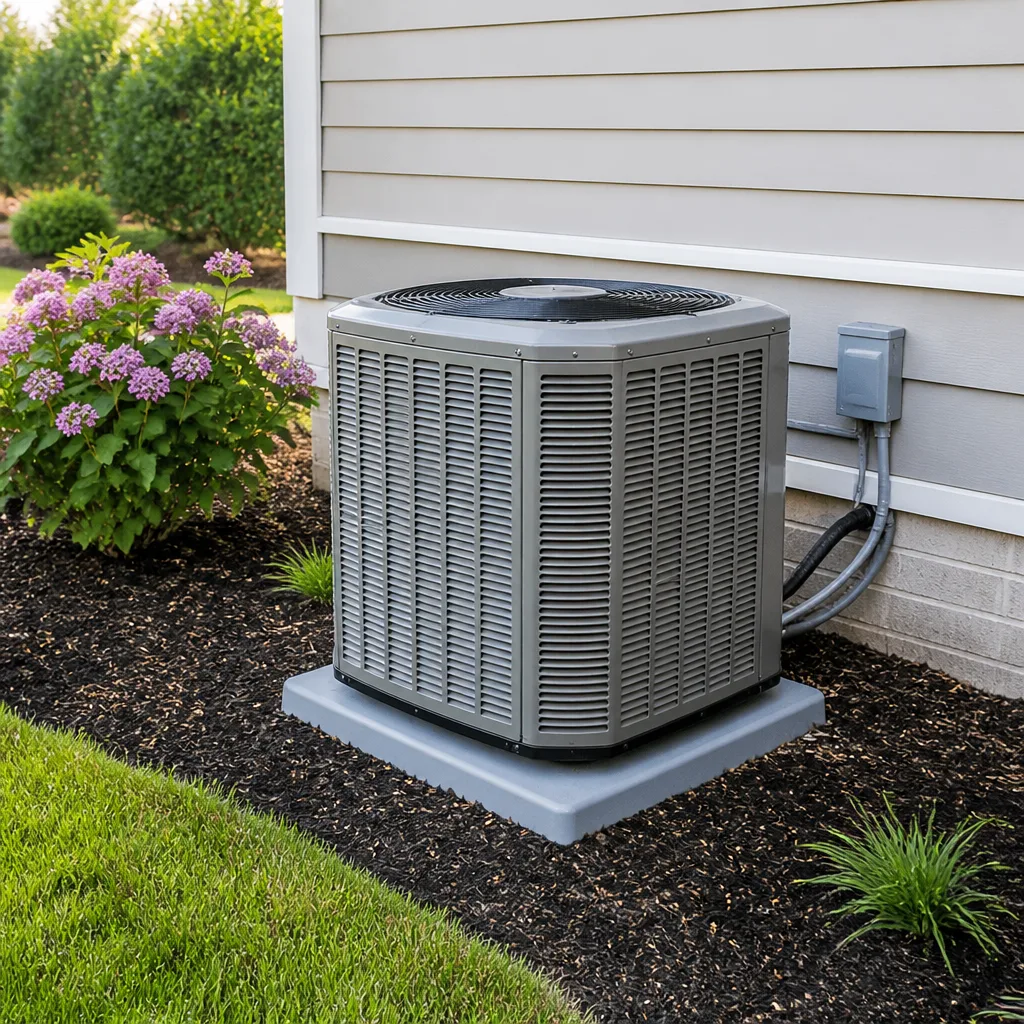 AC repair
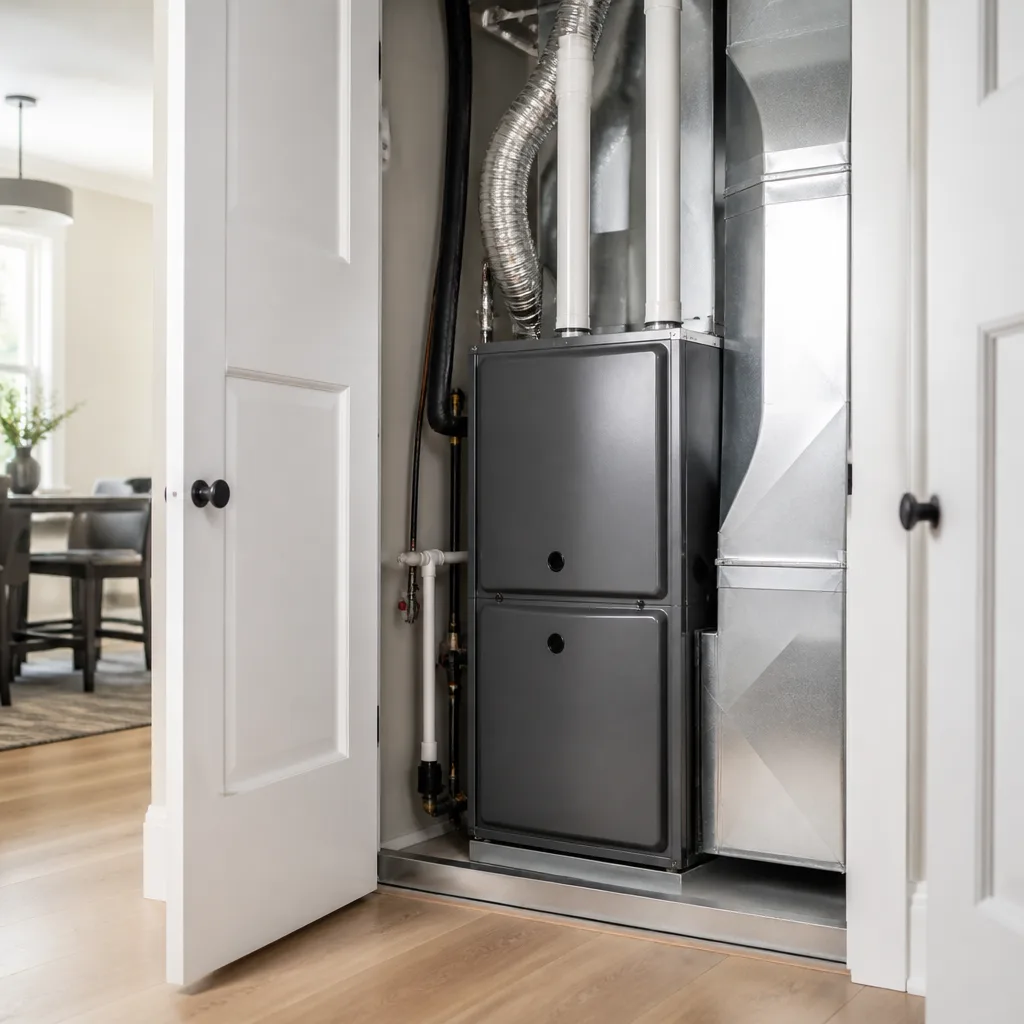 Furnace & heating
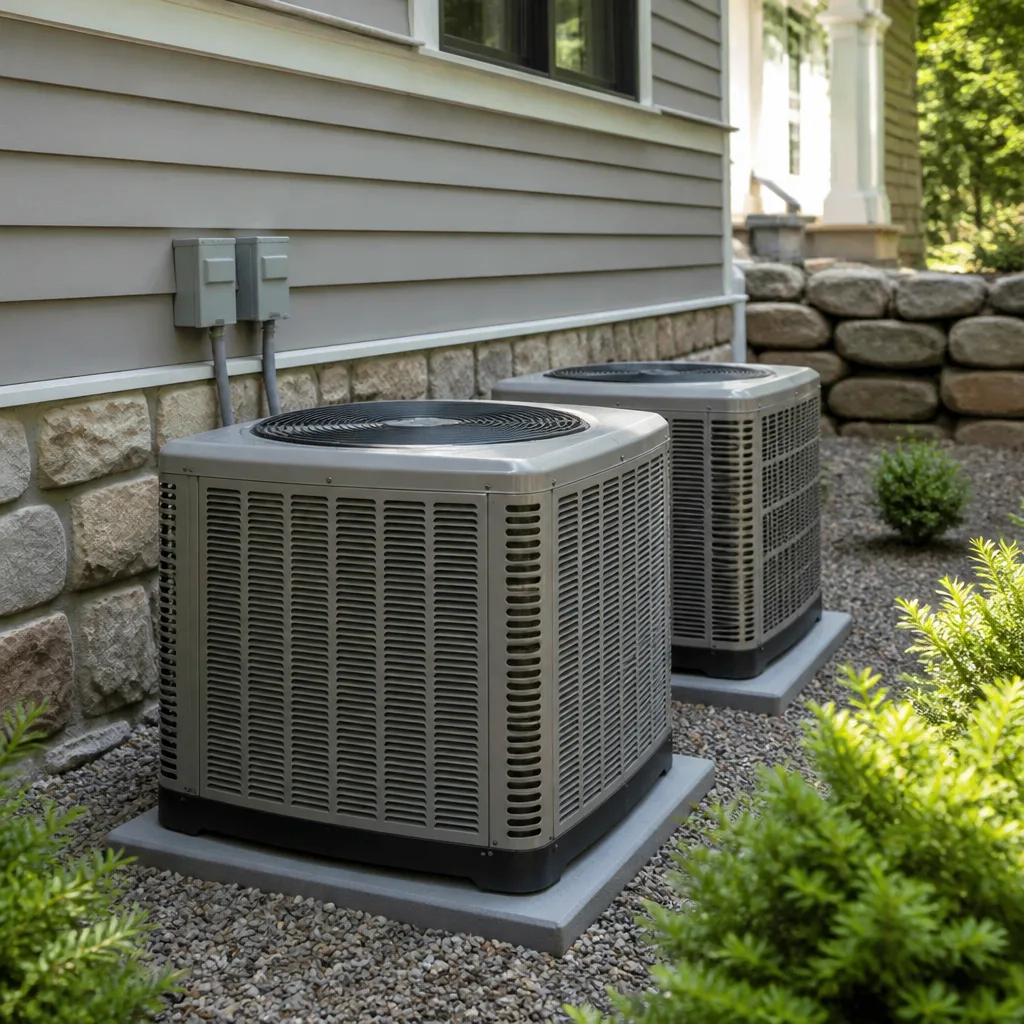 Heat pumps
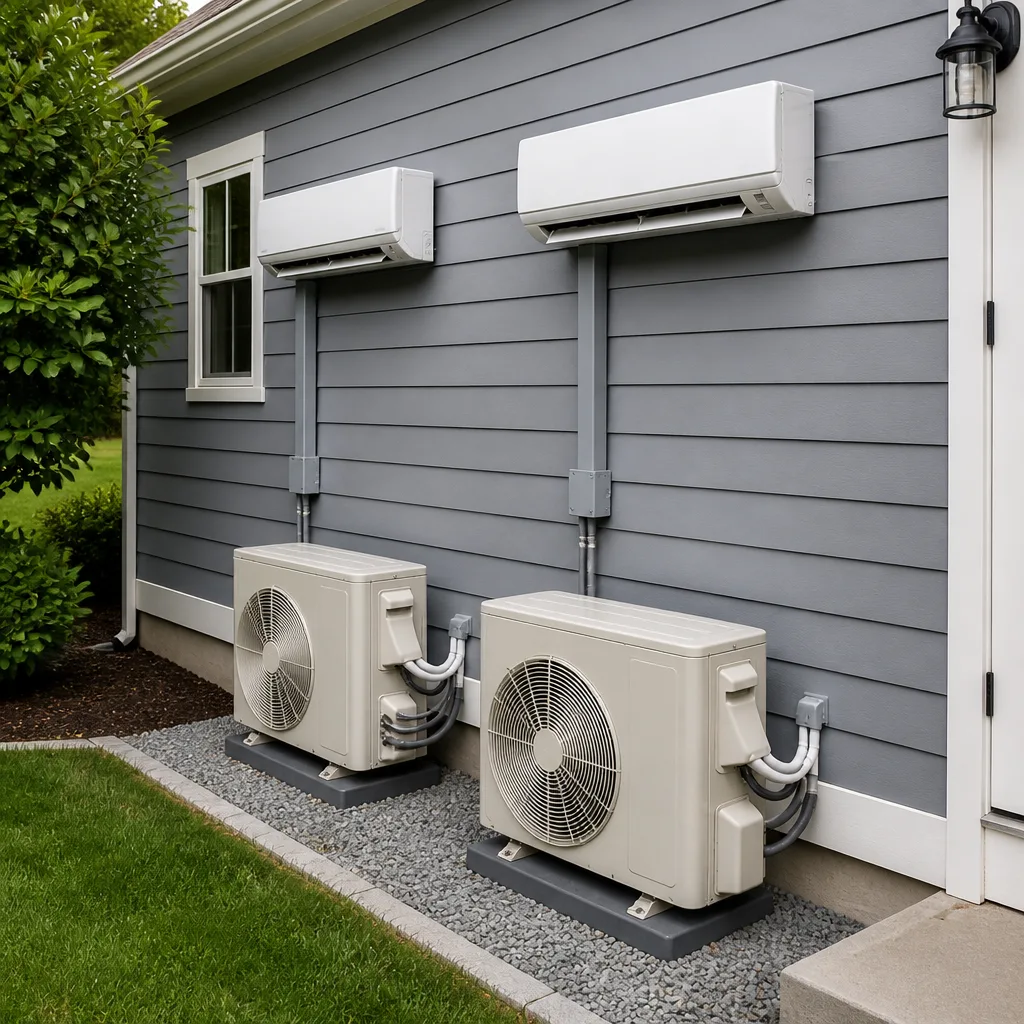 Ductless mini splits
 Carrier
 Trane
 Goodman
Seasonal tune-up and full diagnostic on your Carrier, Trane, or Goodman system - readings shown to you before any repair is proposed
Diagnosis first, numbers second - you approve the repair price before a single part goes in.
Get your free estimateAC Repair & Installation Maintenance Schedule: What to Do and When
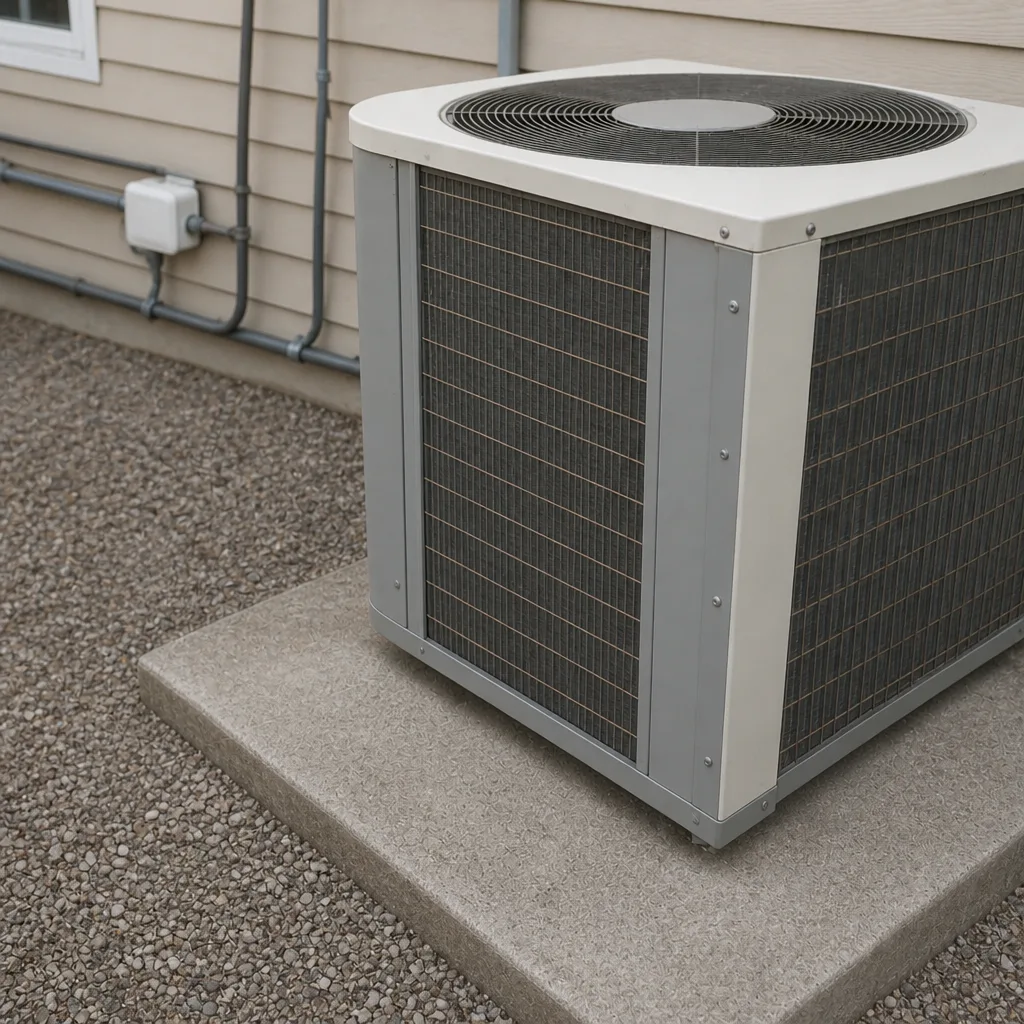
The single most common finding on a Winchester AC service call in June is a condenser coil packed with spring desert dust. It builds up quietly through April and May, and by the first 105-degree week it’s cutting efficiency by as much as 30 percent while the compressor runs hotter than it wants to. That 20-minute cleaning job is the difference between a system that coasts through summer and one that dies in July. This guide lays out a maintenance schedule built around Winchester’s actual season triggers, not a generic spring-and-fall calendar, and shows you which tasks you can do yourself and which ones belong to a licensed technician.
Quick Answer
In Winchester, AC maintenance should run on four trigger points tied to weather rather than dates: a condenser coil cleaning and filter change before the first hot spell in late April, a mid-summer filter swap and refrigerant-line inspection by early July, a pre-freeze heat pump check in October, and a full tune-up after summer’s last heat wave in late September. Most of the tasks homeowners can do themselves are filter and coil cleaning; refrigerant checks, electrical torque checks, and capacitor testing require a licensed technician.
Styles & brands we work with
- AC repair
- Furnace & heating
- Heat pumps
- Ductless mini splits
- Carrier
- Trane
- Goodman
Table of Contents
- Why a Calendar Schedule Fails in Winchester
- The Month-by-Month Winchester Maintenance Calendar
- DIY Versus Licensed: Which Tasks Belong to Whom
- The Correct Filter Interval for Winchester Dust
- What a Real Professional Tune-Up Includes
- How to Document Maintenance to Protect Your Warranty
- Repair or Replace: Making the Call in Winchester
- Scheduling AC Installation Around Winchester’s Weather
Why a Calendar Schedule Fails in Winchester
Most homeowner advice you’ll find online tells you to service the AC in spring and the furnace in fall. That advice was written somewhere with four roughly equal seasons and reliable moisture. Winchester doesn’t work that way. Our climate swings from cold high-desert nights in February to 105-degree afternoons in July, with a spring wind season that drags fine dust and cottonwood debris into every condenser coil in the valley.
A date on a calendar tells you nothing about the actual condition of your system. The temperature does. When the forecast starts flirting with 90 degrees in April, that’s the signal your coil needs to be clean and your filter fresh before the first serious test day. When the overnight lows first drop toward freezing in late October, that’s the signal to verify heat pump defrost cycles and furnace ignition. Building the schedule around those triggers makes the work land where it actually matters.
We’ve serviced Winchester homes long enough to know the rhythm. The valley’s dust load is heavier than what the filter manufacturer assumed, the summer thermal load is more taxing than the national average, and the swing between day and night temperatures puts a particular strain on heat pump systems in the shoulder months. That’s why our AC Repair & Installation in Winchester work almost always includes a conversation about the local climate before we hand over the invoice. There’s no point quoting a national schedule to a homeowner who lives here.
The Month-by-Month Winchester Maintenance Calendar
Here’s the schedule we’d give a neighbor. It uses Winchester’s weather windows as triggers, not fixed dates, but the months are accurate for most years.
- March: Walk the outdoor unit. Clear any debris that winter storms pushed against the cabinet. Look up at the coil. If spring wind hasn’t started yet, this is your last easy window to clean it.
- April: Change the filter. Rinse the condenser coil with a garden hose. Schedule a professional tune-up before the first 90-degree day so any worn capacitor or failing contactor gets replaced before it strands you.
- May: Run the system on a warm afternoon and listen. Any new rattle, click, or short cycle is worth a call. The spring dust season peaks now, so filters take a beating.
- June: Change the filter again. Check the condensate drain line for algae buildup. Confirm outdoor unit clearance is at least two feet on all sides.
- July: Mid-summer filter change. If the system is running longer cycles than it did in May, that’s a sign the coil is dirty again or the refrigerant charge has drifted. Call for a diagnostic.
- August: Peak load. Don’t run the system with a clogged filter. Watch for ice on the indoor coil, which signals airflow trouble.
- September: Post-summer tune-up. This is the best time to catch compressor wear, capacitor drift, and refrigerant leaks that surfaced during the heat.
- October: Heat pump and furnace check. Confirm the reversing valve, defrost board, and ignition sequence before the first freeze.
- November through February: Filter changes on the same cadence. Keep snow and ice clear of the outdoor unit and heat pump cabinet.
If you have a heat pump rather than a straight AC, the October and November work matters more than most homeowners realize. A heat pump sitting on a frozen coil in January is a bigger problem than a compressor that’s running hot in July, because it can’t defrost on its own when the board is failing. Our Heat Pump & Mini Split in Winchester team handles those checks the same way every year.
DIY Versus Licensed: Which Tasks Belong to Whom
There’s real money to be saved on the tasks a homeowner can safely handle. There’s also real danger in the ones they can’t. Here’s the honest split.
Homeowner tasks (safe and worth doing)
- Changing the air filter, which is the single most important maintenance act and the easiest
- Rinsing the outdoor condenser coil with a garden hose (power off at the breaker first)
- Clearing debris, leaves, and weed growth around the outdoor cabinet
- Checking and clearing the condensate drain line
- Verifying thermostat batteries and settings
- Cleaning return-air grilles with a vacuum brush
Licensed technician tasks (do not attempt)
- Refrigerant check and charge: handling refrigerant requires EPA Section 608 certification and manifold gauges. It’s also a sign of a leak if the charge is low, so the diagnosis matters more than the top-off.
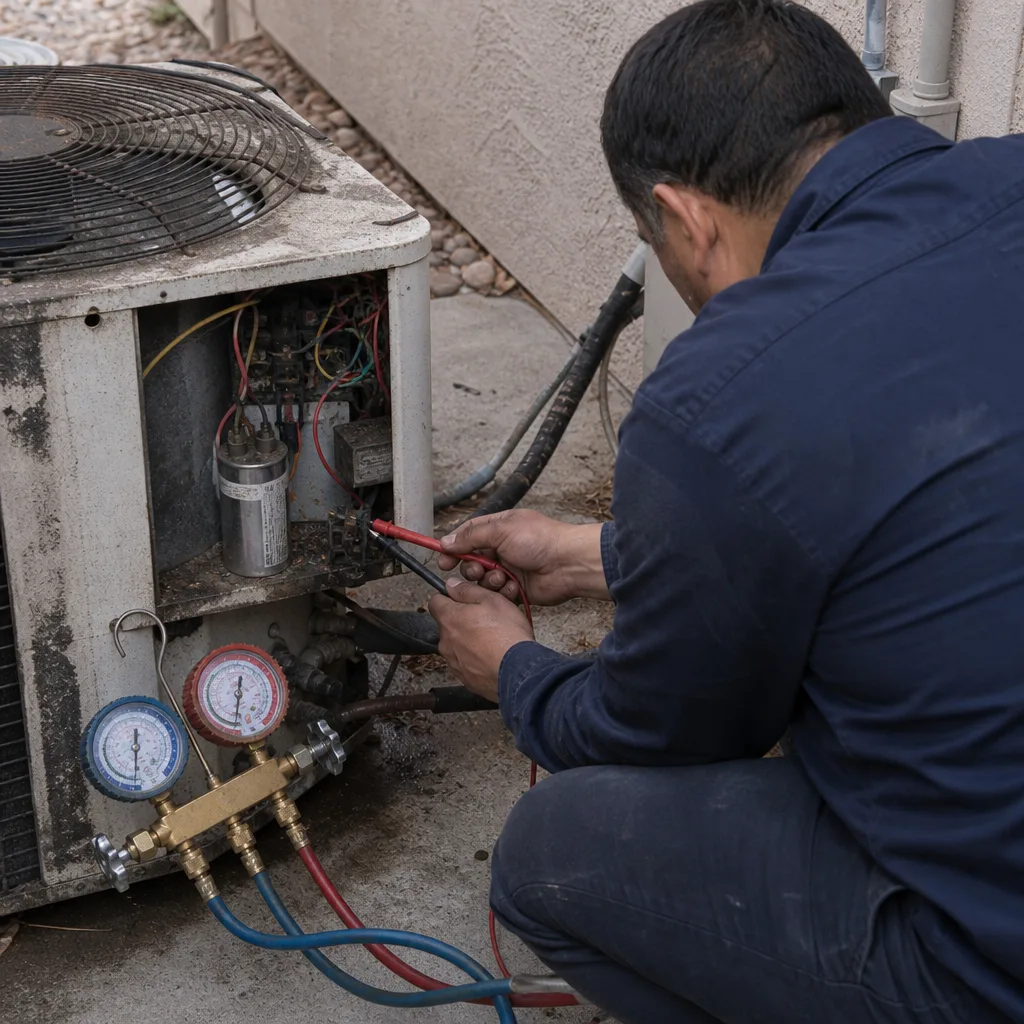
- Electrical torque check: loose lugs on contactors and disconnects cause arcing, melted wire, and occasionally fire. Only a trained technician should open the electrical panel on an HVAC unit.
- Capacitor and contactor testing: these hold a charge even after the breaker is off. Touching the wrong terminal can put you on the floor.
- Compressor and blower motor diagnostics: reading winding resistance and amp draw requires the right meters and the experience to interpret the readings.
- Gas furnace ignition and heat exchanger inspection: a cracked heat exchanger is a carbon monoxide risk. Only a licensed tech with a combustion analyzer should be in there.
Here’s the plain-language version: if it involves a screwdriver and a hose, you can probably do it. If it involves a meter, a manifold gauge set, or a gas line, it belongs to a professional. Our Heating & Furnace in Winchester team has seen too many homeowner attempts at gas-line work to recommend anything else.
The Correct Filter Interval for Winchester Dust
The filter packaging says 90 days. In Winchester, that’s wrong for most homes. The combination of spring desert dust, cottonwood fluff in April and May, and year-round particulates from the valley floor means a standard 1-inch pleated filter typically needs changing every 30 to 45 days during the cooling season and every 60 days in winter. Homes near open desert or with pets or wood-burning appliances should cut that further.
A few concrete rules of thumb:
- 1-inch pleated filter: every 30 to 45 days in summer, every 60 days in winter
- 2-inch pleated filter: every 60 days in summer, every 90 days in winter
- 4- or 5-inch media cabinet filter: every 6 to 12 months, with a check at 6 months to see how loaded it is
- Washable electrostatic filter: rinse monthly during cooling season, no exceptions
If the filter looks gray or matted when you pull it out, it needed changing two weeks ago. A clogged filter restricts airflow, which ices the indoor coil and strains the blower motor. Those are the two most common failure modes we see in Winchester homes during a hot July, and both trace back to a filter that should have been swapped in June.
One more note for homes with pets or anyone who has recently had ductwork cleaned: check the filter at the two-week mark after either event. The first filter after a duct cleaning catches an unusual load and will need replacing early. Better to catch it than to run a restricted system for a month.
What a Real Professional Tune-Up Includes
Not every company defines a tune-up the same way, and the differences matter. A $59 special that takes 20 minutes is not the same as a full service call. Here’s what a proper tune-up should include, line by line, so you can evaluate whether you received the service you paid for.
- Filter inspection and replacement if the filter is past its interval
- Condenser coil cleaning (not just a rinse, a proper coil cleaning with the cabinet opened)
- Evaporator coil inspection and cleaning if accessible
- Refrigerant charge check with superheat and subcooling readings, not just a pressure glance
- Electrical inspection of contactor, capacitor, and torque check on all lugs
- Blower motor amp draw and speed verification
- Condensate drain flush and float switch test
- Thermostat calibration and cycle verification
- Outdoor disconnect inspection for heat damage or corrosion
- Written report of every reading, every component tested, and every item that’s trending toward failure
If the technician doesn’t hand you anything at the end, ask for the numbers. Any company confident in its work will show them. We include a documented report with every Fireside Heating & Air Co. Winchester home tune-up because the readings are what let you plan next year’s work instead of guessing.
How to Document Maintenance to Protect Your Warranty
Most equipment warranties, including those on a Daikin or Carrier system, require proof of regular maintenance if a major component fails. Homeowners who can’t produce documentation sometimes lose a compressor claim they would otherwise have won. The fix is simple: keep a written log.
What to keep:
- Date of every professional service visit and the invoice (a photo saved to your phone works)
- Filter change dates, written on the filter frame in marker so it’s visible when you pull it out
- Any technician’s written report, filed with your equipment paperwork
- Receipt for any homeowner-purchased part, filter, or thermostat
- The original installation paperwork, which should list the model and serial numbers
One common mistake: replacing your own motor, capacitor, or control board with a non-OEM part voids portions of some warranties. If a part fails during the warranty period, call for service rather than swapping it yourself. The documentation is only useful if the work itself keeps the warranty intact.
If you’re missing records from previous years, don’t panic. Start now and be consistent. A clear log from this year forward is treated far better than a blank file, and it protects you on the next equipment purchase too, when a buyer or an installer wants to see the service history.
Repair or Replace: Making the Call in Winchester
The industry rule of thumb still holds: if the repair is more than a third of the replacement cost and the system is over 12 years old, replacement is usually the better spend. But in Winchester, a couple of local factors tilt the math.
Our summer heat load means compressors work harder here than they would in a milder climate, so a 15-year-old unit that has run at 105-degree ambient for a decade is genuinely more worn than the same unit in a coastal city. That said, a well-maintained unit on a properly sized system can hit 15 to 18 years in this valley, especially if it’s a heat pump that gets year-round service rather than just summer attention.
Ask three questions before you decide:
- What’s the repair cost, and is it a one-time failure or the third visit this summer?
- What’s the SEER2 rating of the new unit compared to the old one, and how much would that cut the summer bill?
- Is the current unit correctly sized for the house, or was it undersized to save money on the original install?
If you want a second opinion on a written estimate from another company, we offer one free of charge. That’s a standing offer, not a sales pitch. AC Repair & Installation in Winchester is where that conversation usually starts.
Scheduling AC Installation Around Winchester’s Weather
Replacement installation is not a same-day emergency service, and any company promising one is worth a second look. A proper install requires a load calculation (Manual J), equipment sizing, refrigerant line verification, and a permit where local code requires one. Realistically, that means a written fixed price, a scheduled install date, and rebate paperwork handled before the crew rolls.
The best window to schedule a Winchester AC replacement is late September through early November. Why? The evening temperatures are cool enough that a same-day install setback doesn’t leave the house uncomfortable overnight, and the equipment lead times are shorter than in July. If you’re replacing a heat pump, target the same window so the system is commissioned well ahead of the first freeze.
For sizing, don’t skip the load calculation even if the existing unit has worked for years. Houses change, insulation changes, windows change, and handing a contractor the old unit’s tonnage is not the same as a proper Manual J. We do the load calc on every replacement, and we’ll walk you through the numbers so you understand what you’re buying.
If the installation involves a new thermostat or zoning, factor an extra half-day. If it involves ductwork changes, budget more. Honest scheduling beats a rushed install every time. Our Heat Pump & Mini Split in Winchester work follows the same process, and we write the install date down before we order the equipment.
Common Mistakes to Avoid
- Trusting the filter package’s “90 days” label. In Winchester’s dust load, that interval is often double what your system can take. Check the actual filter at 30 days and see how gray it is.
- Skipping the pre-summer tune-up to save $89. The tune-up is cheap next to the July emergency call when the compressor fails on the hottest day of the year. We charge $89 for a seasonal tune-up and it’s the best value in the whole business.
- Letting a technician “top off” refrigerant without finding the leak. Refrigerant doesn’t get used up. If it’s low, it’s leaking. Get the leak located, not just filled.
- Running the system with a dirty outdoor coil. A 30 percent efficiency hit on a Winchester summer runs to real money over the season. It also shortens compressor life measurably.
- Replacing parts yourself under warranty. It voids coverage. Call for service and let the licensed technician do the diagnosis and the part swap.
- Ignoring the condensate drain. A clogged drain in July causes a water leak into your ceiling. Flush it every spring and every fall.
- Buying a new system without a load calculation. Oversized systems short-cycle and don’t dehumidify. Undersized systems never catch up. Get the Manual J done.
See the difference
 Before
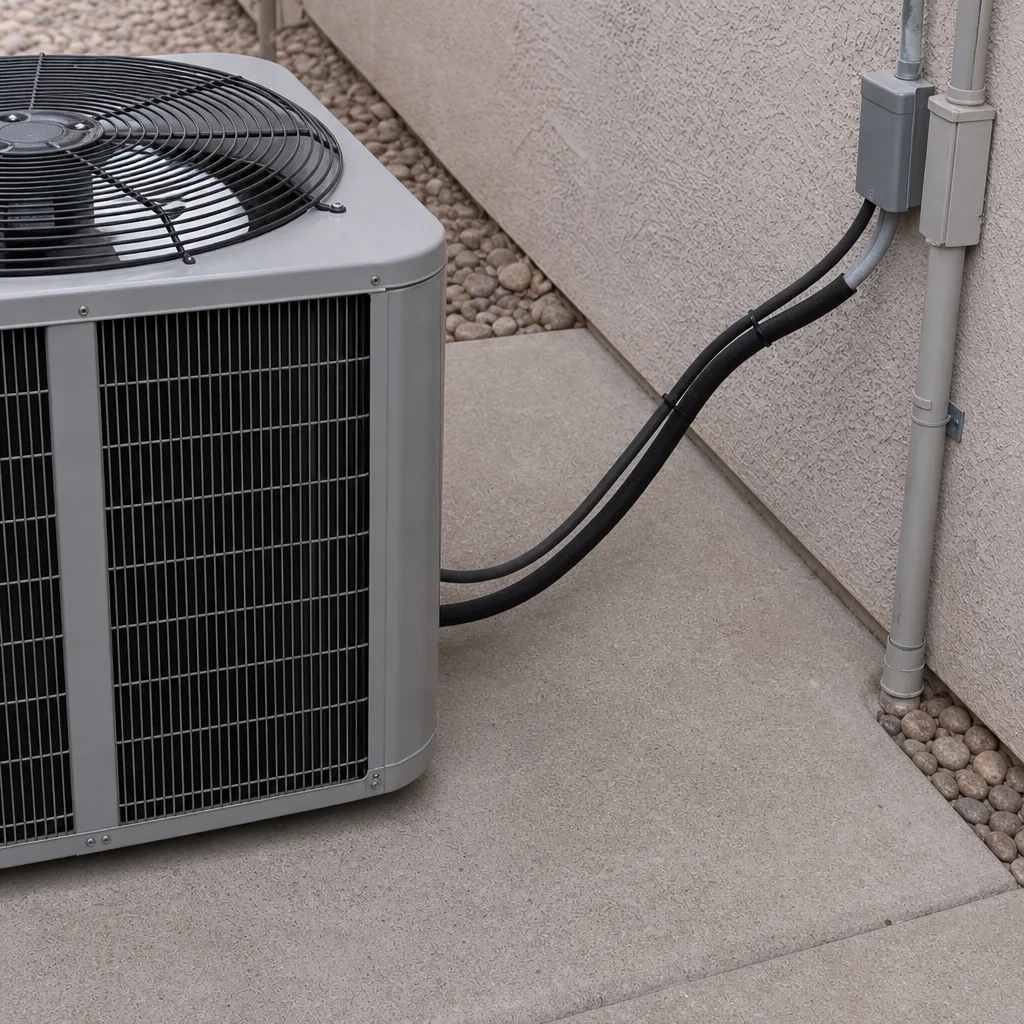 After
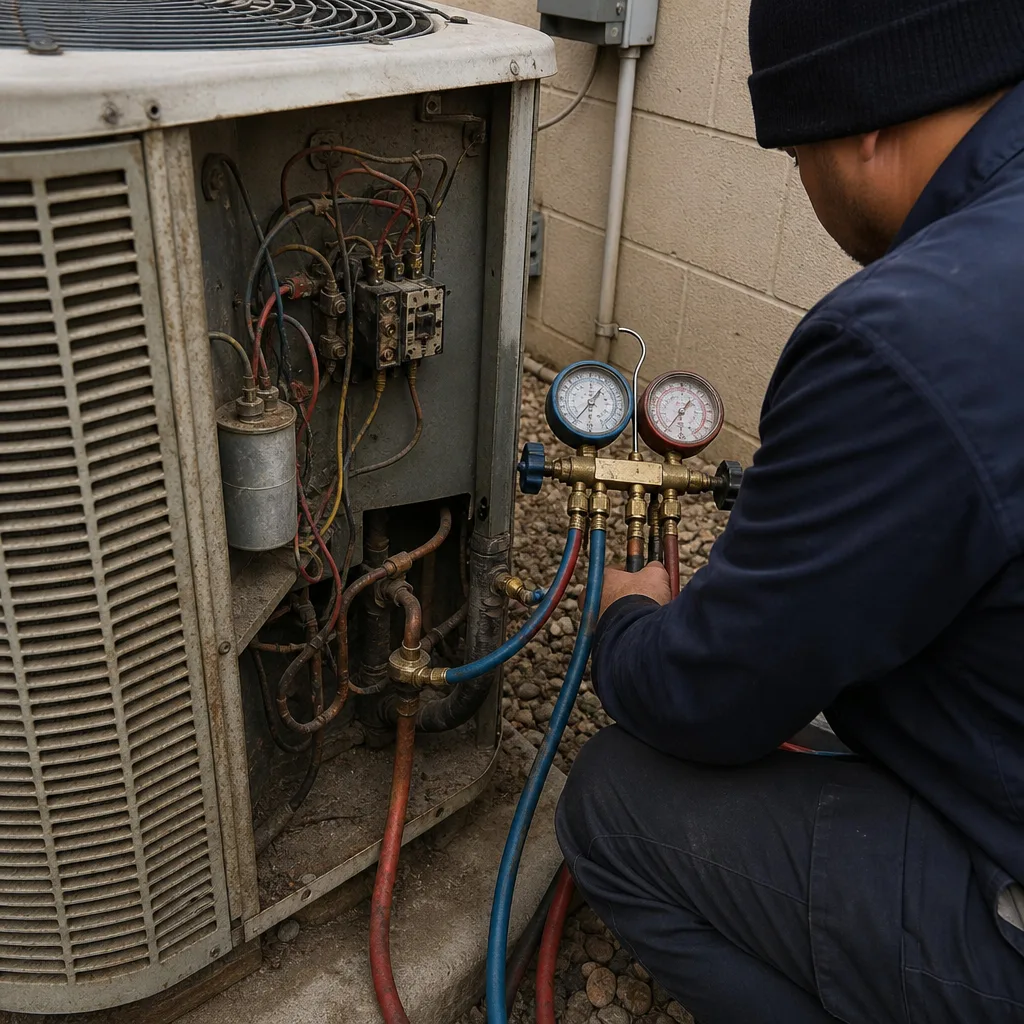 Before
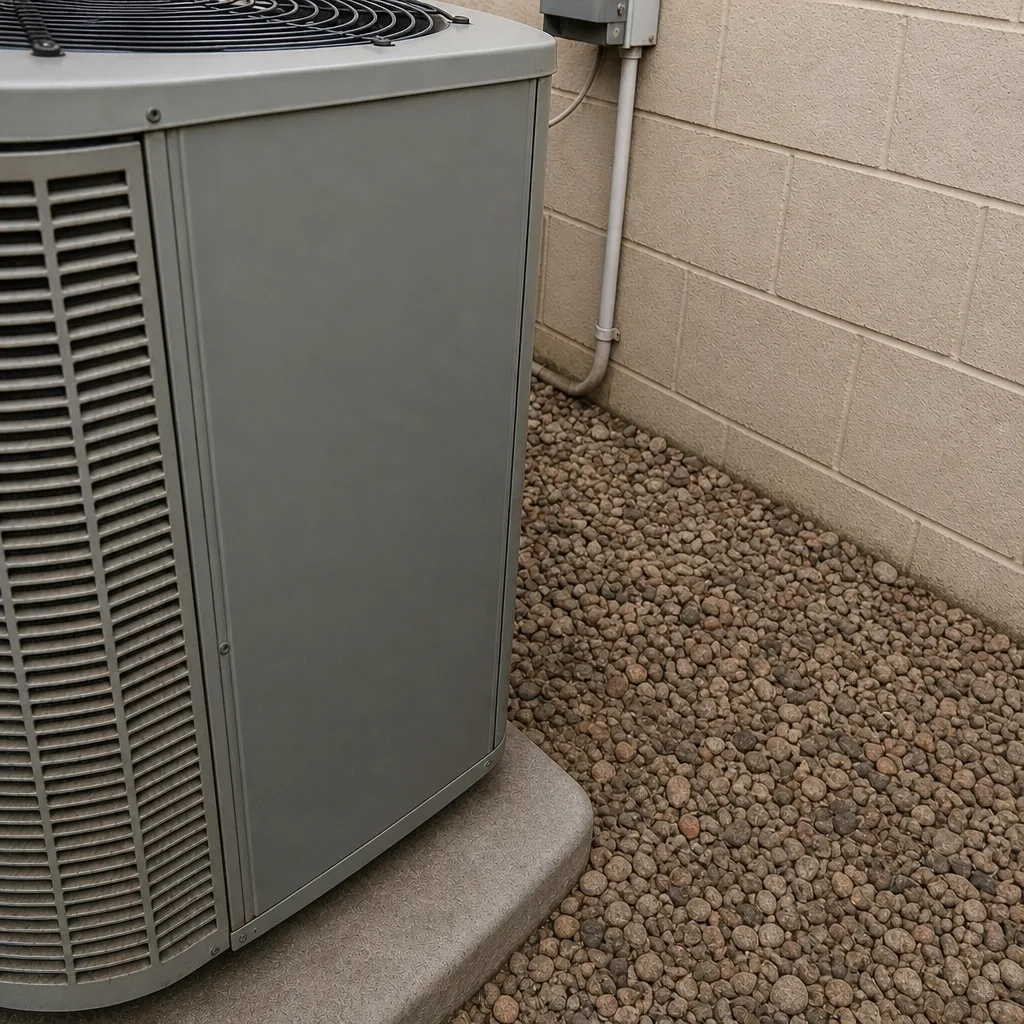 After
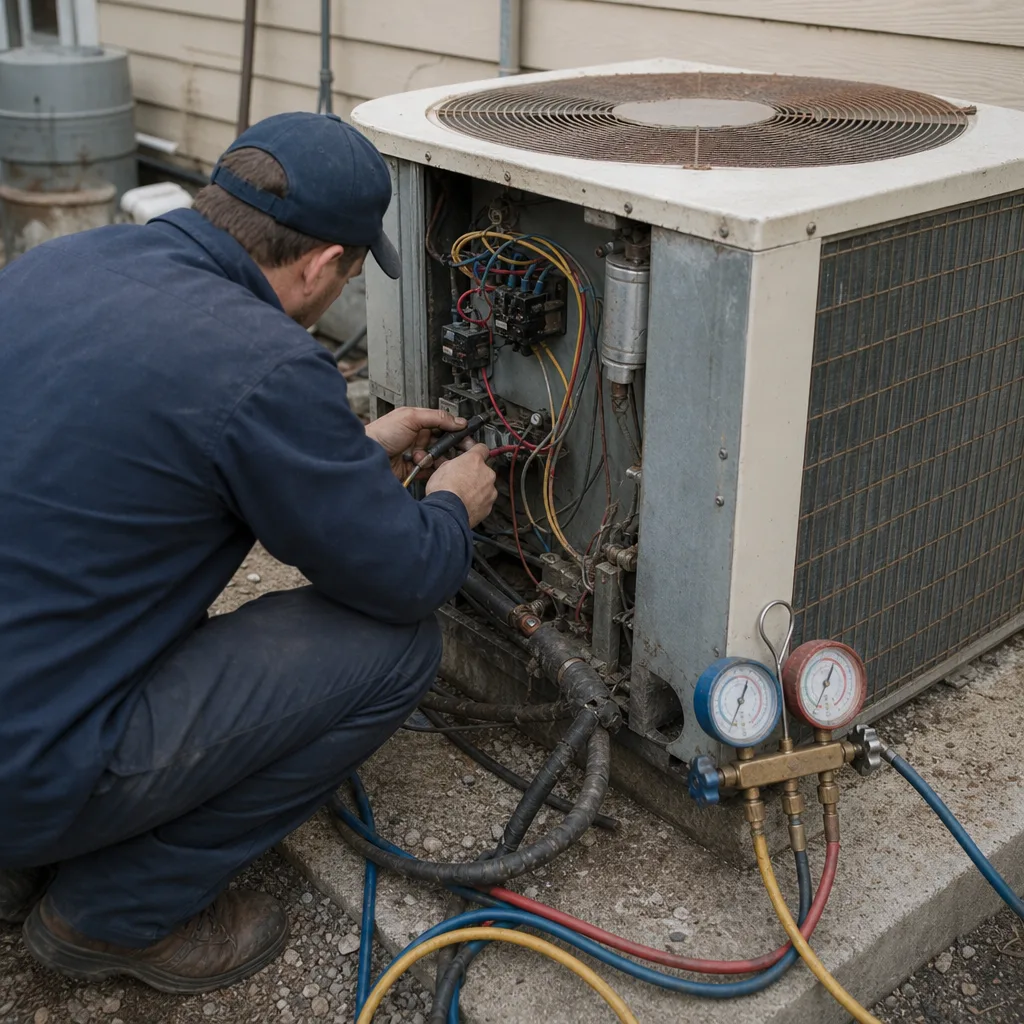 Before
 After
When to Call a Professional
Call us if you see any of the following: ice forming on the indoor or outdoor coil, the system running but not cooling, a burning smell near the air handler, water pooling at the base of the furnace or AC, a compressor that clicks off seconds after starting, or a heat exchanger concern on a gas furnace. Any of those is a same-day priority. Don’t open the electrical panel or attempt a refrigerant adjustment yourself. Those are licensed technician tasks for a reason, and the danger is real. Fireside Heating & Air Co. Winchester offers free estimates in Winchester. Call (844) 783-5043. Phones are answered by a live person, nights and weekends included, and the price quoted is the price paid.
Frequently Asked Questions
Twice a year is right for most Winchester homes: a full tune-up in April before the first hot spell and a post-summer inspection in September. Homes with heat pumps should add an October or November check to confirm defrost cycles and reversing valve operation before the first freeze. Homes with heavy dust exposure, pets, or wood-burning appliances should plan three visits instead of two. Call (844) 783-5043 to book one – estimates are free.
You can change your own filter safely, and you should. But filter work doesn’t cover refrigerant charge verification, electrical torque checks, capacitor testing, or the condensate system flush. Skipping the professional tune-up because you changed a filter is a false economy. Book the $89 seasonal tune-up and let the licensed technician handle the parts you can’t reach. Call (844) 783-5043 to schedule.
Our seasonal tune-up runs $89 and includes a written report of every reading and component tested. If a repair is needed, the estimate is free, and any repair over $250 comes with $50 off. Senior and veteran customers receive an additional 5% off, always. If a company quotes you $39, ask what’s actually included. Call (844) 783-5043 for an exact quote – the price quoted is the price paid.
No. A heat pump does the same cooling work plus winter heating, so it needs everything an AC needs plus defrost board testing, reversing valve checks, and heat-mode refrigerant charge verification. In Winchester, that extra work is best done in October or early November, before the first freeze. Call (844) 783-5043 to schedule a heat pump tune-up.
The rule we use: if the repair is more than one-third of replacement cost and the system is over 12 years old, replacement is usually the better spend. Under that threshold, repair is the sensible call, especially on an American Standard or Bryant system still in its warranty window. We offer a free second opinion on any written estimate if you want an independent read before deciding. Call (844) 783-5043.
In most cases yes, and we prioritize no-cooling calls on hot days. Calls are answered by a live person 24 hours a day, 7 days a week, so a 105-degree afternoon isn’t the moment you reach a voicemail tree. Every repair carries the 90-Day Done Right Promise: done right, or we make it right, no arguing. Call (844) 783-5043 and we’ll be there when we say.
The Bottom Line
A Winchester maintenance schedule is only as good as the triggers it’s built around. Clean the condenser coil before the first 90-degree afternoon, change the filter every 30 to 45 days in summer regardless of what the packaging says, and book the professional tune-up before the pressure of July catches up with you. Keep a written log of every service and filter change. It protects your warranty at claim time. When a task involves refrigerant, a meter, or a gas line, call a licensed technician. Fireside Heating & Air Co. Winchester has been standing behind that work long enough that a square deal is still the only kind we know how to give.
Ready to schedule a tune-up or get an honest read on a repair? Call (844) 783-5043 for a free estimate. Live person answers the phone, every time, day or night.
Written by the team at Fireside Heating & Air Co. Winchester.