
Last updated November 18, 2026
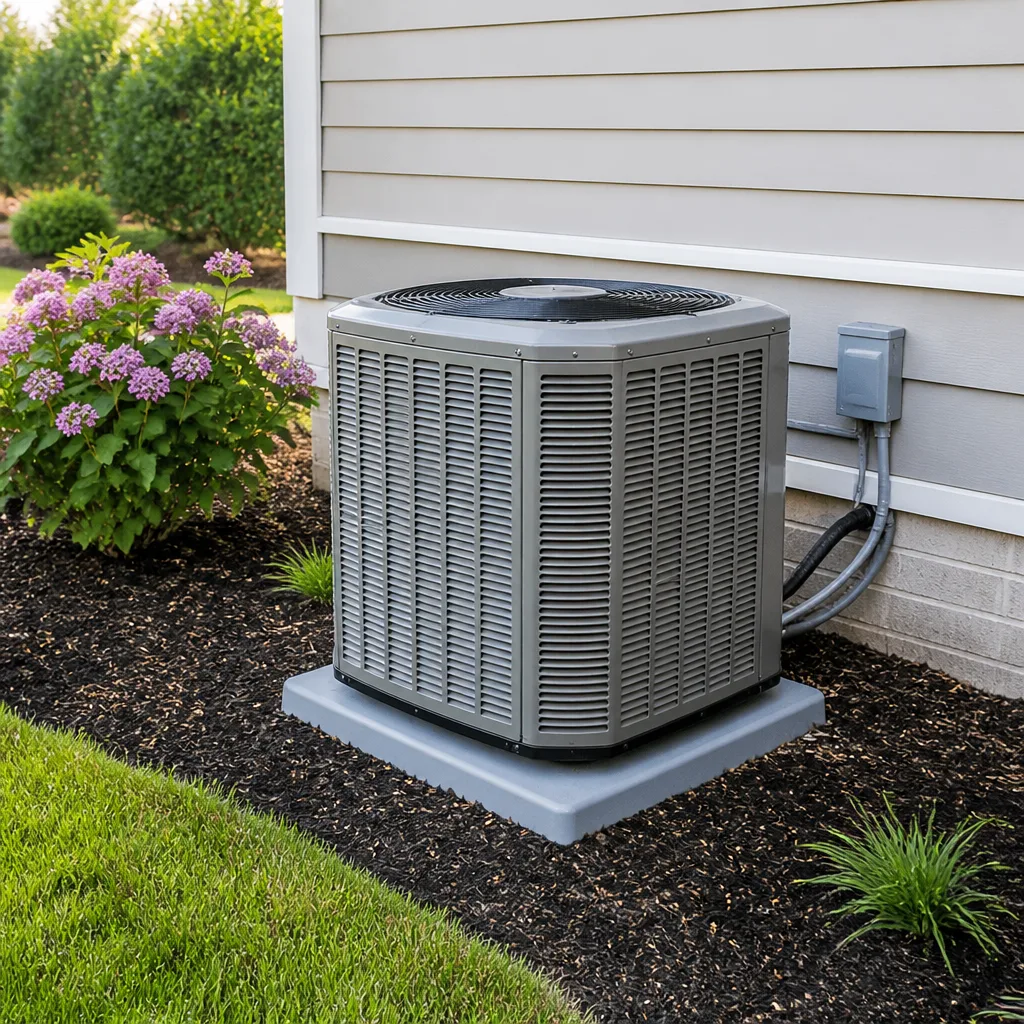 AC repair
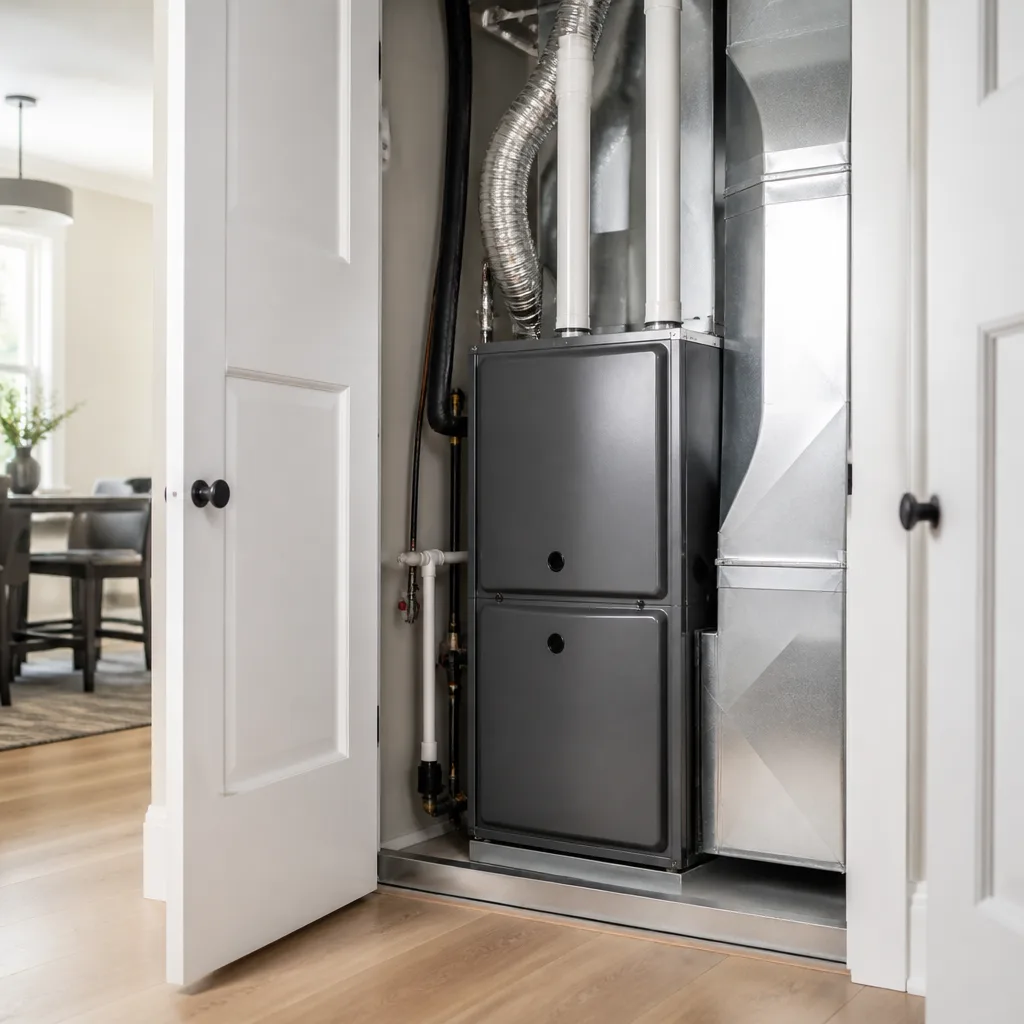 Furnace & heating
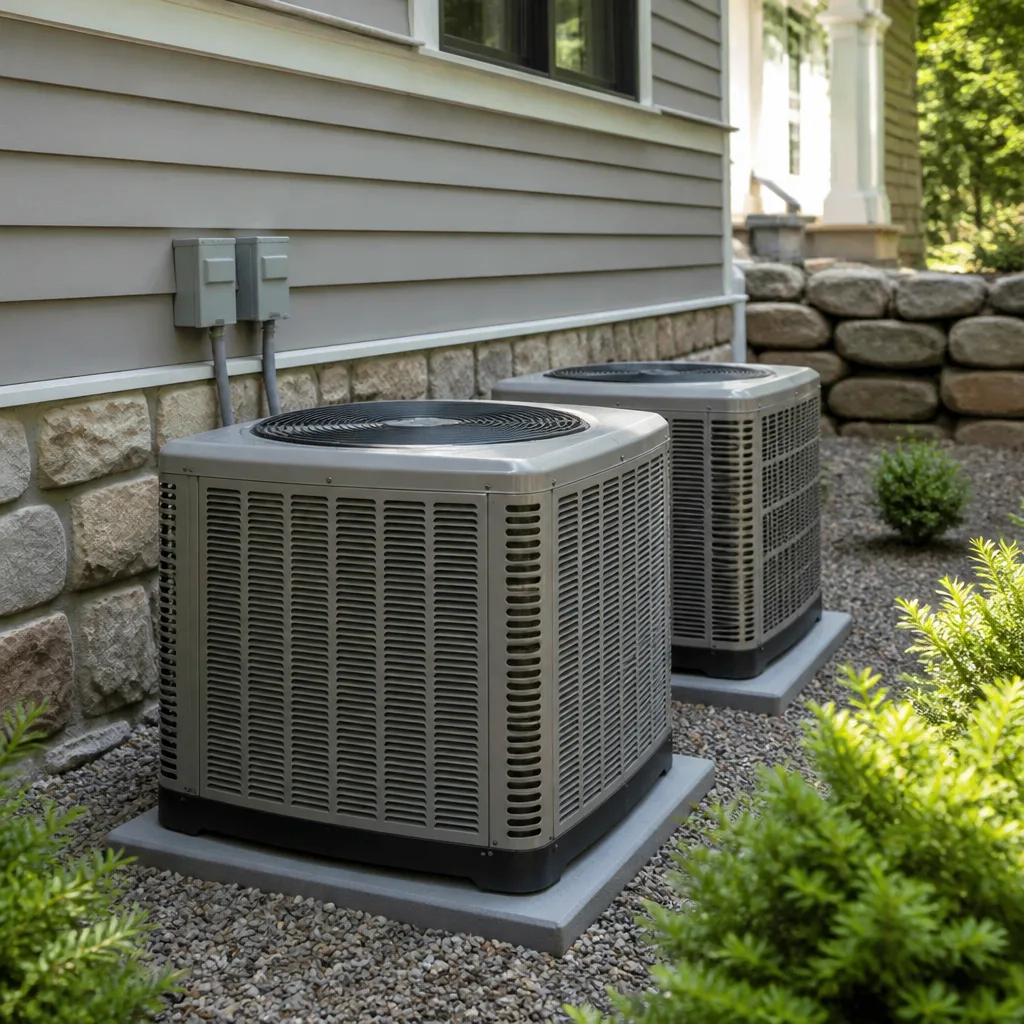 Heat pumps
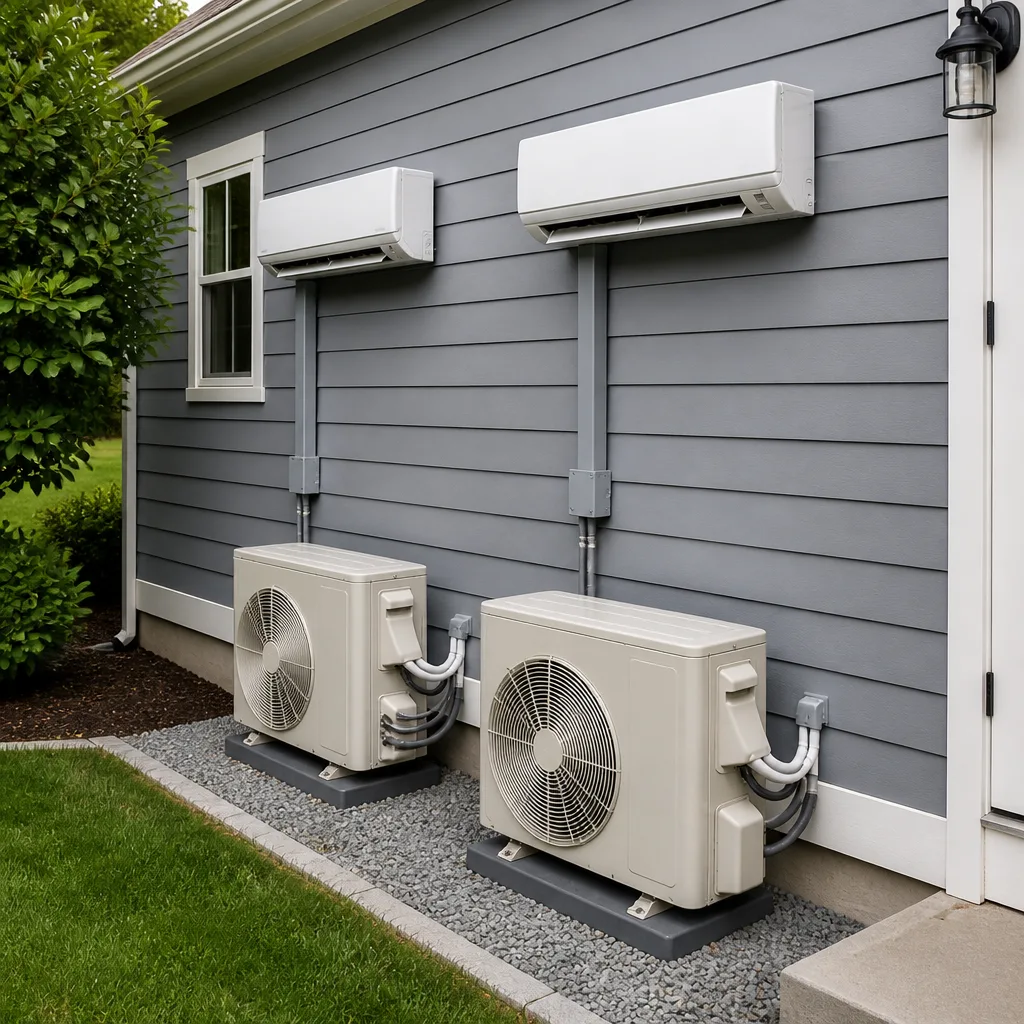 Ductless mini splits
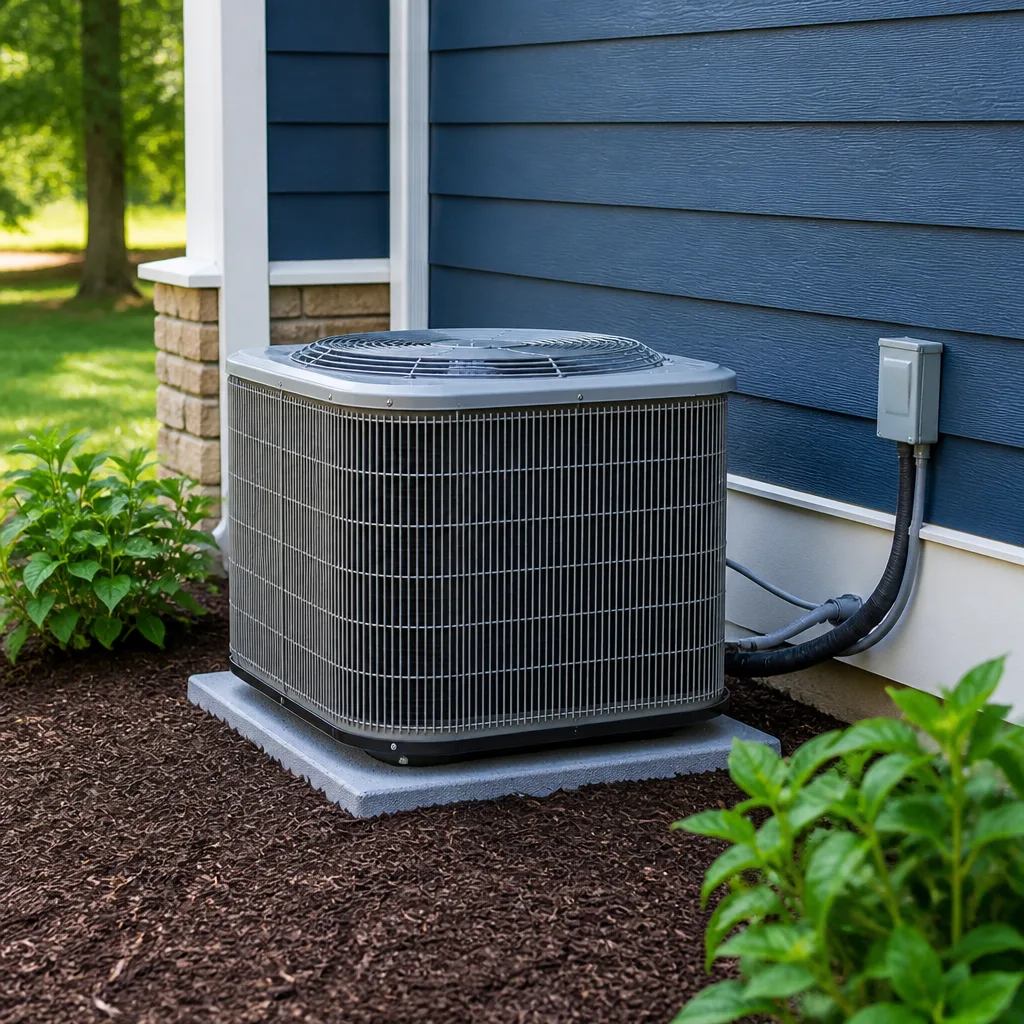 Carrier
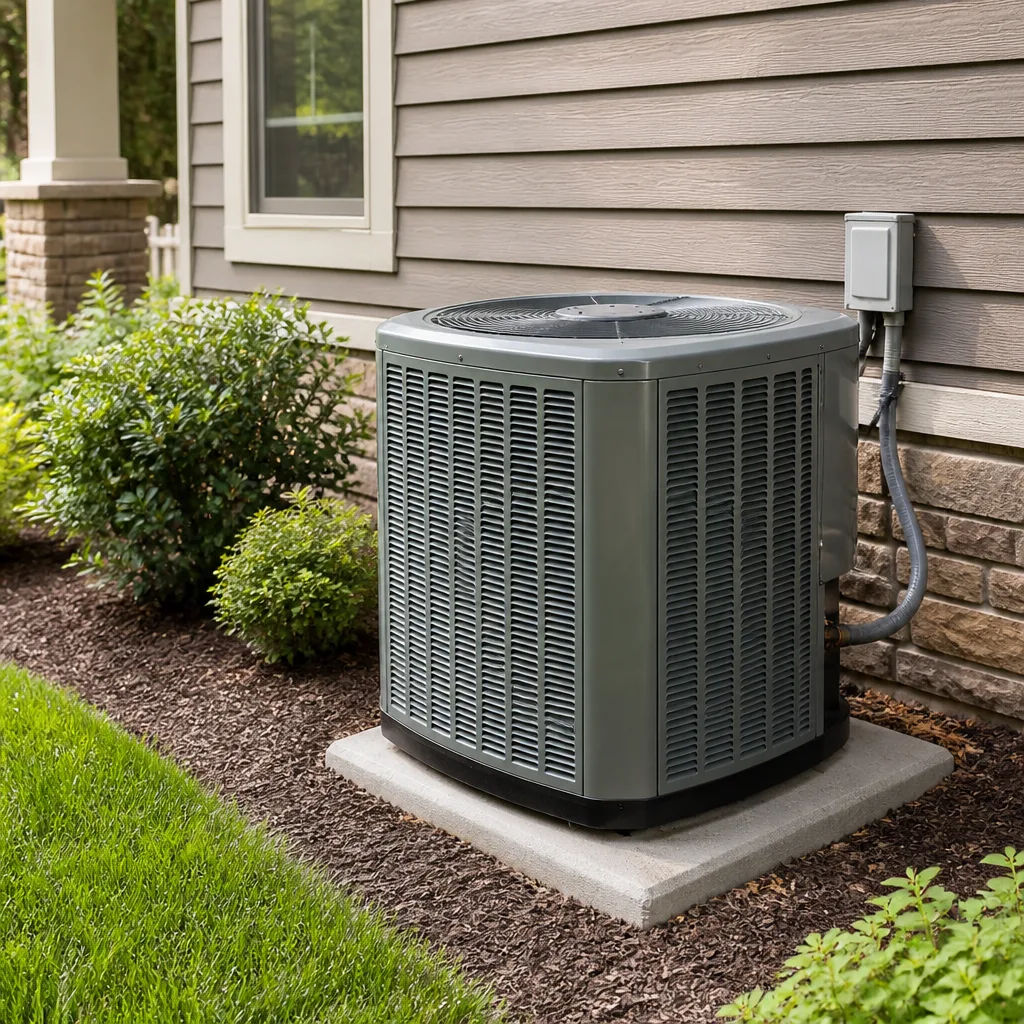 Trane
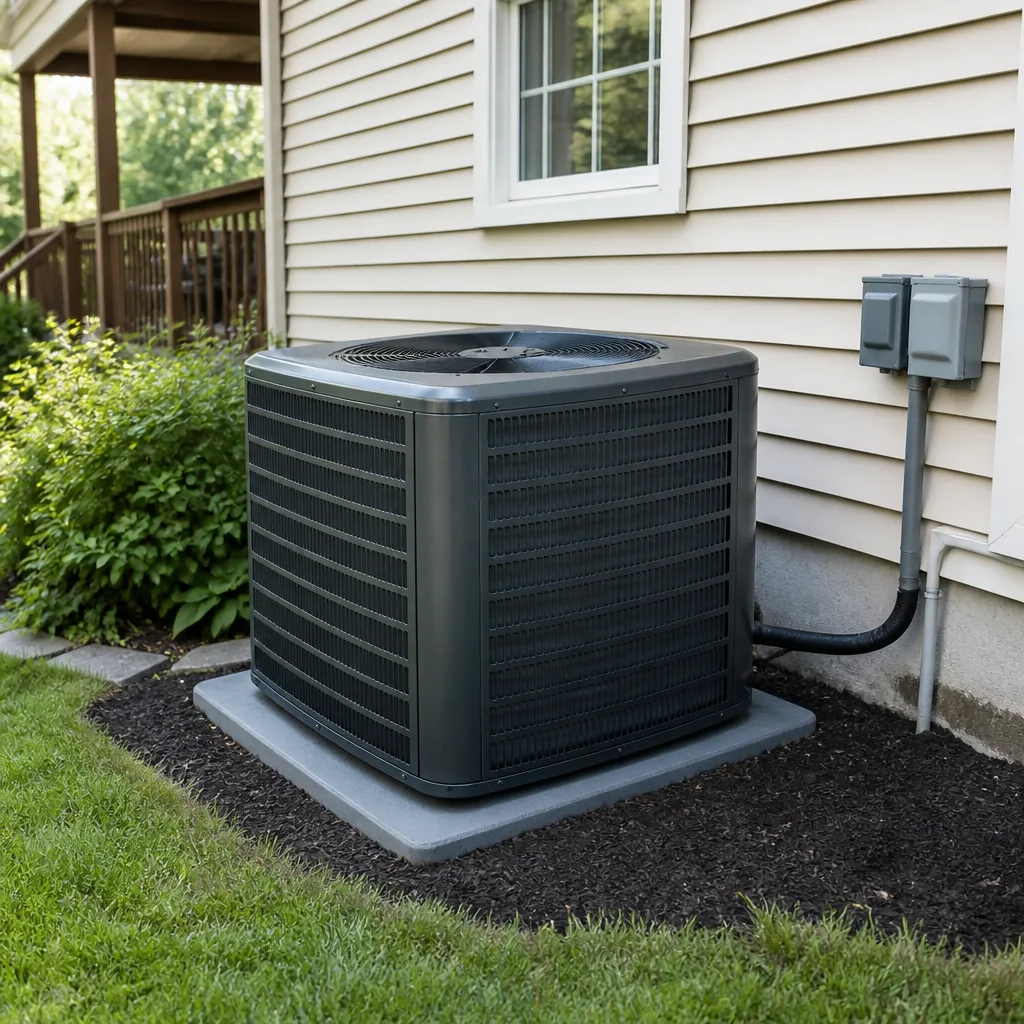 Goodman
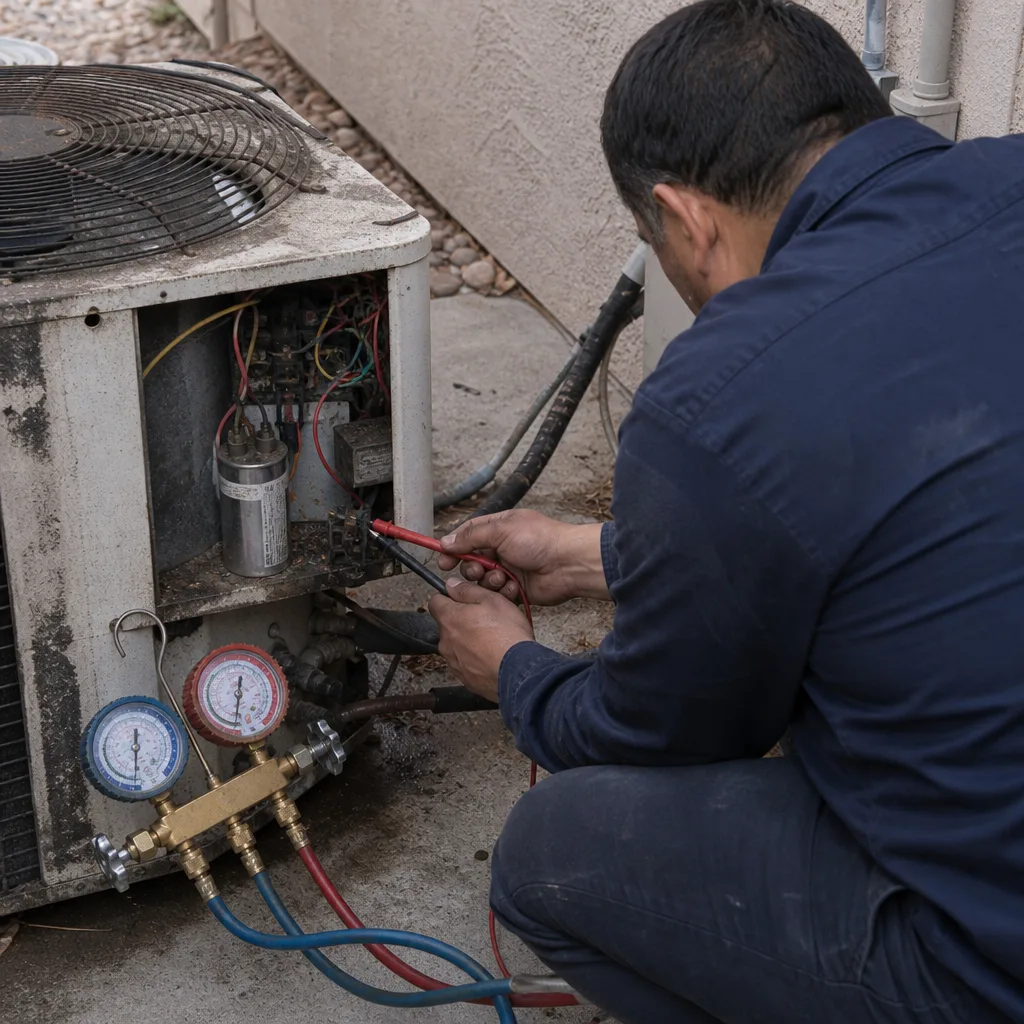
Seasonal tune-up and full diagnostic on your Carrier, Trane, or Goodman system - readings shown to you before any repair is proposed
Diagnosis first, numbers second - you approve the repair price before a single part goes in.
Get your free estimateAC Repair & Installation Troubleshooting: Common Problems and How to Fix Them
A system blowing warm air on a 108-degree afternoon and a system frozen solid in July feel like opposite problems. They’re often the same root cause. And that misdiagnosis, the one homeowners make every summer, is what turns a $200 repair into a $1,400 compressor replacement. In Winchester, where summer afternoons regularly top triple digits and the evening air still holds heat off the pavement, we see the same six failure patterns over and over. Learn to read which one you’re in and you’ll know whether you need a technician in the next hour or the next week.
Quick Answer
Most AC problems that look catastrophic come down to one of six repeatable failures: low refrigerant, a dirty coil, a failed capacitor, a tripped disconnect, a clogged condensate line, or a failing compressor. You can narrow which one you have using what you can see, hear, and feel, without opening the unit. Airflow problems and electrical issues usually show up fast and are worth calling about today; slow cooling and short-cycling can often wait for a scheduled visit.
Styles & brands we work with
- AC repair
- Furnace & heating
- Heat pumps
- Ductless mini splits
- Carrier
- Trane
- Goodman
Table of Contents
- The Six Failure Patterns Behind Most Service Calls
- How to Tell a Refrigerant Leak from a Dirty Coil from a Bad Capacitor
- Resetting a Tripped Breaker or Disconnect: The Right Sequence
- Why Short-Cycling Is the Most Damaging Symptom
- Warm Air from the Vents: What It Usually Means
- Water Around the Unit and the Condensate Line
- What to Have Ready Before You Call
- Installation Troubleshooting: When a New System Doesn’t Behave
The Six Failure Patterns Behind Most Service Calls
In our experience, more than 80 percent of the AC service calls we run in Winchester fall into six buckets. Knowing the buckets helps you describe the problem accurately and helps a technician start diagnosing before anyone drives out.
- Low refrigerant from a leak. The system runs but never gets cold enough. The line set may frost over. This is the pattern that most often gets mistaken for a “bad compressor.”
- Dirty condenser or evaporator coil. Restricted airflow, weak cooling, and a system that runs longer than it should. In Winchester’s dusty spring winds, coils clog faster than most homeowners expect.
- Failed capacitor. The outdoor unit hums but won’t start, or starts and immediately shuts down. This is one of the cheapest repairs on the list and one of the most commonly misdiagnosed.
- Tripped disconnect or breaker. Nothing runs at all. Sometimes the fix is a reset; sometimes a reset is exactly the wrong move.
- Clogged condensate drain. Water pooling near the indoor unit or a safety switch shutting the system down. Common in Winchester because the system runs long hours and pulls a lot of moisture.
- Compressor failure. Usually the end result of one of the first five going unaddressed. This is the pattern we most want to catch before it happens.
If you’ve been running your system through several Winchester summers without a tune-up, you’re more likely to land in pattern two or six. Our AC Repair & Installation in Winchester team can usually tell which pattern you’re in from a short phone conversation and confirm it on site.
How to Tell a Refrigerant Leak from a Dirty Coil from a Bad Capacitor
You don’t need gauges to sort these three apart. You need your eyes, your ears, and a thermometer at the vent.
Low refrigerant
- The air at the vents is cool but never cold, even after running for an hour.
- The large copper line going into the outdoor unit is frosted or sweating heavily.
- The system runs continuously without reaching the thermostat setpoint.
- You may notice a faint sweet or chemical smell near the outdoor unit.
Dirty coil
- Cooling is weak but the line set looks normal.
- The outdoor unit’s fan is running, but airflow through the cabinet feels restricted.
- The top of the outdoor unit is visibly coated with dust, cottonwood fluff, or grass clippings.
- Energy bills climb steadily over a few weeks without any change in usage.
Failed capacitor
- You hear a clicking or humming from the outdoor unit but the fan doesn’t spin.
- The unit tries to start, then shuts off within a minute or two.
- Sometimes it starts fine in the morning and fails in the afternoon heat, which is a classic sign of a capacitor weakening under load.
Dirty coils are the one pattern on this list most Winchester homeowners can address themselves with a garden hose and a soft brush, with the power off at the disconnect. Refrigerant and capacitor work should be left to a technician. Both involve either pressurized systems or stored electrical charge that can injure you badly.
Resetting a Tripped Breaker or Disconnect: The Right Sequence
A dead system is often just a tripped breaker. But there are right and wrong ways to reset it, and one specific situation where you should not reset it at all.
- Turn the thermostat to OFF and wait five minutes. Compressors don’t like being restarted under pressure.
- Locate the outdoor disconnect (usually a small grey box on the wall near the condenser) and pull the handle or flip the switch to OFF.
- Go to your electrical panel and find the breaker labeled for the AC. If it’s tripped (usually sitting between ON and OFF), reset it fully to OFF, then back to ON.
- Wait two minutes, then restore the outdoor disconnect.
- Turn the thermostat back to COOL and let the system run for 15 minutes before judging whether it’s working.
When NOT to reset it: if the breaker trips again within minutes of being reset, stop. A breaker that trips twice in a row is telling you there’s a genuine fault somewhere in the circuit, and repeatedly resetting it can damage the compressor or, worse, create a fire risk. That’s the moment to call us. Our phones are answered by a live person around the clock, including the middle of the night, so there’s no voicemail tree between you and someone who can help.
If your electrical panel is old, warm to the touch, or has breakers that feel loose, that’s a separate safety concern worth addressing before you touch anything. We’d rather you call than guess.
Why Short-Cycling Is the Most Damaging Symptom
Short-cycling is when the system turns on and off every few minutes instead of running in long, steady cycles. It’s the single symptom that damages equipment fastest if left unaddressed, and it’s the one most homeowners ignore because “at least it’s still cooling.”
Every time a compressor starts, it draws a surge of current and puts stress on the windings, the capacitor, and the contactor. A system that runs three or four cycles an hour instead of one is putting four times the startup wear on components that weren’t designed for it. Over a Winchester summer, that’s the difference between a system that lasts another ten years and one that fails in two.
Common causes of short-cycling:
- An oversized system that cools the house too fast and shuts off before removing humidity (a common installation problem we see in newer Winchester subdivisions).
- A failing thermostat or a thermostat placed in direct sun or near a supply vent.
- Low refrigerant causing the system to hit a low-pressure safety cutout.
- A dirty filter or blocked return air causing the evaporator coil to freeze, then thaw, then freeze again.
- A failing capacitor or contactor in the outdoor unit.
If you can count three or more cycles in a single hour, that’s a call-today situation. It usually isn’t an emergency, but the longer it runs like that, the more likely a cheap repair becomes an expensive one.
Warm Air from the Vents: What It Usually Means
Warm air is the symptom most homeowners call about, and the cause is usually one of four things. Sort them in this order.
- Check the thermostat. Is it set to COOL, not FAN or HEAT? Is the setpoint actually below the current room temperature? It sounds obvious; it isn’t always.
- Check the filter. A filter clogged with dust and pet hair will strangle airflow to the point where the coil freezes and the air coming out feels room-temperature. In Winchester, a filter during June and July fills up faster than most homeowners expect. Change it monthly during the cooling season.
- Check the outdoor unit. Is the fan running? Is the cabinet clear of debris? Is there frost on the copper line? If you see frost, you have a refrigerant issue and you should shut the system off at the thermostat and call.
- Check the breaker and disconnect. If everything looks fine but the outdoor unit isn’t running at all, you may have a tripped breaker or a failed capacitor.
If all four check out and you’re still getting warm air, the problem is likely a refrigerant leak or a compressor issue. Both require gauges and training to diagnose properly. In our experience, the homeowners who sort through these four checks before calling save themselves a diagnostic fee and get a faster, more accurate repair estimate.
Water Around the Unit and the Condensate Line
An AC system pulls gallons of moisture out of Winchester’s summer air every day. That water has to go somewhere, and when it doesn’t, it shows up on your floor or ceiling.
Most systems have a condensate drain line running from the indoor coil to a floor drain or the outside of the house. If that line clogs with algae, dust, or insect debris, water backs up. Modern systems have a float switch that shuts the system down before water overflows, which is why some “broken AC” calls are actually a condensate issue.
What to check:
- Look at the drain pan under the indoor unit. If it’s full, the line is likely clogged.
- Find the outdoor end of the drain line and check for a slow trickle while the system runs.
- Check the float switch (a small device on the drain line) and see if it’s tripped.
Some homeowners clear a simple clog with a wet-dry vacuum on the outdoor end of the line. If the clog is deep or the line is hard to reach, it’s better to have us clear it properly. A backflow that soaks drywall or a ceiling costs more to fix than the drain clearing ever would. This is also a good moment to mention our $89 Seasonal Tune-Up, which includes clearing the drain as part of the check.
What to Have Ready Before You Call
The single best thing you can do for a fast, accurate diagnosis is to have your information ready before you dial. When our dispatcher answers, they’ll ask a handful of questions, and the answers get a technician pointed in the right direction before the truck leaves.
- The make and model of your outdoor unit (usually on a plate on the side).
- What the thermostat is set to and what the room temperature actually is.
- The exact symptom: warm air, no air, short-cycling, water, strange noise. “Not working” is the least useful description there is.
- When the problem started, and whether anything changed recently (new filter, power outage, recent storm).
- Whether the breaker has been reset and whether it tripped again.
- Whether you’ve had any recent repairs.
If you’re in Winchester and unsure whether your symptom is urgent, describe it and we’ll tell you straight. If it can wait until morning, we’ll say so. If it shouldn’t, we’ll get someone out. Our Fireside Heating & Air Co. Winchester home page has more on how we work.
Installation Troubleshooting: When a New System Doesn’t Behave
A newly installed system that isn’t cooling right is usually one of three things: an undersized unit, a poor installation, or a component failure in the first weeks of operation. All three are worth documenting and calling the installer about immediately, because new-system problems rarely fix themselves.
Signs a new system wasn’t sized correctly:
- The house cools too fast and shuts off before removing humidity (short-cycling again).
- One side of the house is consistently three or more degrees warmer than the other.
- The outdoor unit runs almost continuously on mild days and still can’t keep up on 105-degree afternoons.
Signs of an installation problem:
- Refrigerant line set improperly brazed or leaking.
- Ductwork not sealed at the plenum or registers, so cool air is leaking into the attic.
- Thermostat wired to the wrong terminals or placed in a bad spot.
If you’re shopping for a replacement and want a straight answer on sizing and staging, our Heat Pump & Mini Split in Winchester page explains how we approach load calculations and system selection. A properly sized system runs in long, steady cycles, removes humidity, and outlasts an oversized one by years. We back every install with our 90-Day Done Right Promise, in writing, so if anything isn’t right after the job is done, we come back and make it right. No arguing, no paperwork to fill out.
Common Mistakes to Avoid
- Resetting a tripped breaker more than once. If it trips twice in a row, the circuit has a genuine fault. Reset it twice and you risk the compressor.
- Adding refrigerant to a system you haven’t leak-tested. Low refrigerant always means a leak. Topping it off without finding the leak is a seasonal bandage, not a fix.
- Running the system with a frozen coil. Turn off the thermostat, let it thaw completely, then call. Running it frozen can damage the compressor in under an hour.
- Ignoring short-cycling because “it’s still cooling.” This is the pattern that most often leads to premature equipment failure, especially in the long Winchester summers.
- Filling up the filter with a “high-efficiency” one-size-fits-none filter. A 1-inch pleated filter that’s too dense for your blower will strangle airflow just as badly as a dirty filter. Match the filter’s MERV rating to what your system was designed for.
- Covering the outdoor unit for the winter and forgetting to uncover it in spring. We see this every March. A covered condenser can’t reject heat and will run itself to failure in the first warm week.
- Not calling about a new installation that isn’t working right. New systems are under warranty. The longer you wait, the more likely a small installation defect becomes a larger repair your warranty won’t cover.
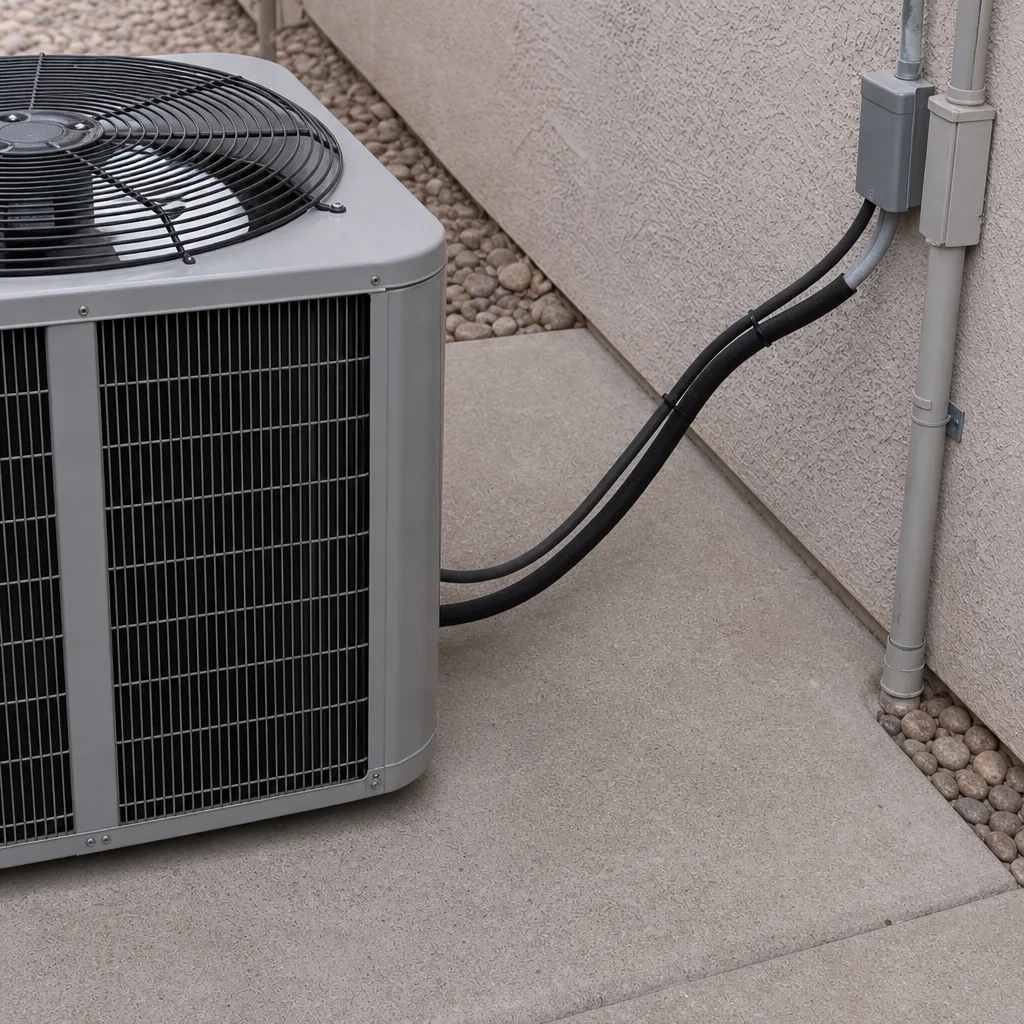
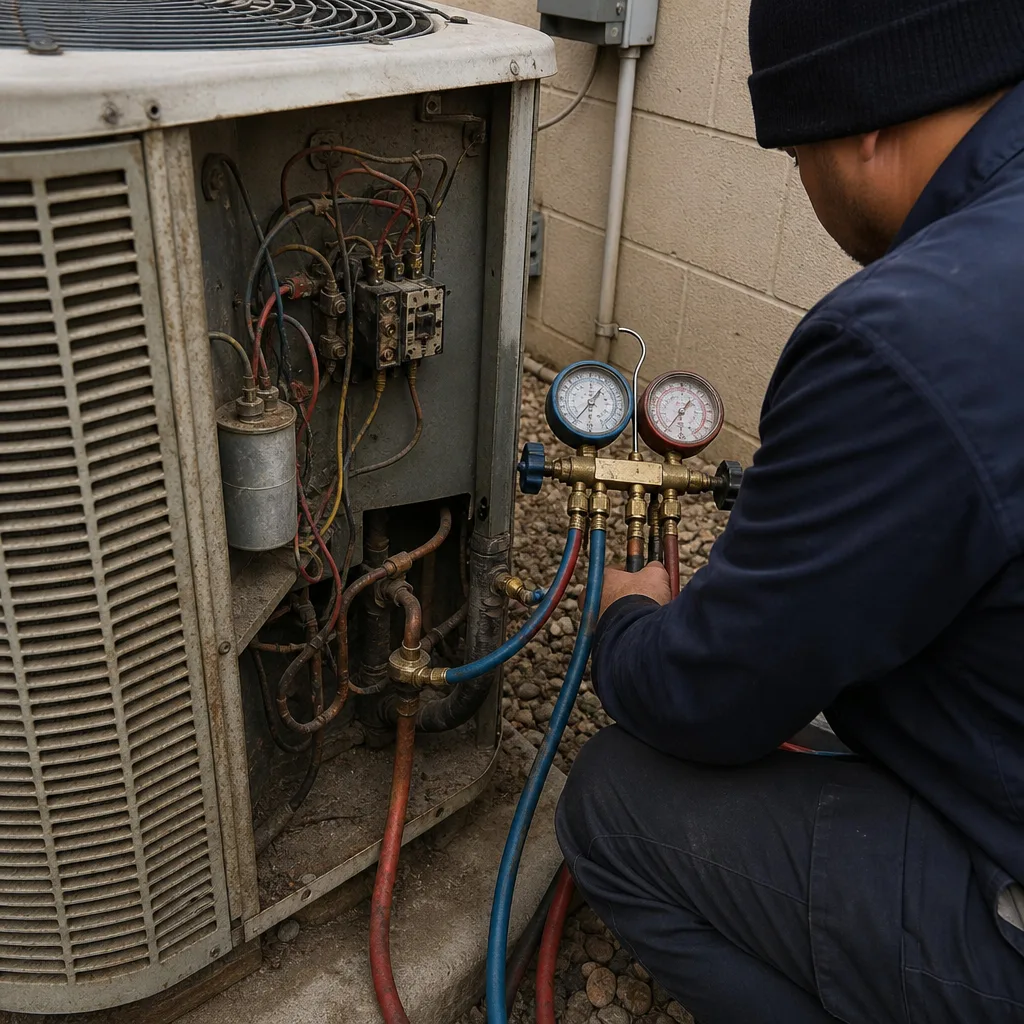
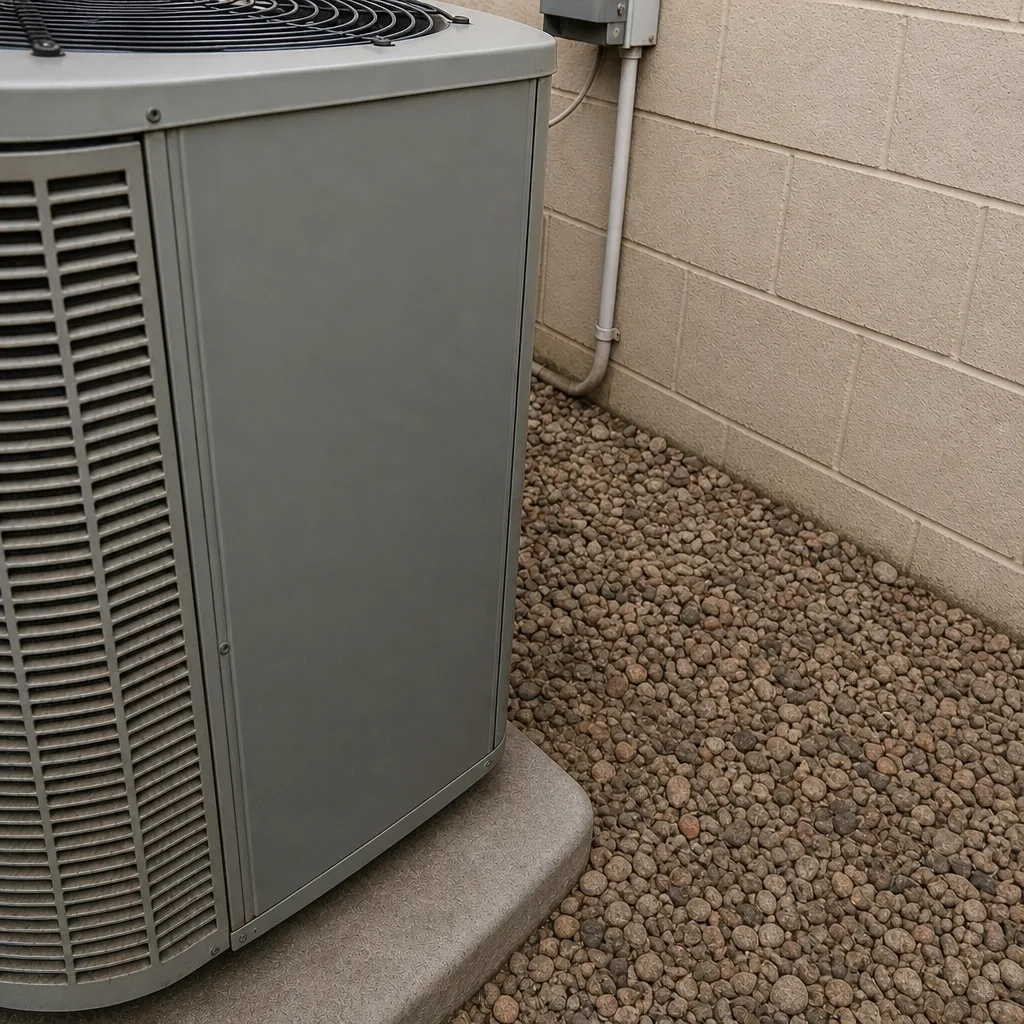
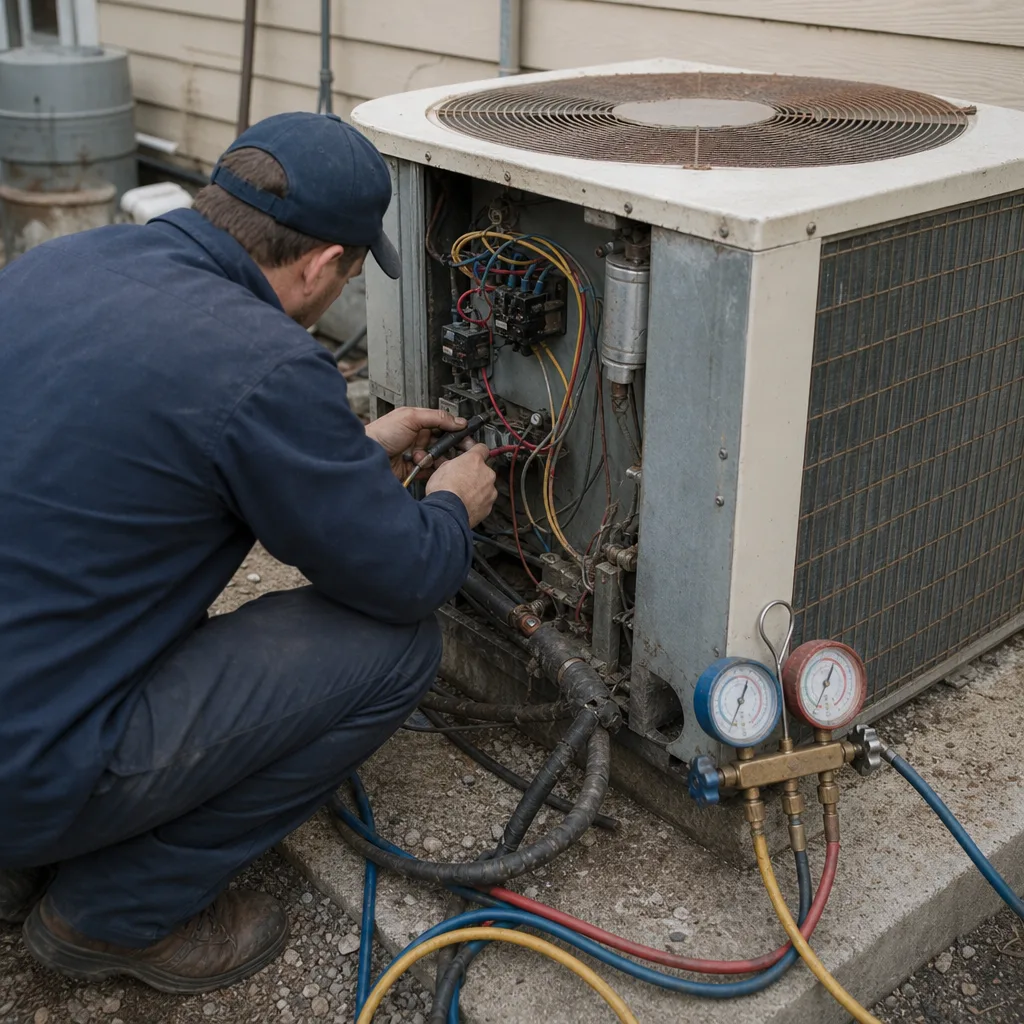
See the difference
 Before
 After
 Before
 After
 Before
 After
When to Call a Professional
Call us today if: the system is blowing warm air and you’ve already checked the thermostat and filter; the breaker trips twice in a row; you see frost on the copper line set; you hear grinding, screeching, or clicking from the outdoor unit; water is pooling near the indoor unit; or the system has been short-cycling for more than a day. Those symptoms are the ones that get worse fast and cheap to fix cheaply. Heating & Furnace in Winchester covers the cooling-season counterpart for when the weather turns.
Fireside Heating & Air Co. Winchester offers free estimates in Winchester – call (844) 783-5043. Our phones are answered by a live person around the clock, and the technician who shows up is background-checked, uniformed, and trained on every brand we service, from Trane to Lennox to Goodman to Rheem.
Frequently Asked Questions
Most common AC repairs in Winchester run between $180 and $650 depending on the part and the system. A capacitor replacement typically sits at the low end; a refrigerant leak repair or a blower motor replacement sits at the high end. Call (844) 783-5043 for an exact quote on your system; estimates are free, and our pricing is no-hassle upfront, so the price quoted is the price you pay.
Yes, in most cases we can. Our phones are answered by a live person 24 hours a day, including nights, weekends, and holidays, and we routinely run same-day calls during the cooling season. If your symptom is urgent, describe it when you call and we’ll tell you how soon we can get there.
If the outdoor unit is running and you’re still getting warm air, the two most likely causes are low refrigerant (check for frost on the copper line) or a compressor that’s failing to pump. Both need gauges to diagnose properly. Shut the system off at the thermostat and call (844) 783-5043 – running a system with low refrigerant can damage the compressor further.
The rule we use: if the repair costs more than 30 percent of a new system’s installed price, and the existing unit is more than 12 years old, replacement is usually the better math. If the unit is under 10 years old and the repair is a capacitor or a clogged drain, repair is the obvious answer. We’ll give you a straight read on both options and won’t push either one.
Monthly during cooling season in Winchester, or every other month if you have no pets and no construction dust nearby. Winchester’s spring dust and summer pollen load up filters faster than most homeowners expect, and a clogged filter is one of the most common causes of frozen coils and weak cooling we see.
Yes. Every repair is backed by our 90-Day Done Right Promise, in writing. If anything we fixed isn’t right within 90 days, we come back and make it right. No arguing, no paperwork. That’s the standard we hold ourselves to on every job, whether it’s a $180 capacitor or a full system replacement.
The Bottom Line
Most AC failures fall into six patterns, and the symptom you notice usually points to which one. Warm air plus frost on the line set means low refrigerant. A hum with no fan means a capacitor. Water on the floor means a clogged drain. Short-cycling means something is straining the compressor and needs attention soon. Learning to read those symptoms yourself is worth the effort: it saves you a diagnostic fee, it gets a technician pointed in the right direction faster, and it helps you avoid the misdiagnosis that turns a $200 repair into a $1,400 one. When in doubt, call. Our phones are answered by a live person any hour of the day, and our estimates are free in Winchester.
Call (844) 783-5043 for a free estimate on any repair or installation. We’ll be there when we say, quote a fair price, and stand behind the work in writing.
Written by the team at Fireside Heating & Air Co. Winchester.