
Last updated November 18, 2026
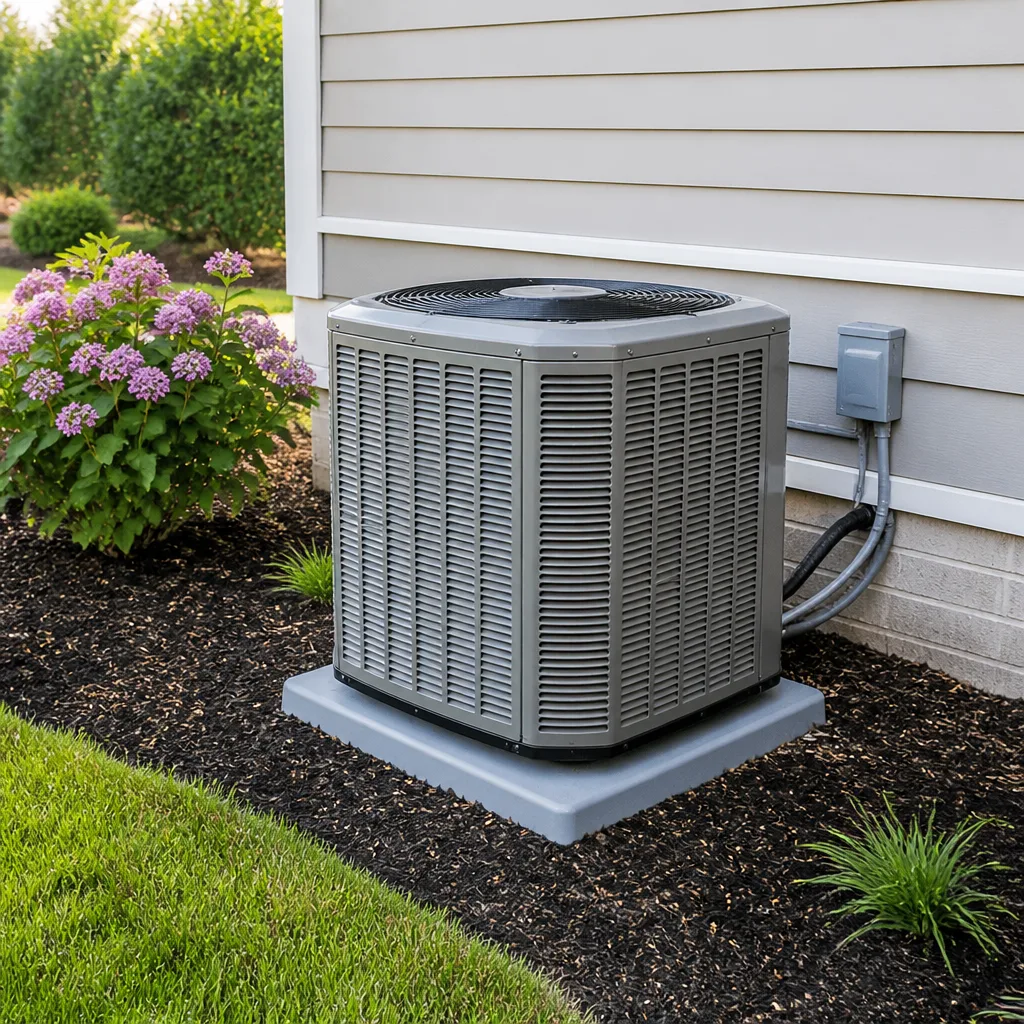 AC repair
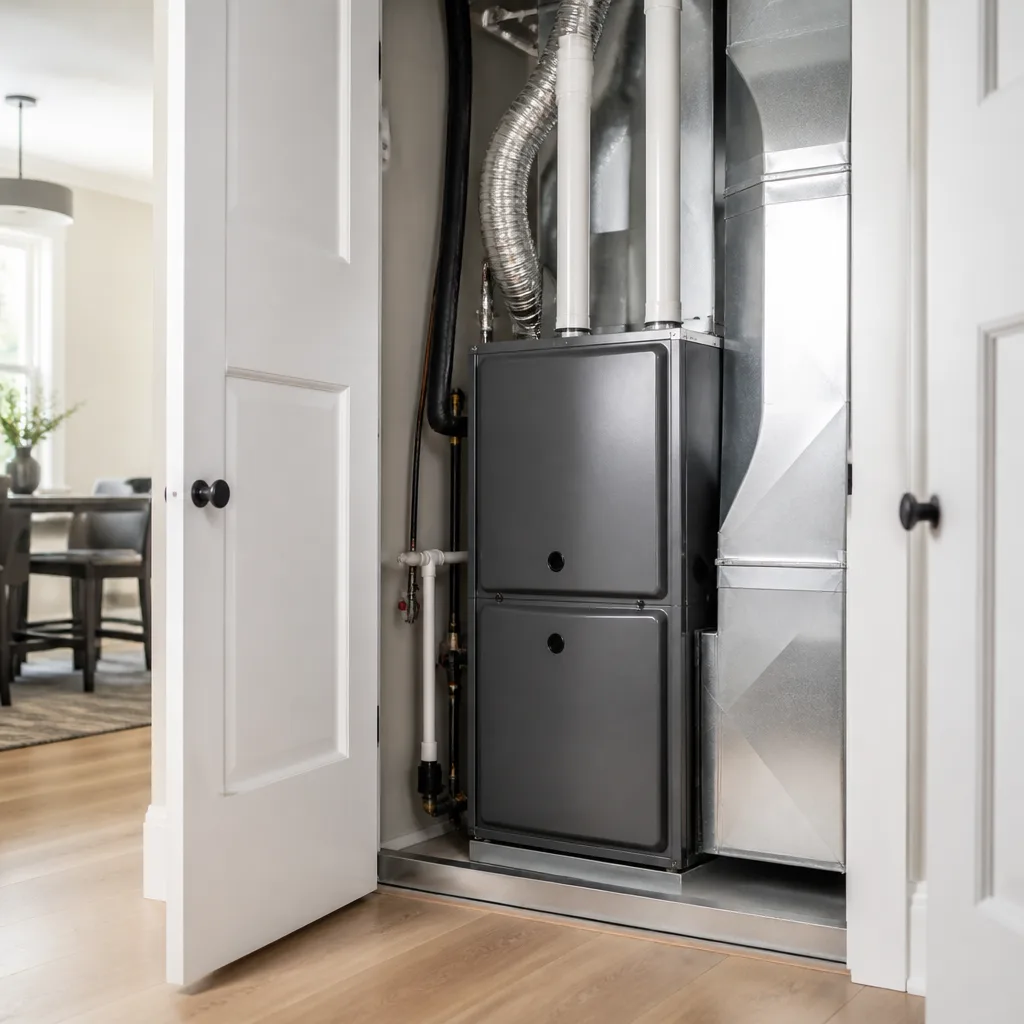 Furnace & heating
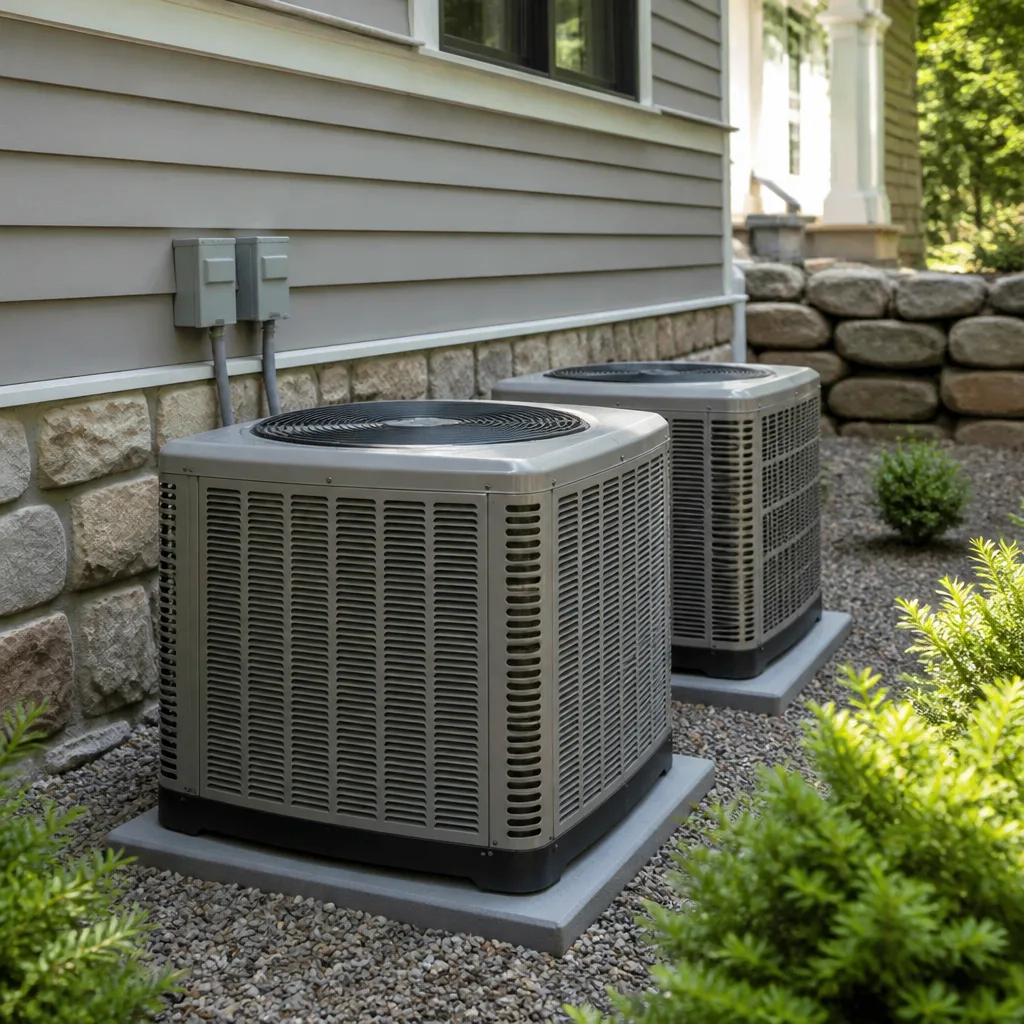 Heat pumps
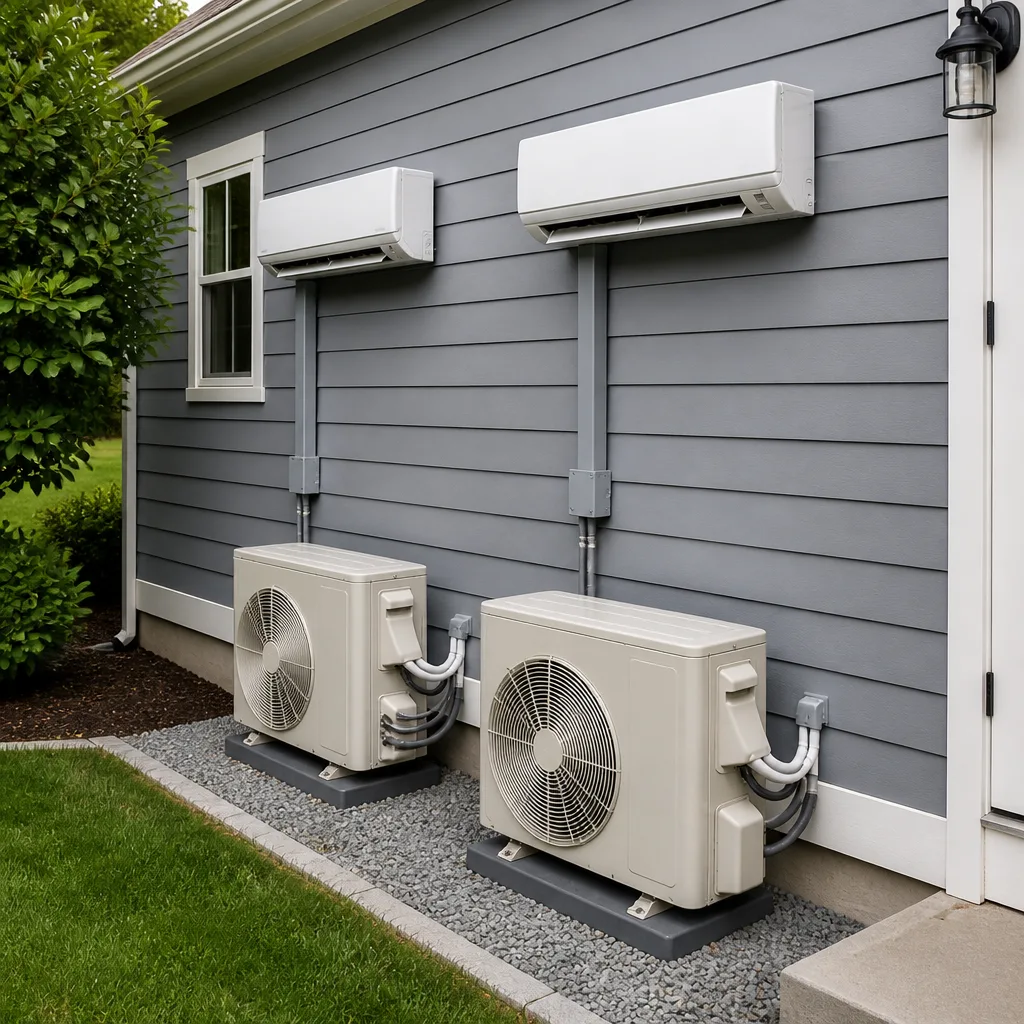 Ductless mini splits
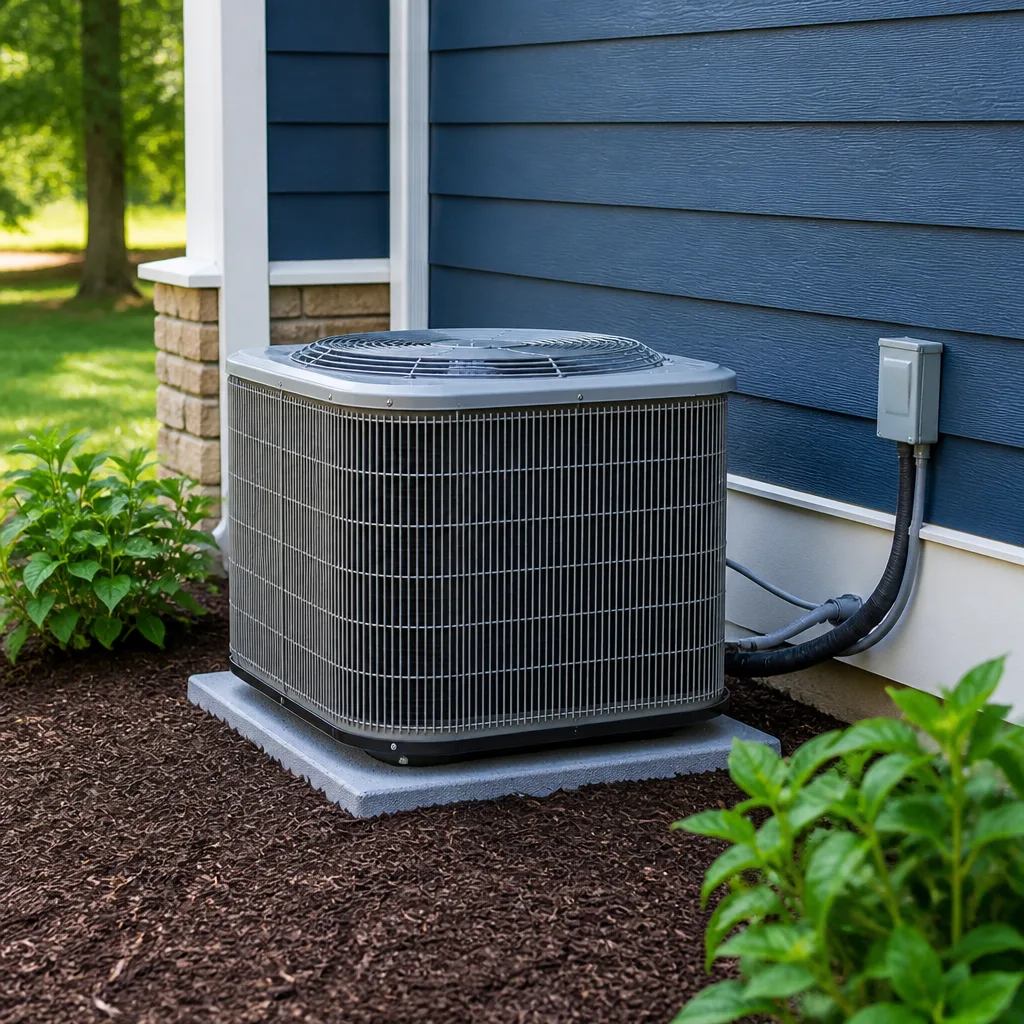 Carrier
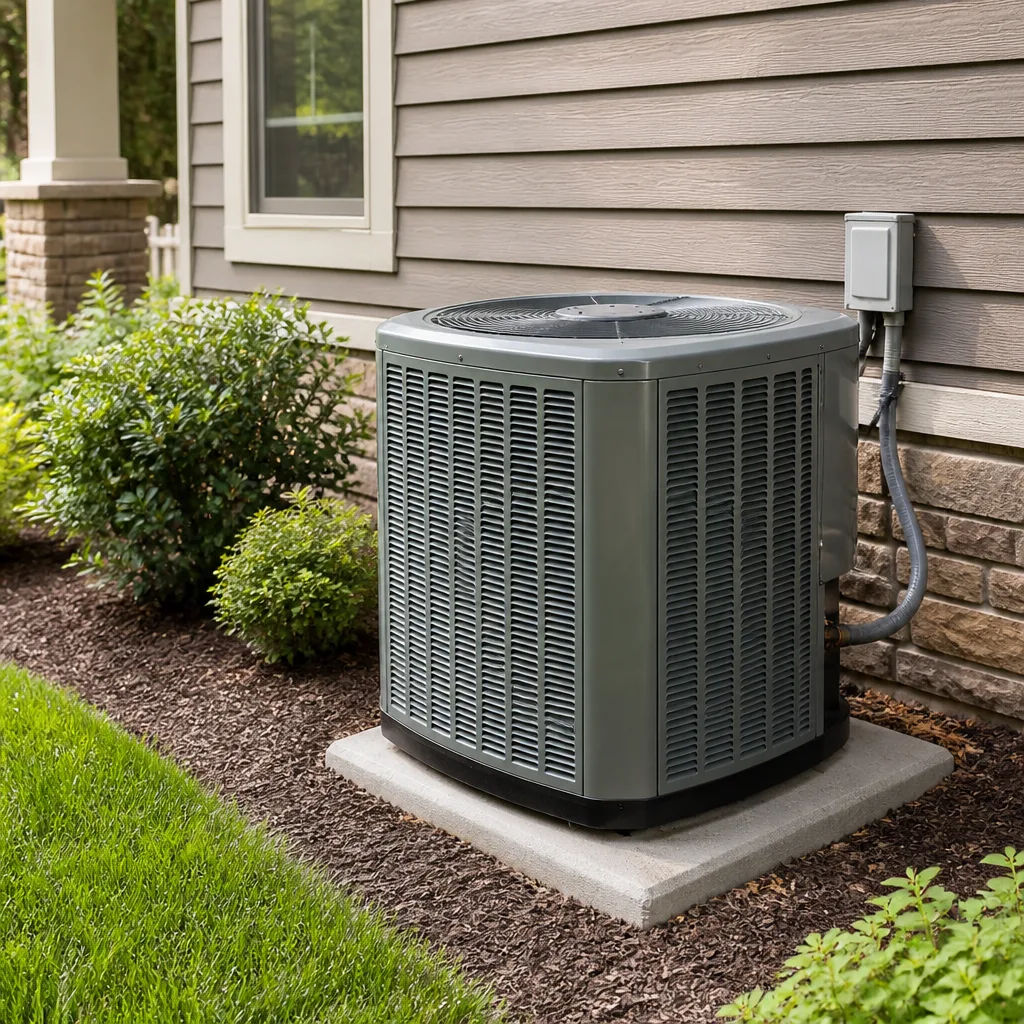 Trane
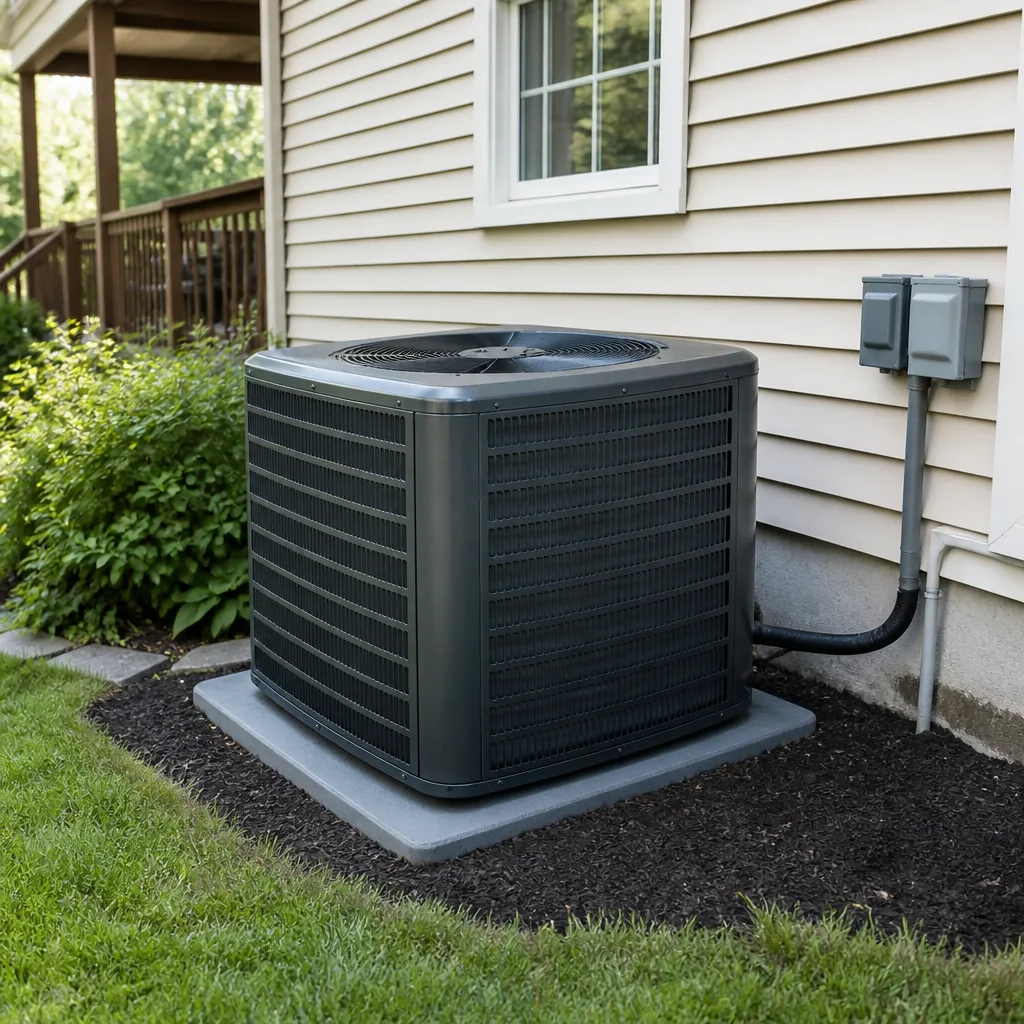 Goodman
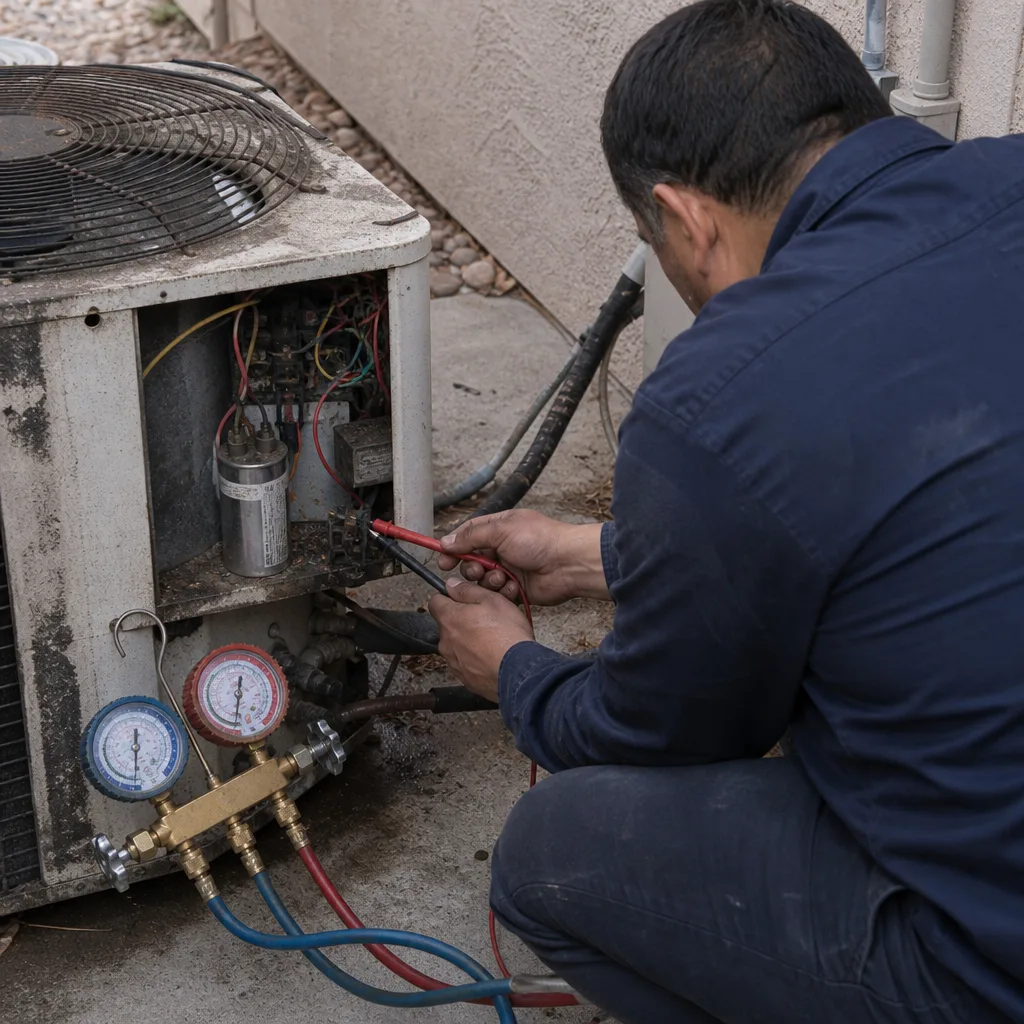
Seasonal tune-up and full diagnostic on your Carrier, Trane, or Goodman system - readings shown to you before any repair is proposed
Diagnosis first, numbers second - you approve the repair price before a single part goes in.
Get your free estimateAC Repair & Installation Warning Signs Every Homeowner Should Know
A faint burning smell when the AC first starts each season is not “just dust burning off.” It is one of three distinct warning signs, and each one points to a different failing component. Two of them are annoying. The third is a fire hazard, and the difference between them is a smell most homeowners never learn to read. In our experience across Winchester, the emergencies that cost the most are the ones that gave weeks of notice first. This guide catalogs those signals the way a technician reads them, so a $300 problem gets caught before it becomes a $3,000 one.
Quick Answer
The warning signs of an AC breakdown are changes in sound, smell, and run time: grinding or squealing noises, burning-plastic or burning-electrical odors, musty air, and a system that runs noticeably longer to hit the same temperature. Three signs mean shut the system off now – a burning electrical smell, a hissing or bubbling sound from the refrigerant lines, and repeated breaker trips. Everything else is a schedule-a-visit signal, not a wait-and-see signal.
Styles & brands we work with
- AC repair
- Furnace & heating
- Heat pumps
- Ductless mini splits
- Carrier
- Trane
- Goodman
Table of Contents
- What the Sounds Are Telling You
- The Smell Taxonomy: Four Odors, Four Urgency Levels
- Why a System That “Works Fine” May Already Be Failing
- The Failure Progression: How a Small Problem Becomes a Dead Compressor
- How to Keep a Simple Log That Pinpoints Intermittent Failures
- The Three Signs That Mean Shut It Off Now
- Installation Warning Signs: What a Bad Install Looks Like Years Later
- Common Mistakes to Avoid
- When to Call a Professional
- Frequently Asked Questions
What the Sounds Are Telling You
An AC that is running correctly makes two sounds: the fan pushing air and the compressor humming outside. Anything else is a component talking. Once you learn the vocabulary, you can describe a problem to a technician over the phone with enough accuracy that they arrive with the right part on the first trip.
- Grinding or metal-on-metal. Usually a failing blower motor bearing or a worn compressor. In a Winchester attic unit running through our 105-degree July afternoons, bearings wear faster than they do in cooler climates because the motor runs almost continuously June through September. Grinding rarely fixes itself and tends to worsen within days.
- Clicking that repeats. A single click at startup is normal – that is the contactor engaging. Clicking that repeats every few minutes without the compressor staying on points to a failing capacitor, a stuck contactor, or a pressure switch cutting out on safety. This is the sound of a system trying and failing to start.
- Hissing or bubbling near the outdoor unit. That is refrigerant. Hissing means gas escaping under pressure; bubbling means liquid refrigerant boiling off at a leak. Either way, your system is losing charge, and running it low damages the compressor. Shut it off and call.
- Squealing or screeching. A slipping blower belt on older units, or a dry bearing in the indoor fan motor. Squealing often precedes a full seizure, which can leave you without cooling in the middle of a heat advisory.
- Rattling at the outdoor unit. Loose panels, a failing fan blade, or debris. Occasionally it is a pebble from a spring windstorm rattling inside the cage. Cheap to fix if it is the panel; not cheap if the fan blade has been unbalanced for a month.
Write down the sound, where it comes from (inside the house or outside), and when it happens (at startup, constantly, or only on hot afternoons). That three-part description is worth more to a technician than any guess about what is wrong.
The Smell Taxonomy: Four Odors, Four Urgency Levels
This is the section we wish every homeowner in Winchester would read before summer. Smells are not all the same, and the difference matters. Here is how we read them:
Burning plastic
A sharp, acrid smell like hot wire insulation. Usually a failing blower motor overheating its windings, or a wire connector that has begun to melt. Urgency: moderate to high. Shut the system off and get it looked at the same day. It will not fix itself, and it can progress to the next category.
Burning electrical / fishy odor
This one is different from the plastic smell and harder to describe – metallic, fishy, or like hot dust mixed with something sharp. It points to a failing electrical component: a contactor, a capacitor, or a breaker connection overheating. Urgency: shut it off now. This is the fire-hazard smell. Do not run the system while you wait for a technician, and do not reset the breaker and hope.
Musty or dirty-sock odor
That is biological growth in the evaporator coil, the drain pan, or the ductwork. Southern Nevada’s monsoon humidity in late summer feeds it, and a clogged condensate drain makes it worse. Urgency: low, but don’t ignore it. It is not an immediate safety issue, but it means your system is circulating spores through every room, and the coil is losing efficiency as the growth insulates it.
Chemical / sweet smell
Refrigerant has a faint, sweetish chemical odor that most people only notice at a significant leak. Urgency: shut it off and call. Refrigerant displaces oxygen in a closed space, and the leak will only grow. Do not stand in the mechanical closet sniffing for the source – ventilate the area and call from outside the room.
One more: a “dusty” smell on the first cool morning of fall is usually normal, and it comes from the furnace side, not the AC. A dusty smell that persists past a day or two is a sign of a filter that needs changing or a blower that has been pulling dust through a gap.
Why a System That “Works Fine” May Already Be Failing
The most expensive failures we see in Winchester are not the dramatic ones. They are the quiet ones – systems that still cool the house, still hit the setpoint, and just run longer than they used to. Homeowners call it “getting older.” A technician reads it as a failure in progress.
Here is the pattern. A dirty condenser coil or a slightly undercharged system makes the compressor work harder to reject heat. On a 108-degree afternoon in the Las Vegas Valley, the compressor runs 100% of the time instead of 60%. That extra run time raises head pressure, which stresses every joint and seal in the refrigerant circuit. Within a season or two, a joint leaks, the charge drops further, the compressor runs hotter, and eventually the thermal overload trips – often in the middle of a July weekend.
What to watch for:
- Run time. Note how long the system runs to drop the house from 80 to 76 on a normal afternoon. If that time grows week over week, the system is losing capacity.
- Setpoint creep. If you used to hold 74 and now you are comfortable at 76, the system is not keeping up as well as it used to.
- Airflow. Feel the supply registers. A noticeable drop in airflow can mean a dirty filter, a failing blower, or a duct that has come apart in the attic.
- Outdoor unit behavior. A correctly running condenser shuts off periodically. One that runs continuously all afternoon, every afternoon, is overworked.
That last one is the tell. If our technicians can catch the overworked season, the fix is usually a coil cleaning and a charge check. Wait two seasons and the fix is a compressor. That is the $300-versus-$3,000 gap in one paragraph.
The Failure Progression: How a Small Problem Becomes a Dead Compressor
AC failures don’t jump from fine to dead. They step. Understanding the steps helps you decide how urgently to act.
- Efficiency loss (weeks to months). Dirty coil, dirty filter, low charge. No symptoms beyond slightly longer run times. The system is quietly working harder.
- Audible and behavioral warning signs (days to weeks). Grinding, clicking, squealing, or a system that can’t hold setpoint. This is where most problems are still cheap to fix.
- Intermittent shutdowns (days). The system trips a safety or the breaker, resets, and runs again. Each trip is a warning shot. Continuing to reset a breaker that trips is how people turn a mechanical problem into an electrical fire.
- Hard failure (hours). Compressor locks up, blower seizes, or the system shorts and stops. Now you are in emergency territory, and on a hot Winchester day, that means calling around for whoever can come today.
- Collateral damage (immediate). A seized compressor that ran on a low charge, or a blower motor that took the control board with it. The original problem is now three problems, and the bill reflects it.
The gap between step 1 and step 2 is where a scheduled service visit pays for itself several times over. The gap between step 3 and step 4 is where homeowners spend the most money without meaning to.
How to Keep a Simple Log That Pinpoints Intermittent Failures
The hardest problems to diagnose are the ones that don’t show up when a technician is standing there. An AC that squeals at 3 p.m. on a 112-degree day but runs fine at 9 a.m. when the tech arrives is not a mystery – it’s just missing data. A log fixes that.
You don’t need an app. A notepad on the fridge works, and a phone note works just as well. The point is to record five things every time you notice something:
- Date and time. Intermittent failures often correlate with outdoor temperature. Pattern first.
- Outdoor temperature. If the symptom only shows up above 105, that narrows the cause considerably.
- What you heard, saw, or smelled. Use plain words – “clicking from the outside unit,” “smells like hot plastic,” “airflow weak in the back bedroom.”
- What the system was doing. Just started? Running 45 minutes? Cycling on and off every few minutes?
- What happened next. Did it stop? Did you reset the breaker? Did it come back on its own?
Bring that log to the service call. In our experience, a homeowner who has tracked two weeks of symptoms gets an accurate diagnosis in one visit instead of two or three. For the intermittent failures that hide during a routine tune-up, the log is often the only evidence of what the system does under load.
The Three Signs That Mean Shut It Off Now
Most warning signs mean “call this week.” Three of them mean “call now and don’t run it in the meantime.” Every one of these has a specific danger behind it.
- A burning electrical or fishy smell. That is a failing electrical component inside a closed metal cabinet. Continue to run it and you risk a fire inside the air handler. Shut off the thermostat, and if the smell persists or you see smoke, cut the breaker.
- Repeated breaker trips. A breaker that trips is doing its job – it’s stopping a fault. Resetting it without finding the fault is how a small short becomes a fire. One trip is worth a call. Two trips is worth a call from outside the house before you reset it again.
- Hissing, bubbling, or an oil residue around the refrigerant lines. That is a refrigerant leak under pressure, and the system is running on a declining charge. Every minute of runtime on a low charge damages the compressor. Refrigerant is also a suffocant in a closed space. Shut the system off, open a window, and call.
For all three: shut off the thermostat, and if the system is clearly faulty, turn off the breaker. Do not open panels, do not poke at components, and do not attempt to “tighten” anything you can see. Refrigerant under pressure and live electrical components inside an air handler are not homeowner territory.
Installation Warning Signs: What a Bad Install Looks Like Years Later
Not every warning sign shows up in the first year. Some of the worst ones we see in Winchester were installed years ago and have been quietly failing ever since.
- A system that was never load-calculated. If your AC was sized by “we’ll put in a 3-ton, that’s what was here,” it may be oversized. An oversized unit cools fast and then shuts off before it has time to pull humidity out of the air. The result is a house that feels clammy even when the thermostat says 74. A proper Manual J load calculation considers square footage, window orientation, insulation, and the fact that west-facing rooms in a Valley summer gain enormous heat in the late afternoon.
- An undersized return duct. A lot of older homes in Winchester have a single return that can’t move enough air for the equipment that was installed. The symptom is a whistling return, weak airflow at the far registers, and a blower that runs hot. The fix is often a duct change, not a new system.
- A mismatched coil and condenser. When the coil and the condenser aren’t from a matched set, the system loses efficiency and the compressor works harder. If you ever see a system where the outdoor unit and the indoor coil are different brands by design, ask why.
- A lazy install of the pad or crawl space. Outdoor units sitting on grade that isn’t level will vibrate for years, slowly loosening panels and stressing the compressor mounts. In our desert wind country, a unit that has settled into soft ground after a monsoon can be off level enough to matter.
A proper install includes a load calculation, a matched system, a static pressure check on the ductwork, and a commissioning report that shows the actual temperatures and pressures. If a contractor can’t produce a written price and a documented set of measurements, that is an installation warning sign all by itself.
Common Mistakes to Avoid
- Resetting the breaker without finding out why it tripped. A breaker that trips is protecting your house from a fault. Resetting and moving on turns a repair into a fire risk.
- Assuming a burning smell is “just dust.” Dust burns off in a minute or two at the first startup of the season. A smell that persists, returns every time, or smells metallic or fishy is a component, not dust.
- Running the system on a low charge. Refrigerant is not a consumable that “gets used up.” Low refrigerant means a leak. Running it low burns out the compressor, which is the most expensive part of the system.
- Skipping the filter for “one more week.” In a dusty Winchester summer with windows open during a monsoon, a filter can clog in half the time it does in a milder climate. A clogged filter is the easiest way to overwork a blower.
- Hiring the cheapest bid on an installation. A cut-rate install usually cuts the load calculation, the ductwork, or the commissioning. You won’t notice until year three, when the system is inefficient, loud, and has already had its first repair.
- Ignoring an intermittent symptom because the technician couldn’t reproduce it. Intermittent problems are real. Keep a log and bring it in. A symptom that shows up under load, at temperature, is a symptom you can diagnose with the right data.
- Replacing a system when a repair would do, or repairing a system that is past its useful life. Both directions cost money. The honest conversation is about age, refrigerant type, and how many more years the rest of the system has – not about what the tech sells that day. Our technicians are not paid on what they sell, so that conversation stays straight.
When to Call a Professional
Call when you hear a sound that wasn’t there before, when a smell returns after the first minute of startup, when the system runs noticeably longer than it did last summer, or when the breaker trips more than once. Call before you reset the breaker a third time, before you run the system on a suspected leak, and before you decide “we’ll see how it does this weekend” – because weekends in Winchester summer have a way of turning into emergencies.
If it’s after hours, that’s fine. We answer the phone with a live person 24 hours a day, seven days a week, including the 2 a.m. no-cooling call. Estimates are free, pricing is upfront, and the price quoted is the price paid. Fireside Heating & Air Co. Winchester offers free estimates in Winchester – call (844) 783-5043. Every job is backed by our 90-Day Done Right Promise: if it’s not done right, we make it right, in writing, no arguing.
Frequently Asked Questions
The earliest warning signs are changes in run time, airflow, and sound: the system runs noticeably longer to hit the same temperature, airflow from the registers weakens, or you hear clicking, grinding, or squealing that wasn’t there before. Most of these appear weeks before a hard failure. Catching them at that stage is the difference between a small repair and a compressor replacement.
A brief dusty smell on the first startup of the season is normal. A burning plastic, metallic, or fishy smell is not, and it means a failing electrical component or an overheating motor. Shut the system off and call. Call (844) 783-5043 for a same-day diagnosis – estimates are free.
Longer run times usually mean the system is losing capacity – a dirty condenser coil, a filter that needs changing, a refrigerant leak, or a failing blower. In a Winchester summer, a unit that runs continuously all afternoon is typically working far harder than it should be. That overwork is what stresses the compressor toward failure. Have it checked before the summer peak.
No. A tripping breaker is protecting your home from a fault, and resetting it without finding the cause can turn a repair into a fire risk. One trip is worth a service call. Two trips is worth a call before you reset it again. Our technicians can trace the fault and give you a straight answer on what it will take to fix it.
Yes. A symptom that only appears under load or at high outdoor temperature is one of the most common early failure signs – a weak capacitor, an overheating motor, or a compressor starting to struggle. It won’t show up during a mild-weather service visit unless you can describe when it happens. A simple log of dates, temperatures, and symptoms lets a technician find it in one visit.
Yes. Our technicians are trained to service nine major residential brands, including Carrier, Trane, Lennox, Goodman, Rheem, York, Daikin, Bryant, and American Standard. That means we can diagnose and often repair your existing system in a single visit regardless of who installed it. Call (844) 783-5043 – estimates are free, and we offer a free second opinion on any written estimate.
The Bottom Line
Most AC emergencies announce themselves for weeks – through sounds, smells, and run times that have specific meanings once you know how to read them. A grinding bearing, a fishy electrical smell, a system that runs longer every week: each one is a step on a failure progression, and each step is cheaper than the one after it. The three shut-it-off-now signs are a burning electrical smell, repeated breaker trips, and refrigerant hissing. Learn those, keep a simple log, and you’ll catch the small problems in Winchester before they turn into the expensive ones. That’s what Done Right looks like from the homeowner’s side.
When something does need attention, call AC Repair & Installation in Winchester at (844) 783-5043. We answer with a live person, give you a straight price before we start, and stand behind it in writing. You can also reach our team through the Fireside Heating & Air Co. Winchester home page, or explore our related services for heating and furnace in Winchester and heat pump and mini split systems in Winchester.
Written by the team at Fireside Heating & Air Co. Winchester.
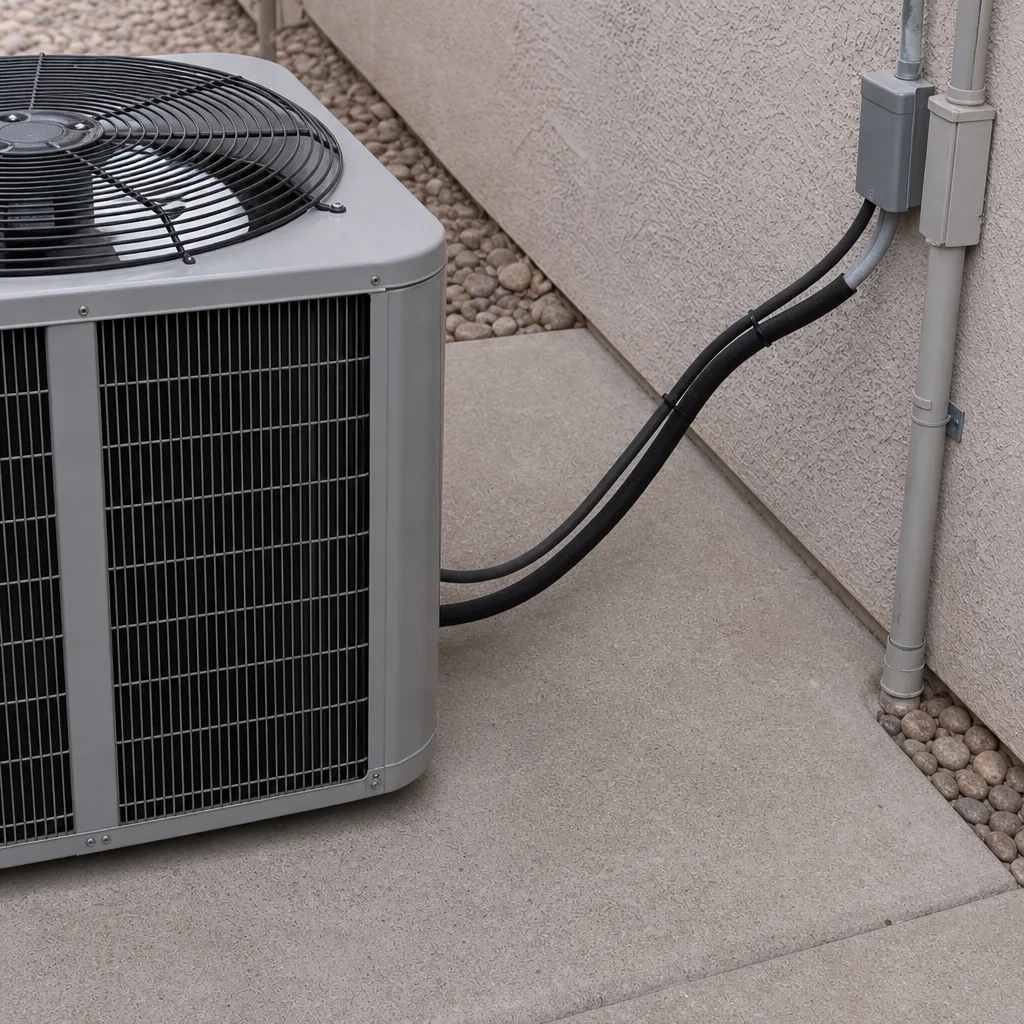
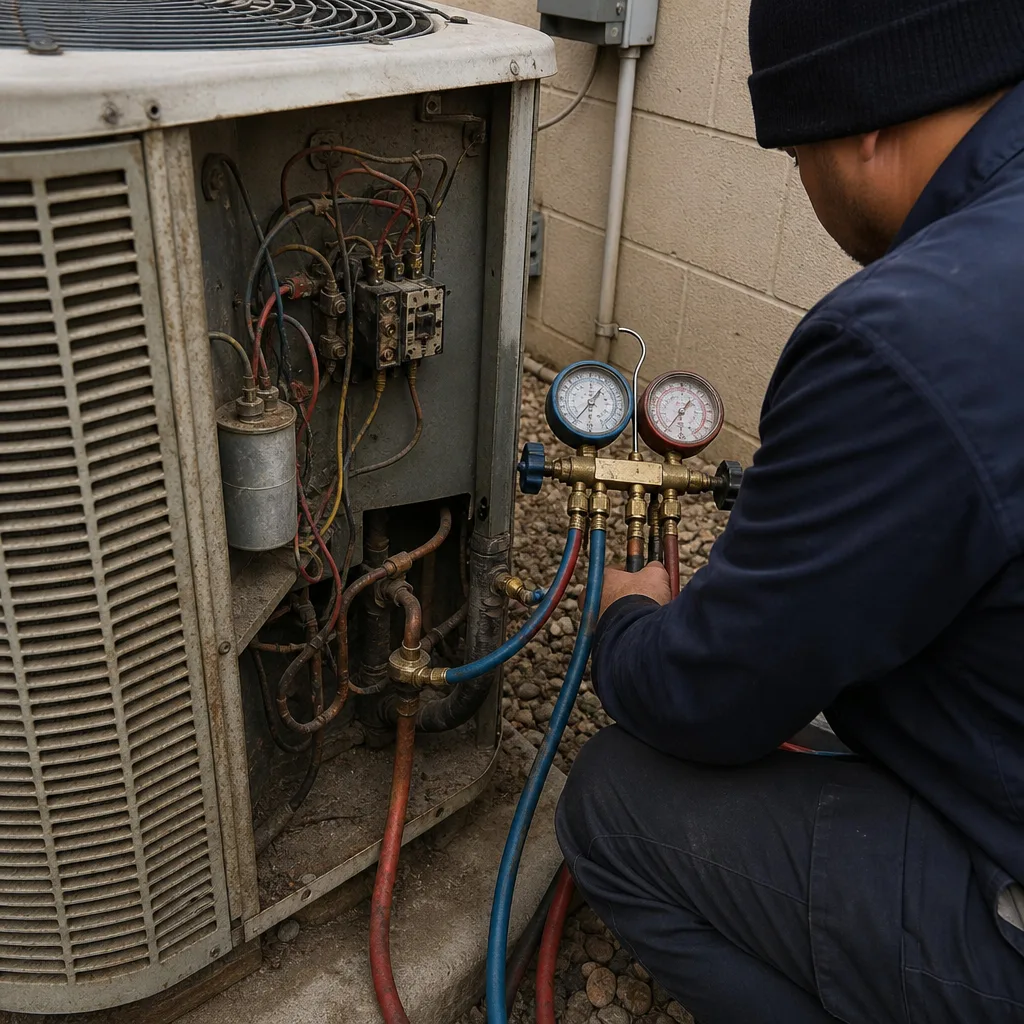
See the difference
 Before
 After
 Before
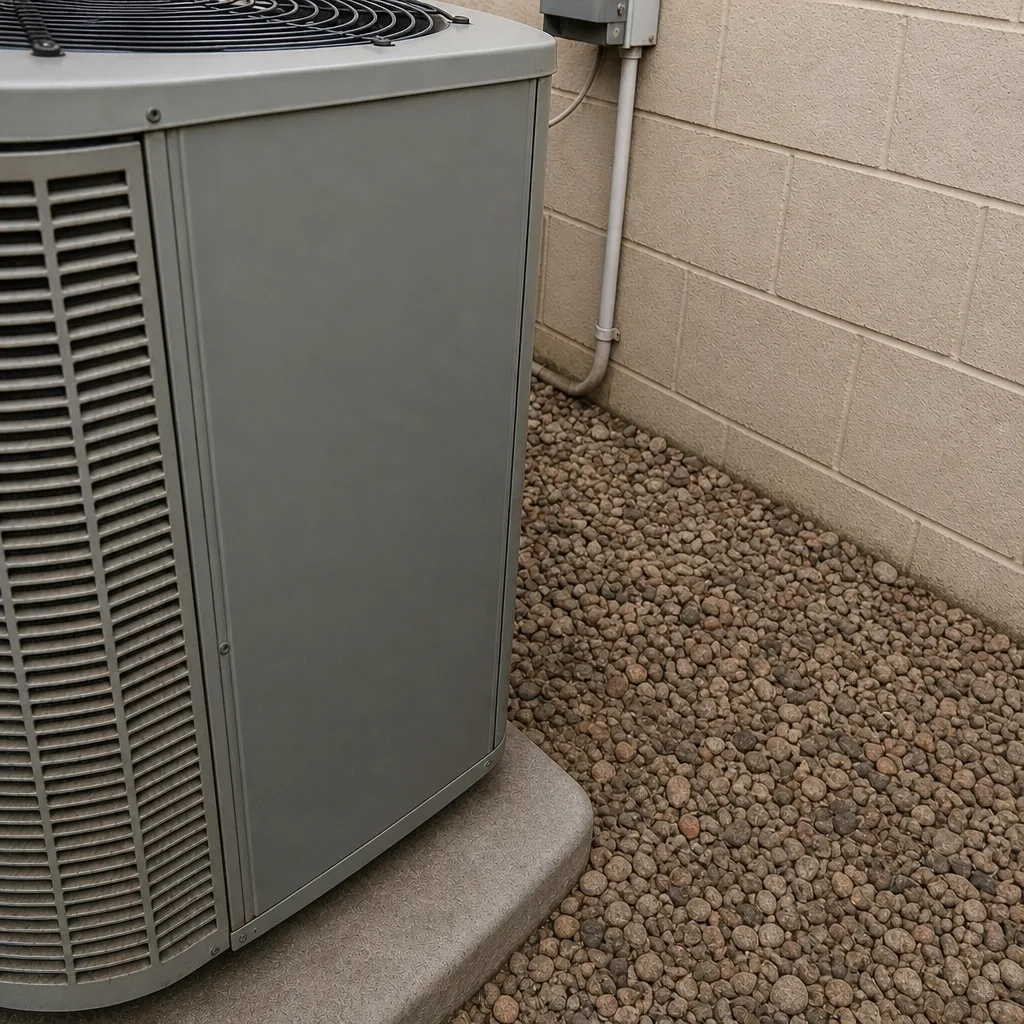 After
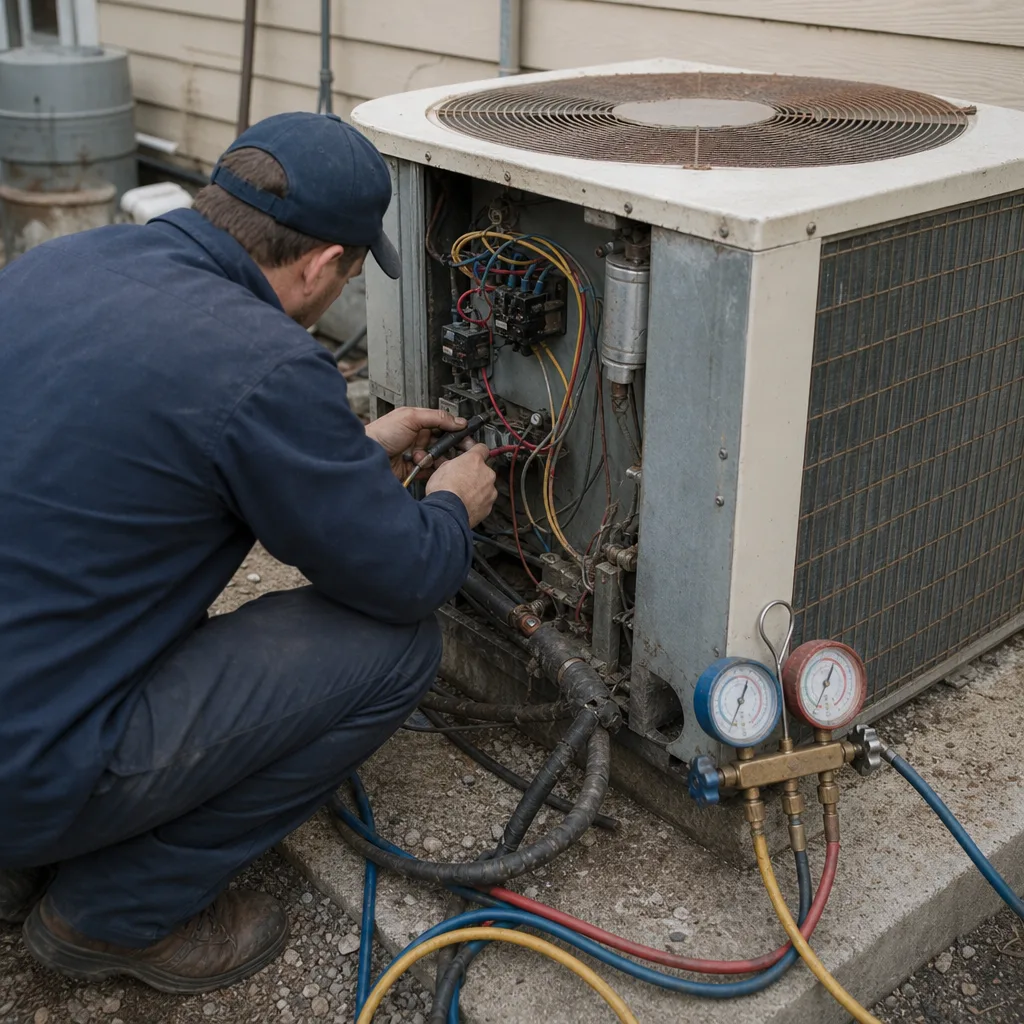 Before
 After