
Last updated November 18, 2026
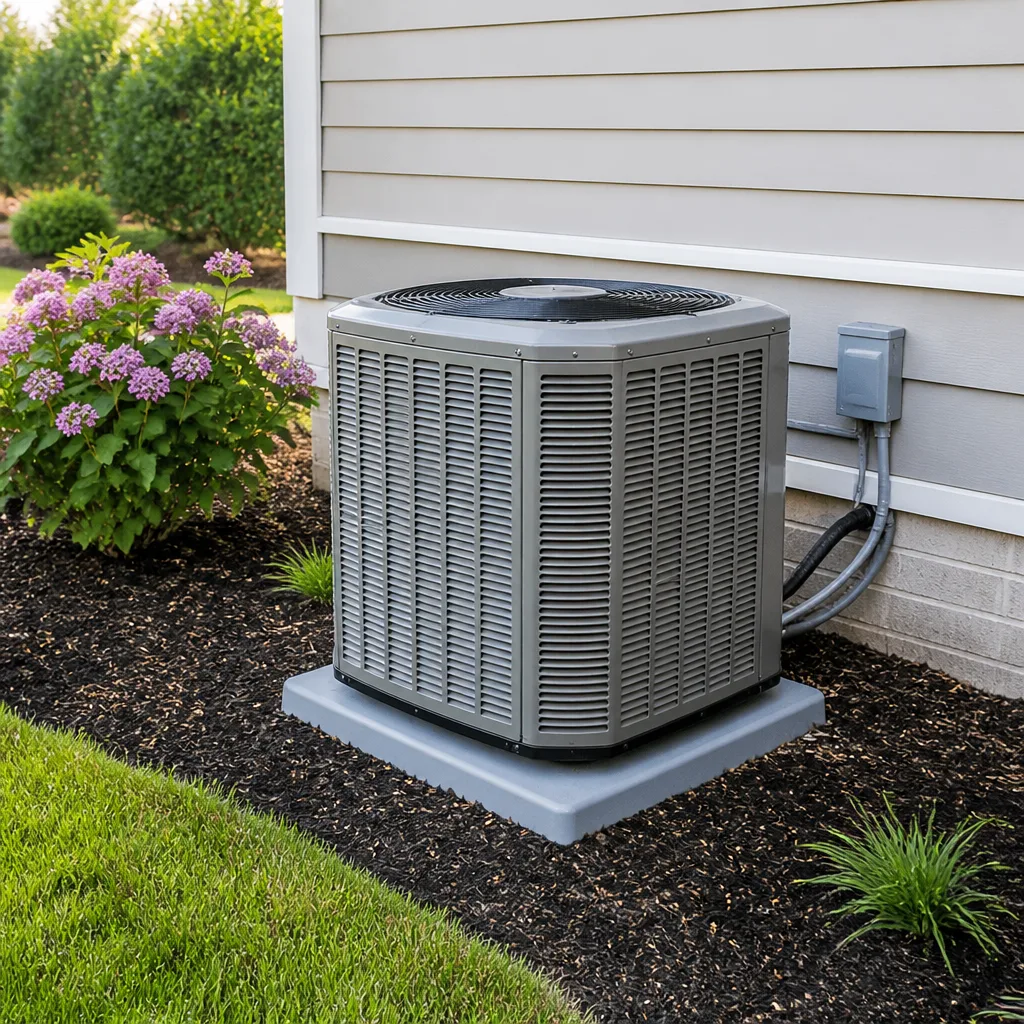 AC repair
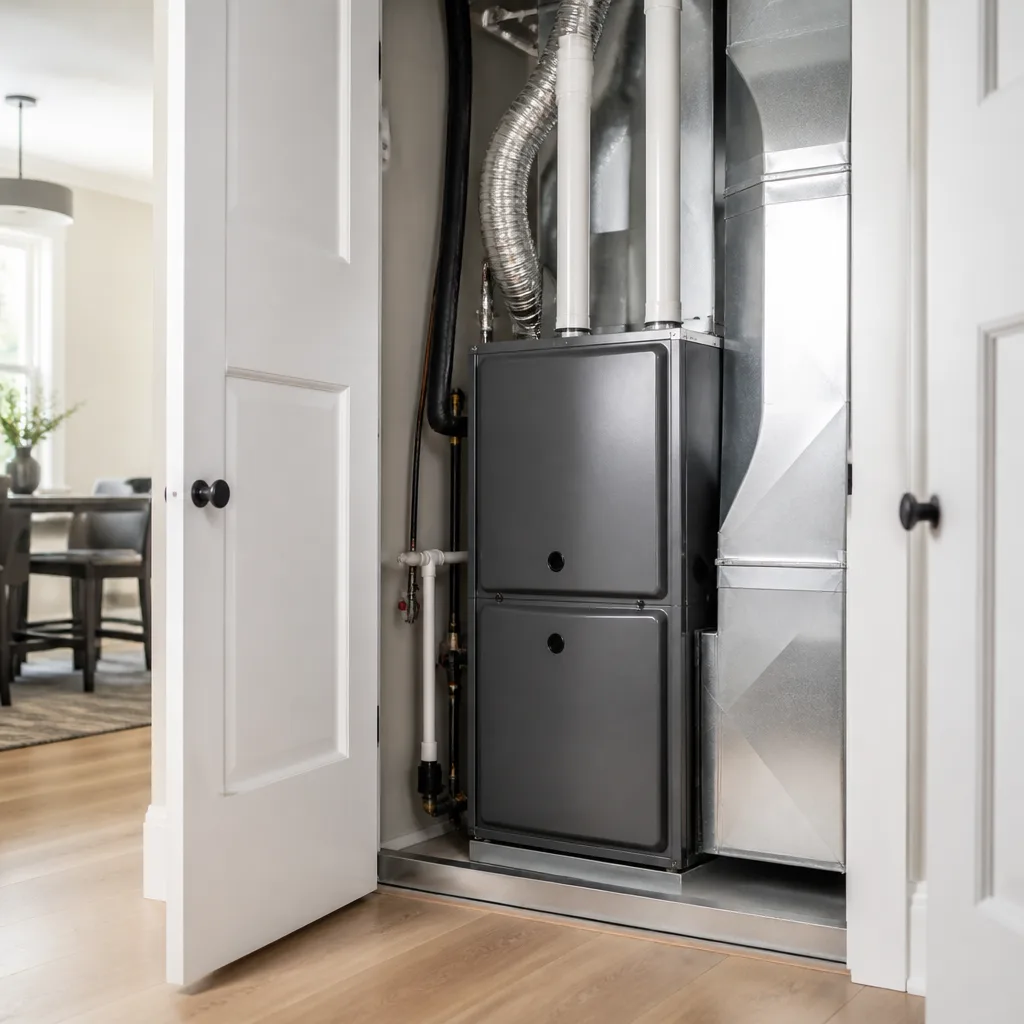 Furnace & heating
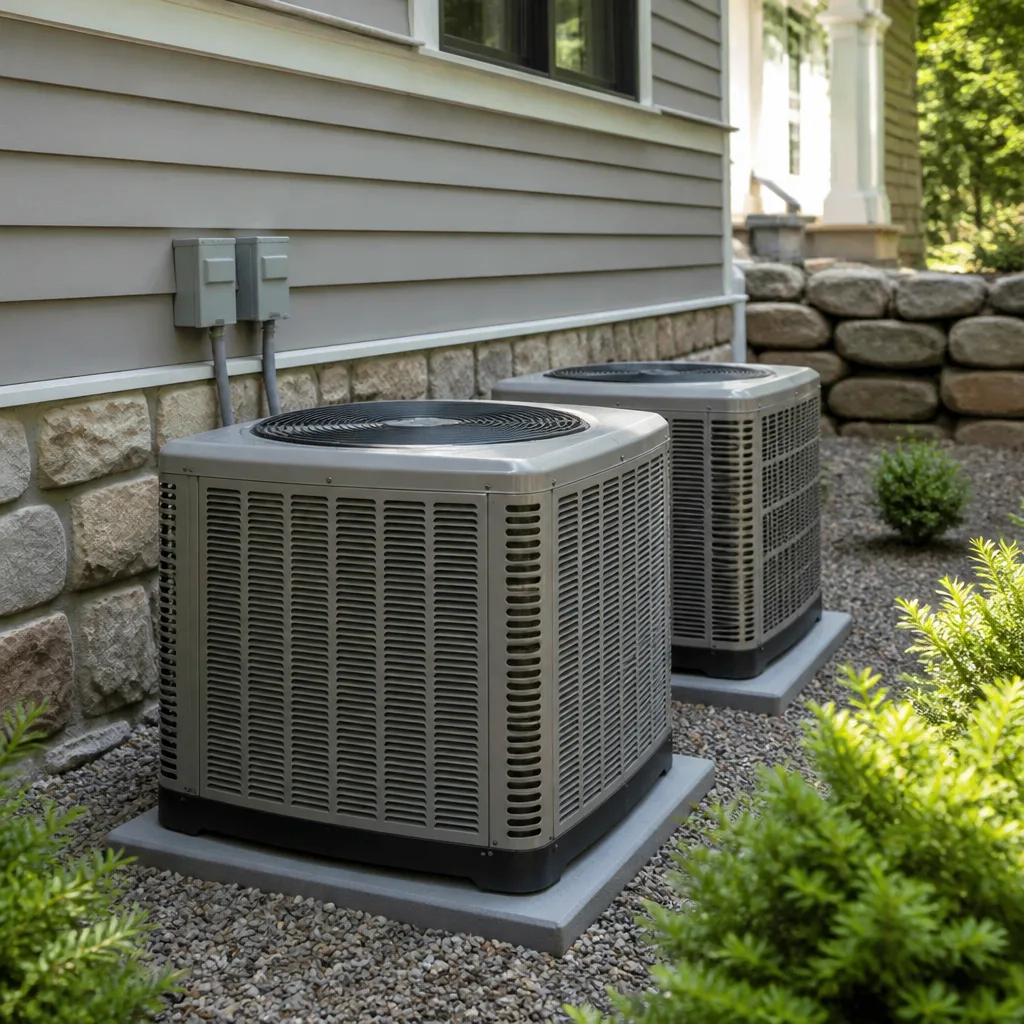 Heat pumps
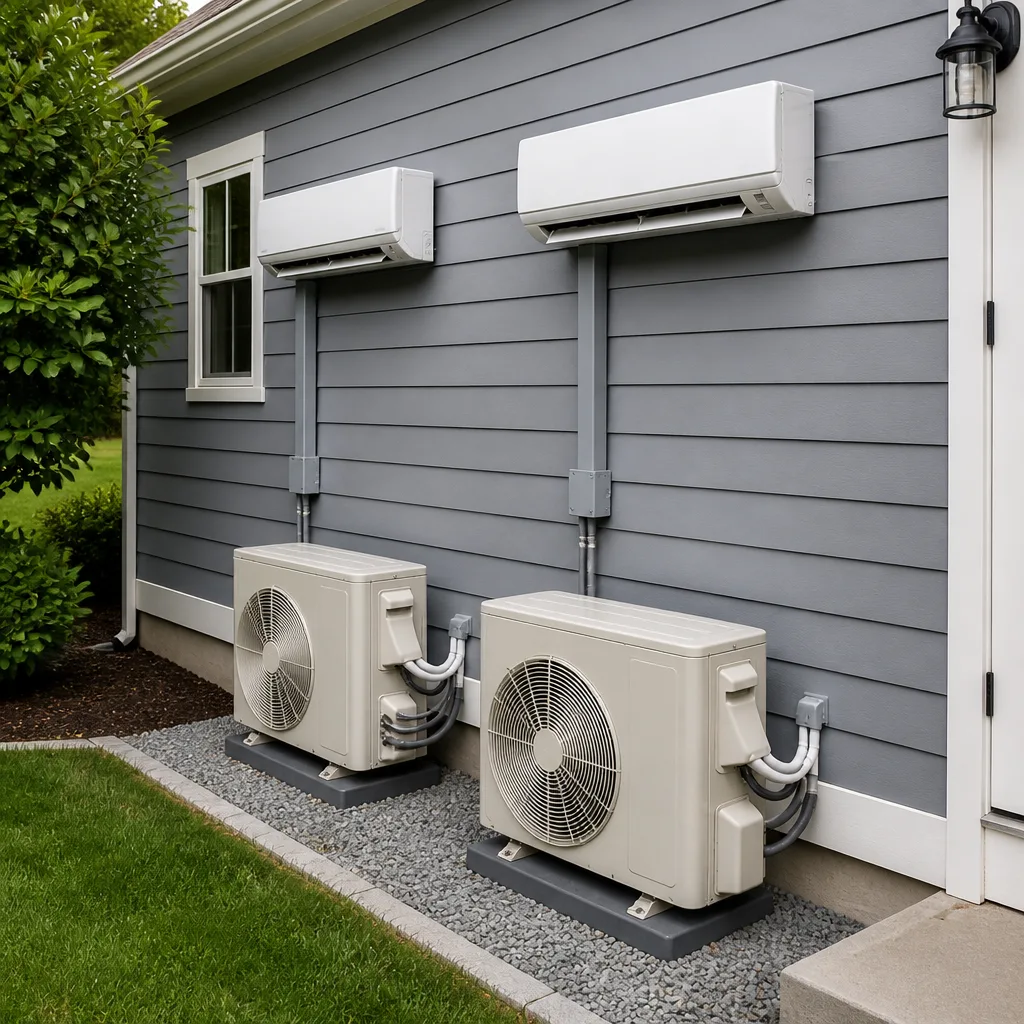 Ductless mini splits
 Carrier
 Trane
 Goodman
Seasonal tune-up and full diagnostic on your Carrier, Trane, or Goodman system - readings shown to you before any repair is proposed
Diagnosis first, numbers second - you approve the repair price before a single part goes in.
Get your free estimateAC Repair & Installation Maintenance Checklist for Winchester Homeowners
Most Winchester AC systems that die before their tenth birthday don’t fail because of the compressor, the refrigerant charge, or even a clogged filter. They fail because of a return air duct that was undersized or leaking from the day the house was framed. We’ve pulled enough dead condensers out of garages in Winchester to know the pattern, and it almost never matches the twelve-point checklist the marketing department at the big franchise publishes. This guide is built backward from the failures we actually diagnose: what gets skipped, why it gets skipped, and what that skipping costs you in real dollars over the life of your system.
Quick Answer
A proper AC maintenance checklist for a Winchester home covers far more than a filter swap and a refrigerant top-off. The items that matter most are return air duct sizing and sealing, condensate drain management for monsoon-season humidity, and proactive inspection of capacitors and contactors before they strand you in July. Skipping those three is the single most common reason Winchester systems fail early and expensively.
Styles & brands we work with
- AC repair
- Furnace & heating
- Heat pumps
- Ductless mini splits
- Carrier
- Trane
- Goodman
Table of Contents
- Why Return Air Ducts Fail Winchester Homes First
- Condensate Drains and Winchester’s Monsoon Humidity
- Capacitors, Contactors, and the Parts That Fail Predictably
- What a Real Installation Punch-List Looks Like
- A Seasonal Checklist for Winchester Homeowners
- How to Document Your System So Warranties Hold Up
- Common Mistakes to Avoid
- Frequently Asked Questions
Why Return Air Ducts Fail Winchester Homes First
Here’s the failure pattern we see most often. A house built in the late nineties or early 2000s in the northwest part of Winchester has a single 14-inch return trunk feeding a three-ton system. On paper it looks fine. In practice, that return is undersized for the actual duct run, and the flex duct running through the attic has sagged or torn at a fitting. The system pulls air from every crack in the building envelope instead of from the house, which means it works harder, runs longer, and pulls in attic dust and hot air all summer.
The symptoms are easy to miss because they look like something else:
- Rooms at the end of the run never quite cool, no matter what the thermostat says.
- The system runs almost continuously in July and August but the house stays three or four degrees above setpoint.
- Your electric bill creeps up year over year with no obvious cause.
- Dust collects faster than it did when the house was new.
- The blower is louder than it used to be, especially at the return grille.
None of those get fixed by swapping a filter. They get fixed by measuring static pressure at the return and supply, and by sealing the duct runs that have come apart in the attic. If you’ve had an annual tune-up that never touched a manometer or a duct probe, you haven’t had a real tune-up. You’ve had a filter change with a receipt.
When a return is genuinely undersized, adding a second return or upsizing the existing trunk is the fix, and it’s a fraction of what a compressor replacement costs. If your system is older and you’re weighing repair against replacement, our AC Repair & Installation in Winchester page lays out both paths in plain terms.
Condensate Drains and Winchester’s Monsoon Humidity
Every summer, Winchester gets a stretch of monsoon moisture that pushes relative humidity into the sixties and seventies for days at a time. Your AC removes a lot of water during those weeks. A system that runs at low load most of the year gets a shock workout, and the condensate drain is where that shows up first. When the drain line clogs with algae or the trap dries out and loses its seal, the condensate pan overflows, and you’re looking at a mid-summer shutdown, a wet ceiling, or both.
What a technician should actually do on every visit, and what most skip:
- Flush the primary drain line with water and verify it flows freely at the termination point, not just at the unit.
- Check the secondary drain or float switch for function. If your system has neither, that’s a real risk, not a small one.
- Inspect the drain pan for rust or cracks. A pinhole in a pan in an attic above a bedroom is a five-figure problem.
- Verify the trap has water in it and the slope runs correctly to the drain.
- Check for standing water or algae growth at the indoor coil cabinet.
If you have a float switch, test it. A float switch that doesn’t trip is worse than no switch at all, because it gives you false confidence. This is the single cheapest piece of insurance a Winchester homeowner can put on a system, and it takes a technician two minutes to test.
Capacitors, Contactors, and the Parts That Fail Predictably
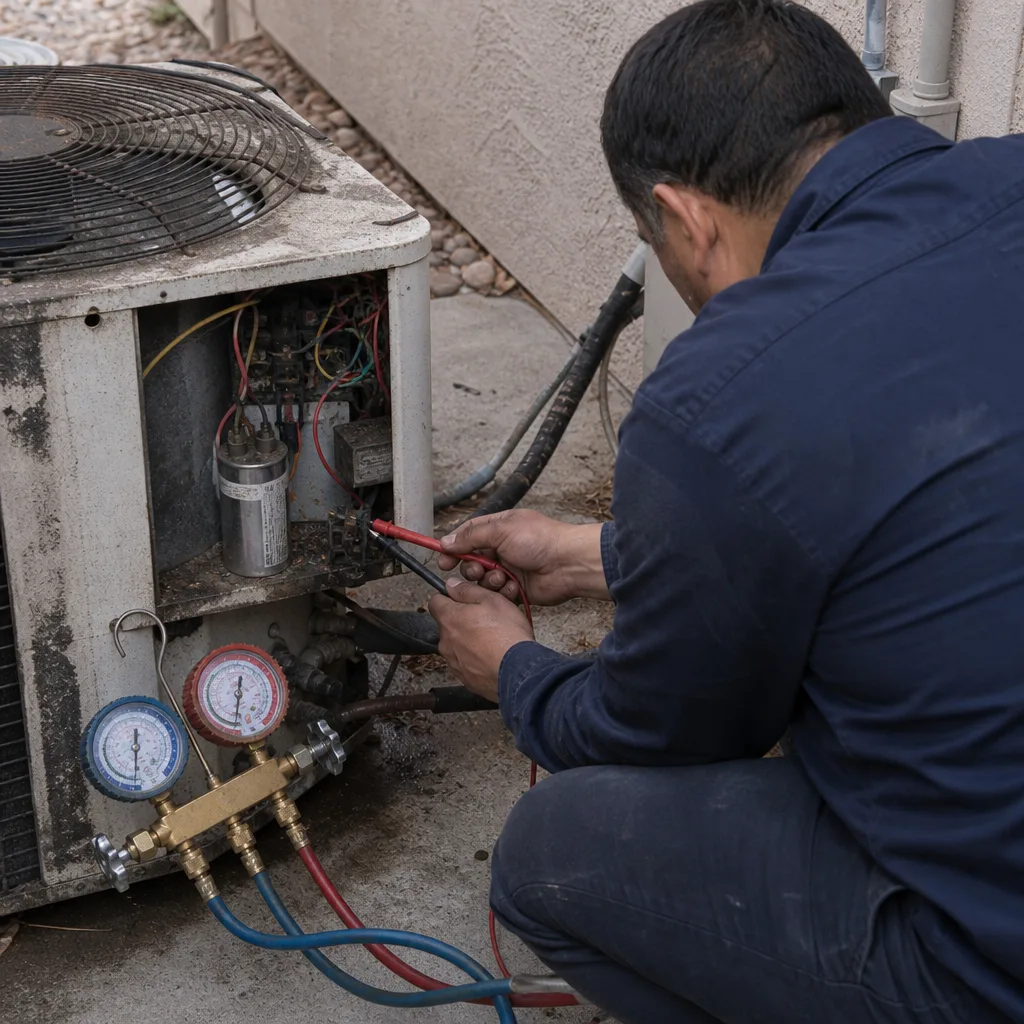
Capacitors and contactors are the two components we replace most often on Winchester AC systems, and they’re also the cheapest to replace proactively. A run capacitor is a small cylinder that helps the compressor and fan motor start and run. When it fails, the system either won’t start, or it starts and the compressor overheats and trips on thermal overload. A contactor is the relay that closes when the thermostat calls for cooling. Its contacts pit and burn over time, and eventually the points stick or fail to close.
Here’s the honest math. A capacitor is a small-dollar part. A compressor replacement is a big-dollar job. When a weak capacitor is caught on a tune-up, it’s a quick swap while the technician is already there. When it’s missed, you’re calling at 2 a.m. in August with a house full of hot air, and the failure has often taken the compressor or the fan motor with it.
What to ask for on a tune-up:
- Capacitance reading on the run capacitor, compared to the rated value on the label. A capacitor reading more than about 10 percent below its rated microfarad value is on its way out.
- Visual and electrical inspection of the contactor contacts. Pitted, blackened, or stuck points mean it needs to go.
- Amp draw on the compressor and condenser fan motor, compared to nameplate ratings.
- Check for burnt wiring or loose connections at the disconnect and the unit terminals.
We keep these parts on the truck on purpose. Brand matters less than promptness on a component this small. Whether your system is a Carrier, a Bryant, or an American Standard, the capacitor fails on the same schedule, and the fix is the same. If you’re not sure how old your equipment is, our Fireside Heating & Air Co. Winchester home page has more on how we handle brand-specific service calls.
What a Real Installation Punch-List Looks Like
Most AC installations that fail early don’t fail because the equipment is bad. They fail because the install was treated as a one-hour swap and go. A real install in a Winchester home takes most of a day, and it ends with a printed set of measurements, not a handshake and a wave from the driveway.
Here’s what should be on a legitimate punch-list after a new system goes in:
- Load calculation. A Manual J room-by-room calculation, done before equipment selection. Guessing by square footage is how homes end up with the wrong size system.
- Duct evaluation. Static pressure readings at the supply and return, plus a duct leakage test. If your existing ducts won’t support the new system, that gets addressed before the equipment goes in.
- Refrigerant charge verification. Superheat and subcooling measured and recorded against the manufacturer’s spec. This is not optional. Undercharged or overcharged systems fail early and void warranties.
- Thermostat calibration and configuration. Set up for your home’s schedule, verified against a separate thermometer, and explained to you in plain language.
- Condensate management. Primary and secondary drains, float switch tested, pan inspected.
- Electrical verification. Voltage and amp draw verified at the disconnect, within nameplate spec.
- A written handoff. Model numbers, serial numbers, refrigerant type and charge weight, filter size and location, and warranty registration confirmation.
If your installer can’t produce those items, you didn’t get a completed install. You got a delivered system. Our team walks every customer through the punch-list before we pack up, and every job is backed by the 90-Day Done Right Promise: if it’s not right, we make it right, in writing, no arguing. If you’re weighing a new system against repairs, a Heat Pump & Mini Split in Winchester consultation can also help clarify whether your next system should be a straight AC or a heat pump.
A Seasonal Checklist for Winchester Homeowners
Winchester runs hot and dry through June and July, then gets a monsoon shoulder in August and September, then cools off fast by November. The system has to handle a huge range, and the checklist should follow that rhythm rather than the marketing calendar.
Spring (before the first real heat):
- Change or clean the filter. If you have pets or live near the desert edges of the valley, check it monthly through the cooling season.
- Clear two feet around the condenser. Trim any shrubs or drip lines that have crept in over winter.
- Schedule a tune-up before the June rush, when lead times are still short.
- Test the thermostat in both heat and cool modes.
Summer (during monsoon humidity):
- Check the condensate drain visually once a month. If you see standing water anywhere near the indoor unit, call us.
- Listen for new noises from the outdoor unit at startup, especially a hard clunk or a grinding sound. That’s often a failing capacitor or fan motor bearing.
- Watch the electric bill for a sudden jump. A weak capacitor or failing contactor can drive run time way up before the system actually stops.
Fall (before heating season):
- Have the furnace or heat pump checked before the first cold snap. Most furnace failures happen in the first cold week because nobody checked the igniter or flame sensor in October.
- Clean debris from around the outdoor unit and the intake screens.
The Heating & Furnace in Winchester page covers what a heating-season tune-up should include in this climate.
How to Document Your System So Warranties Hold Up
Manufacturers deny warranty claims when they can’t see a service history. It’s that simple. If the compressor fails in year seven of a ten-year parts warranty and you have no records of annual maintenance, the claim can be denied on lack of maintenance. That’s a five-figure risk sitting in your garage.
What to keep in one folder, paper or digital, for every system in the house:
- Date, technician name, and summary of every service visit. Ask for a copy, even if the company keeps records.
- Model and serial numbers for the indoor and outdoor units. Photograph the nameplates.
- Refrigerant type and the charge weight recorded at installation. If the system is R-410A versus R-32, that matters when you compare quotes later.
- Filter size and the date each filter was changed. A simple log on the fridge works.
- Warranty registration confirmation, usually a copy of the manufacturer confirmation.
- Any install punch-list or measurement readings. Static pressure and refrigerant readings should be written down, not just checked.
When you call a new contractor in five years, that folder saves a full diagnostic visit and gives the technician a head start. It also is your leverage if a warranty claim gets challenged. Our team leaves a written report every visit, and we don’t bill for paperwork you should have received anyway.
Common Mistakes to Avoid
- Treating the filter as the whole checklist. A filter change is one line of a twelve-page story. If the tune-up in your hand only has a filter and a coil rinse on it, you’ve paid for a drive-by.
- Skipping the return side entirely. Return air problems are the number one early-failure cause in Winchester homes built since the nineties. If your technician never measures static pressure, they’ve skipped half the system.
- Ignoring the condensate drain until August. By the time you notice water in the secondary pan, the primary has been clogged for weeks. Check it in April, not when the ceiling stains.
- Running a capacitor to failure instead of replacing it. A capacitor is a small-dollar part. A compressor is not. The proactive swap is the square deal every time.
- Accepting a one-hour install. No proper install takes an hour. If the crew is pulling out of the driveway before lunch, the punch-list did not happen.
- Not keeping records. Warranties are denied on lack of maintenance. A folder costs nothing. A compressor costs a lot.
- Calling whoever is cheapest on a Friday afternoon. The 2 a.m. no-heat or no-cool call is where a company’s reputation shows. Cheap up front and unreachable on Sunday is the worst combination there is.
See the difference
 Before
 After
 Before
 After
 Before
 After
When to Call a Professional
Call us when you see any of the following: standing water near the indoor unit, a breaker that keeps tripping on the outdoor unit, a system that runs but doesn’t cool, ice on the refrigerant lines, a burning smell at the air handler, or a strange new noise at startup. Call us before the first cold snap if you haven’t had a heating check. Call us in spring if you haven’t had a cooling tune-up. Call us at 2 a.m. if your house is hot in August and you have kids or older family in the house. Fireside Heating & Air Co. Winchester answers the phone with a live person 24 hours a day, every day, and offers free estimates in Winchester. Call (844) 783-5043. A seasonal tune-up is $89, and if the estimate is over $250, the $50 off any repair applies.
Frequently Asked Questions
Once a year in spring, before the first heat wave, plus a heating check in fall before the first cold snap. Winchester’s climate puts the system through a wide swing and a monsoon season, so a single annual tune-up covers the AC side but leaves the furnace or heat pump unexamined. Two visits a year is the standard for a home you intend to stay in. Call (844) 783-5043 and we’ll schedule yours before the summer rush.
Return air duct sizing and sealing, by a wide margin. Most checklists focus on the outdoor unit and the filter, but the return side is where systems in Winchester homes built since the late nineties fail most often. If your technician never measured static pressure or inspected duct fittings in the attic, the tune-up missed the biggest failure point. Call (844) 783-5043 for a straight answer about whether your return is doing its job.
A real tune-up includes capacitance readings on the capacitor, contactor inspection, compressor and fan amp draws, refrigerant superheat and subcooling, static pressure at supply and return, condensate drain flush and float switch test, and a written report of what was found. If a tune-up offer only mentions a filter swap and a coil rinse, that’s what you’re paying for. Our $89 seasonal tune-up follows the full list, and technicians are not paid on what they sell. Call (844) 783-5043 to schedule.
Humidity spikes overwhelm the condensate drain, which is the single most common mid-summer shutdown cause in this climate. When the drain clogs with algae or the trap loses its seal, condensate backs up and either spills into the pan or trips the float switch. Both are avoidable with a spring flush. If your system is already down, call (844) 783-5043. Live person, any hour.
Our rule of thumb: if the system is more than twelve years old, facing a compressor or coil failure, and has more than one repair in the last three years, replacement is usually the better financial move. If it’s under ten years old and the failure is a capacitor, contactor, or fan motor, repair is the clear choice. Straight talk about repair versus replace is the only kind we give, and free second opinions on any written estimate are available. Call (844) 783-5043.
In most cases, a like-for-like replacement requires a permit through the local building authority, and a change in equipment type or capacity usually triggers a more involved review. The permit and inspection process protects you if you ever sell the house, and it protects the warranty. Any installer who suggests skipping the permit is telling you something about how they handle the rest of the job. Call (844) 783-5043 and we’ll answer the permit question for your specific address.
The Bottom Line
The AC checklist that matches your Winchester home isn’t the twelve-item list every competitor publishes. It’s the one built from where systems actually fail: return air ducts that were undersized from day one, condensate management in monsoon humidity, capacitors and contactors caught before they kill a compressor, and an install that ends with measurements on paper rather than a handshake. Get those four right and the system will outlive its warranty. Miss them and you’ll pay for it in August. Fireside Heating & Air Co. Winchester has served area homeowners for over 42 years, and our technicians have up to 8 years of experience. Every job is backed by the 90-Day Done Right Promise.
If you’d rather have this done right than done cheap, call Fireside Heating & Air Co. Winchester at (844) 783-5043 for a free estimate. We answer every call with a live person, 24 hours a day. The $89 seasonal tune-up covers the checklist above, and a free second opinion on any written estimate is available if you already have one in hand.
Written by the team at Fireside Heating & Air Co. Winchester.