
Last updated November 18, 2026
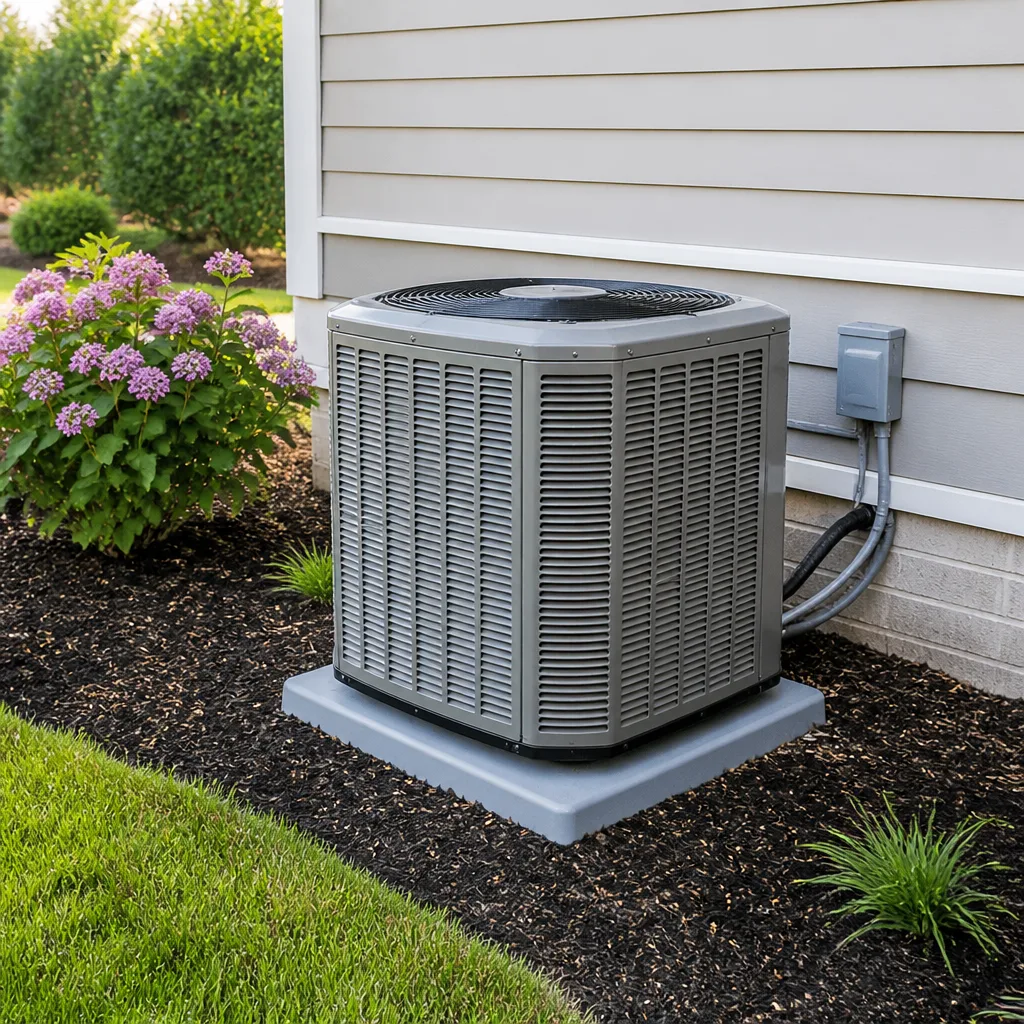 AC repair
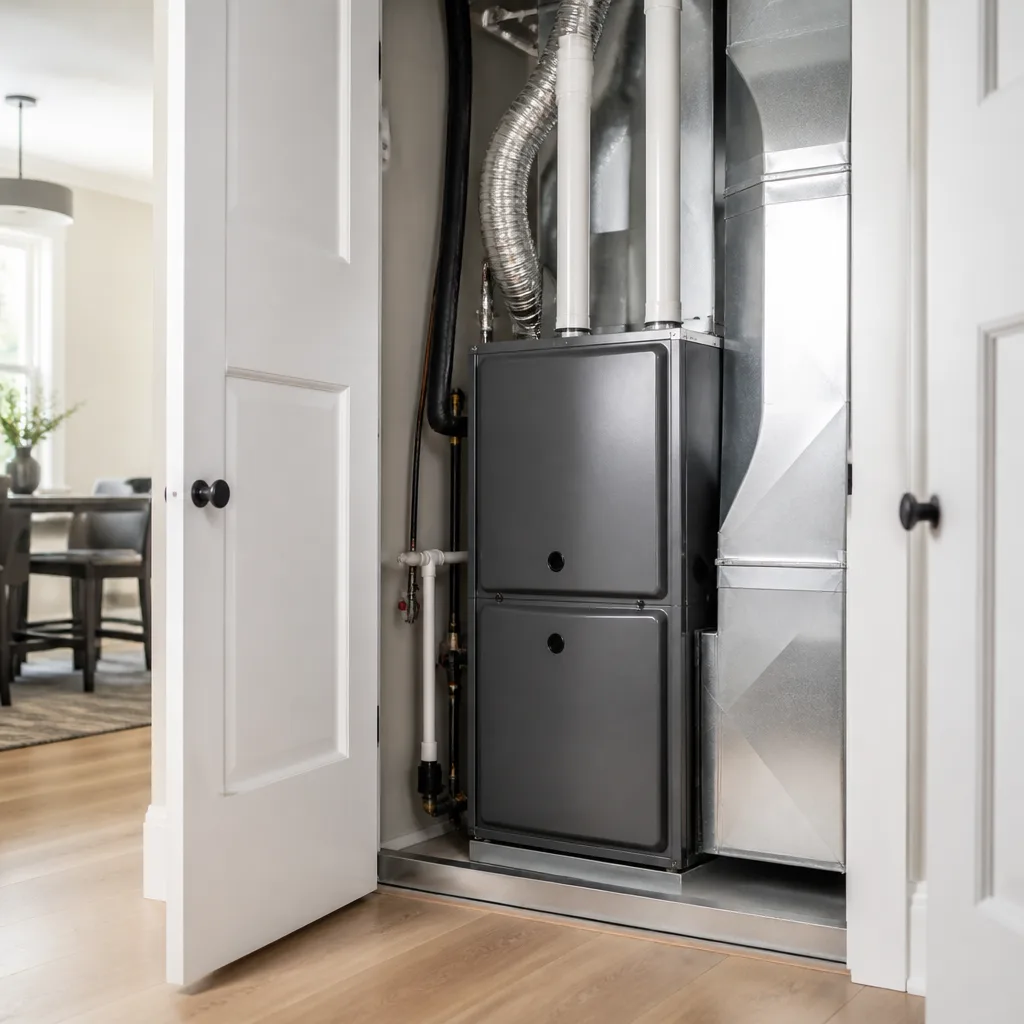 Furnace & heating
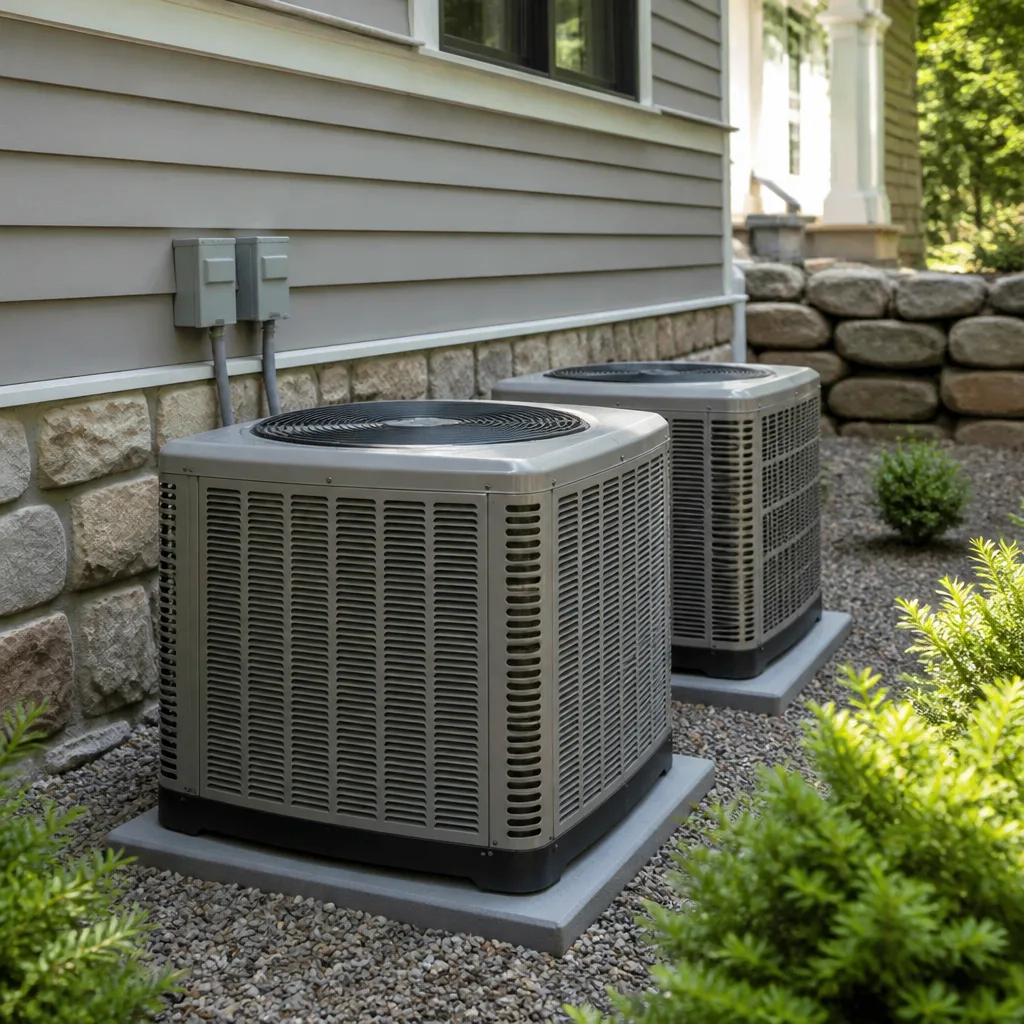 Heat pumps
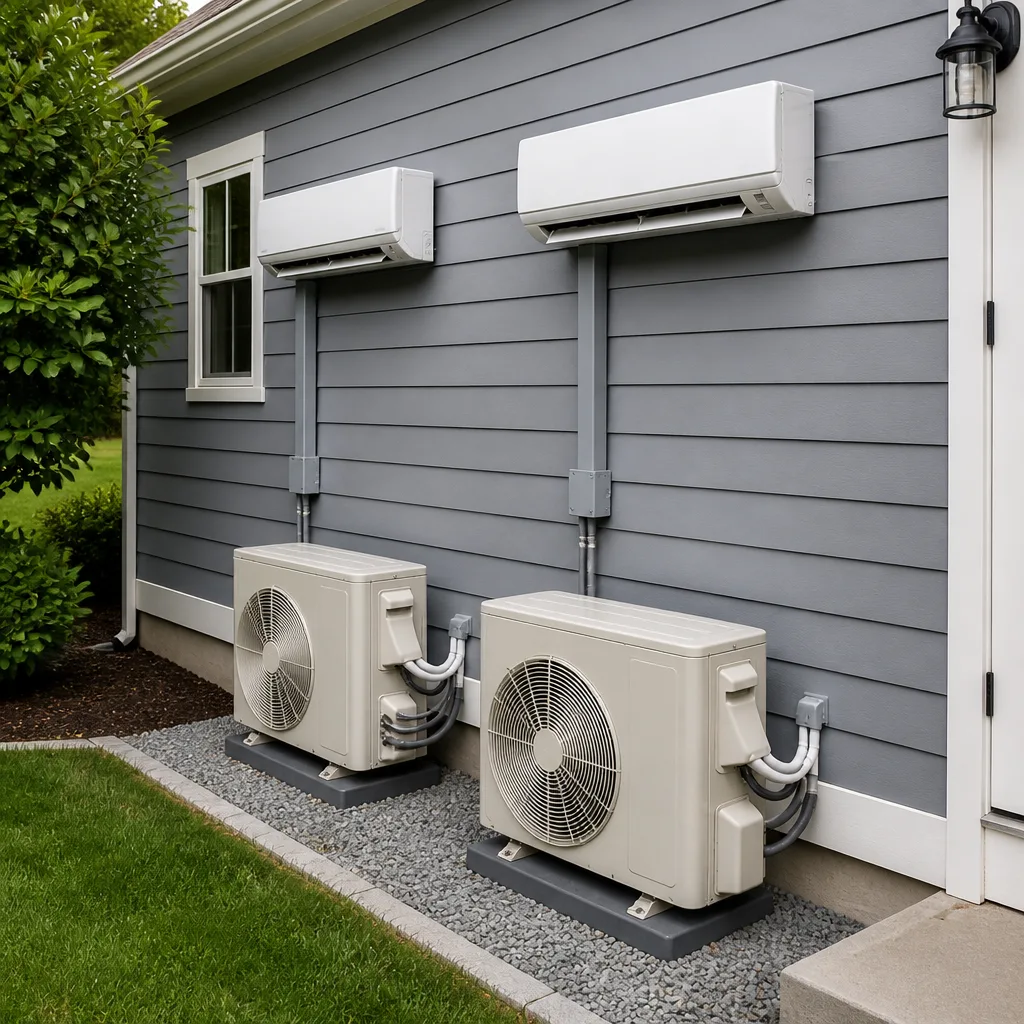 Ductless mini splits
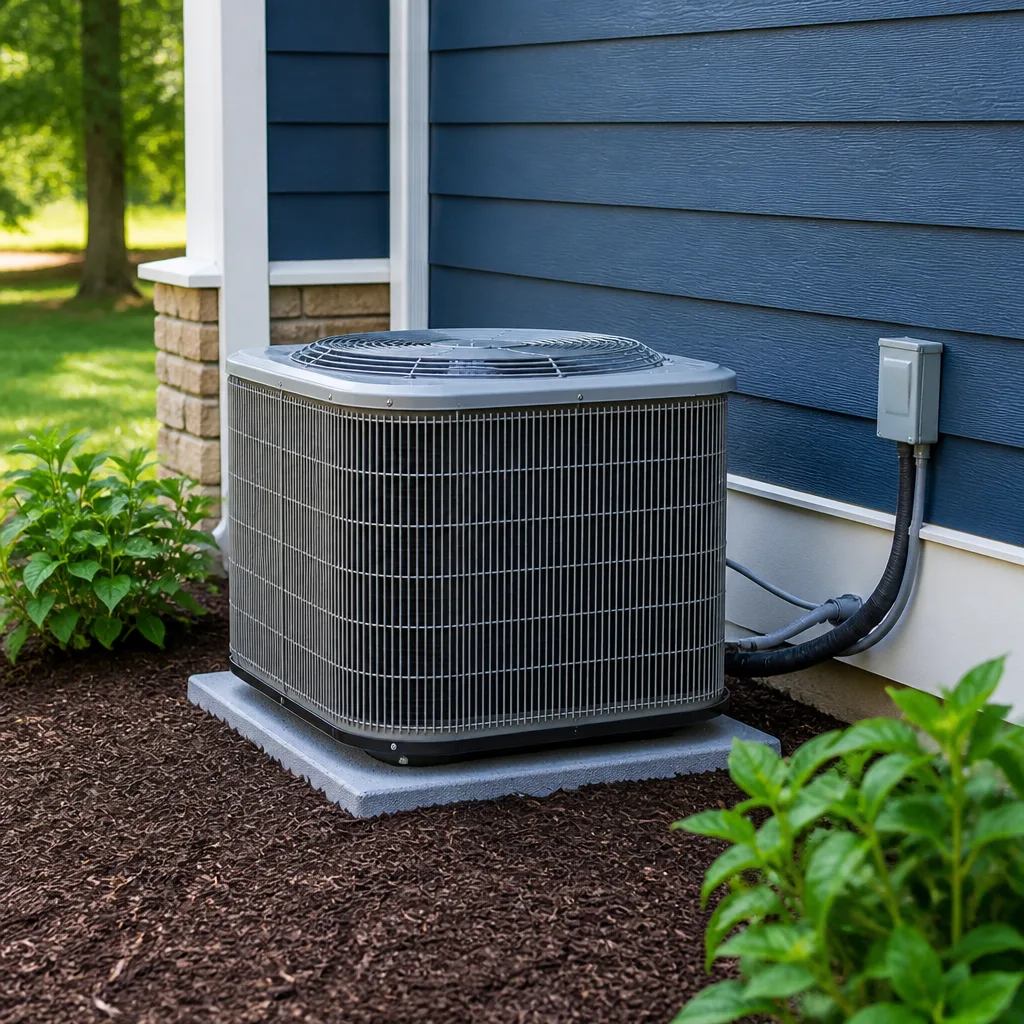 Carrier
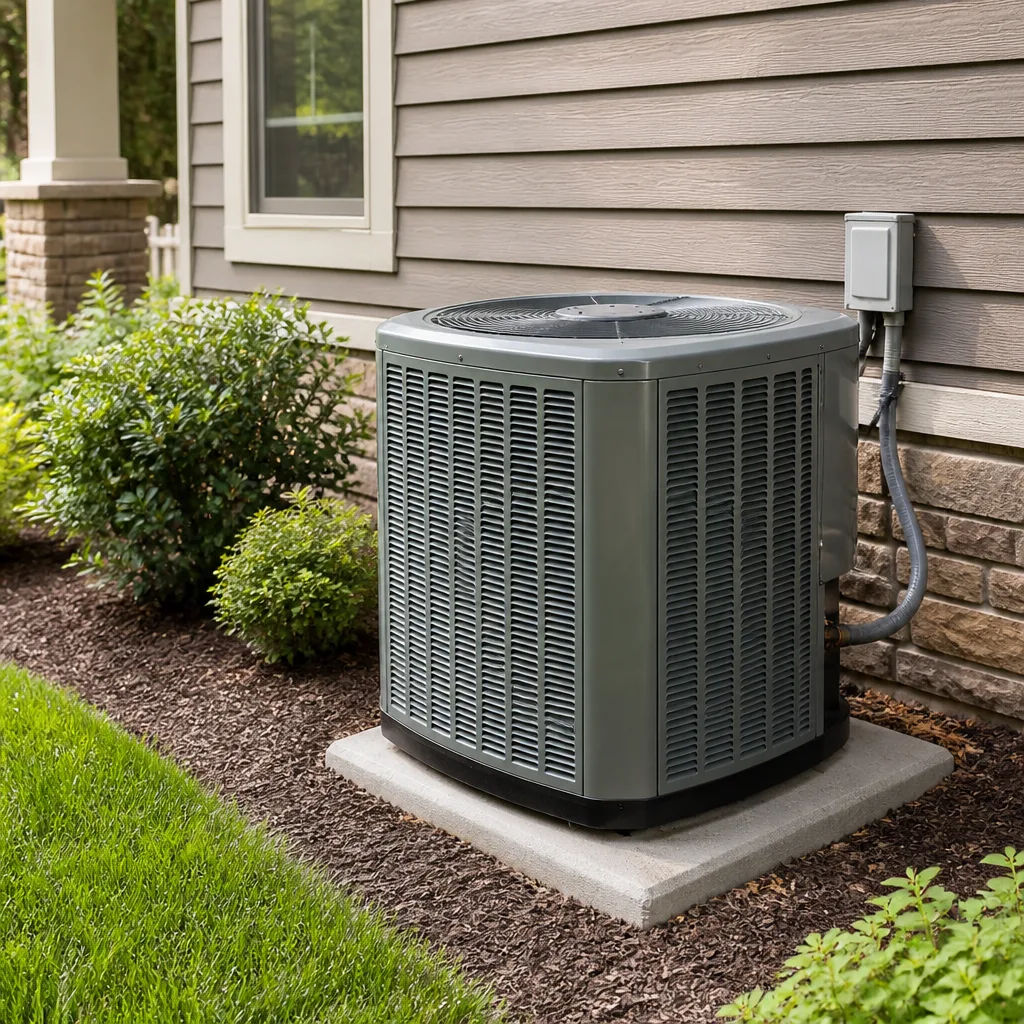 Trane
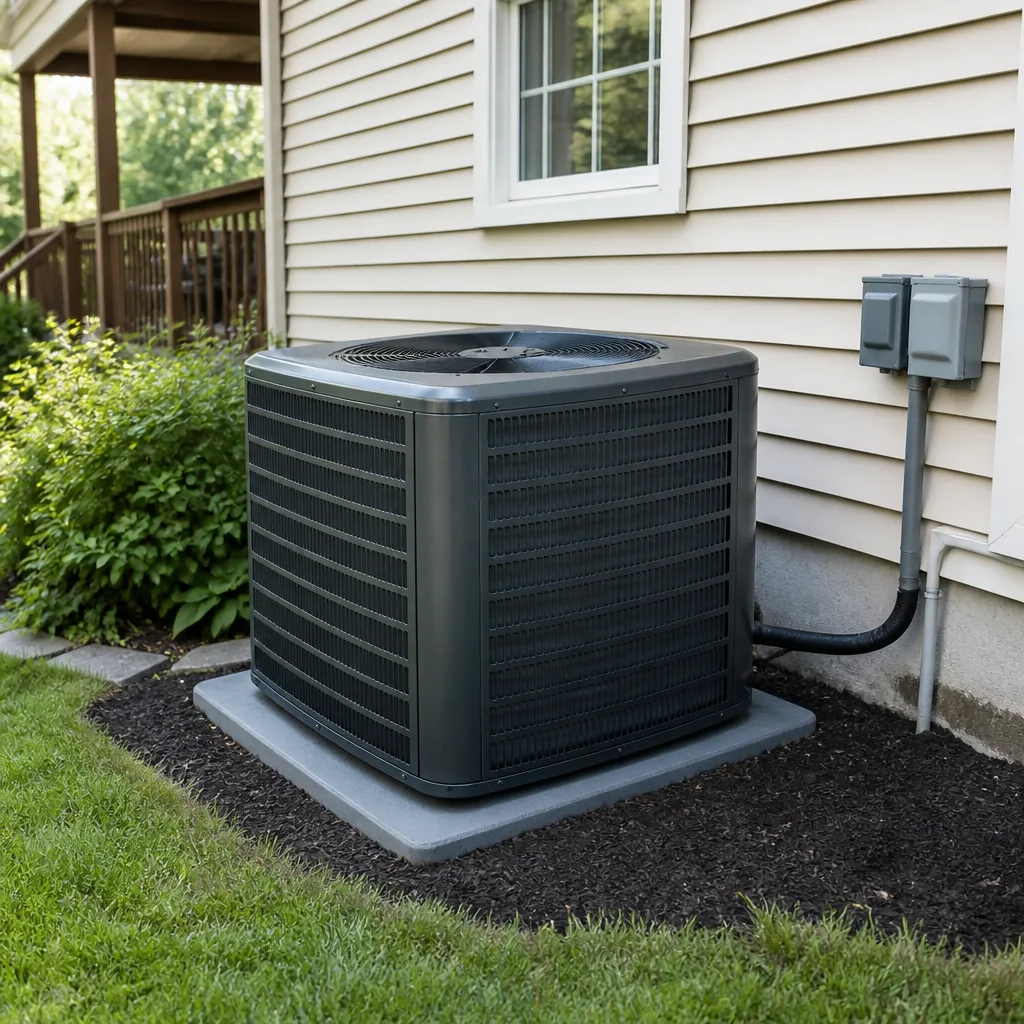 Goodman
Seasonal tune-up and full diagnostic on your Carrier, Trane, or Goodman system - readings shown to you before any repair is proposed
Diagnosis first, numbers second - you approve the repair price before a single part goes in.
Get your free estimateHVAC Emergency Preparedness Guide for Winchester Homes
When Winchester hits consecutive 100-degree days, every HVAC contractor in the region is booked 48 to 72 hours out. The homeowners who get same-day service aren’t luckier than their neighbors. They’re the ones who established a service relationship before the heat wave, not during it. That’s the uncomfortable truth about HVAC emergencies in Winchester: most of them announce themselves in advance, through weather patterns, equipment age, and the maintenance that never got scheduled. This guide treats emergency preparedness as a system you build over a season, not a checklist you file and forget. You’ll learn what actually fails first in Winchester’s climate, what to do in the first 30 minutes of a breakdown, and how much reserve cash covers the realistic worst case.
Quick Answer
An HVAC emergency preparedness plan for a Winchester home has three parts: a small maintenance reserve (typically $800 to $1,500 covers the failures most likely to hit a 20-year-old home), a documented service relationship with a company that answers its phone at 2 a.m., and a simple household protocol for the first 30 minutes of a failure. Homes that have all three either avoid most summer breakdowns or turn them into same-day repairs instead of three-day ordeals.
Styles & brands we work with
- AC repair
- Furnace & heating
- Heat pumps
- Ductless mini splits
- Carrier
- Trane
- Goodman
Table of Contents
- Winchester’s Specific HVAC Risk Profile
- What to Do in the First 30 Minutes of an HVAC Failure
- The Emergency Fund Math for Winchester Homeowners
- How to Establish a Service Relationship Before an Emergency
- Interim Measures That Work (and Ones That Make It Worse)
- Seasonal Preparedness Calendar for Winchester
- Common Mistakes to Avoid
- When to Call a Professional
- Frequently Asked Questions
Winchester’s Specific HVAC Risk Profile
Winchester doesn’t present the same HVAC threats as Las Vegas fifteen minutes up the road, and it certainly doesn’t look like the Midwest or the coastal cities. The risk here comes in three distinct seasons, and each one fails equipment in its own way.
Extreme summer heat. When Winchester sits above 100°F for a stretch, air conditioners run continuously for hours rather than cycling. That continuous run stresses capacitors, contactors, and compressor windings, and it exposes any system that’s been running on low refrigerant for months. In our experience, the week after the first real sustained heat wave is the busiest week of the summer, and it’s almost always capacitors and refrigerant leaks.
Early fall freezes. Winchester gets frost earlier than the surrounding desert floor. A furnace that sat unused since March hasn’t been tested, and the first cold night exposes it. Ignitors fail, flame sensors are dirty, and pilot assemblies that seemed fine last spring suddenly don’t light. The first cold snap of the season is when we field the most no-heat calls.
Winter nights below 15°F. These are the nights when a heat pump loses efficiency, a furnace works hardest, and a failed system turns into a genuine health risk for older residents. A no-heat night in January in Winchester isn’t an inconvenience. It’s a real emergency.
What ties all three together: deferred maintenance amplifies every one of them. A 15-year-old system that’s had its filter changed and a $89 seasonal tune-up is dramatically less likely to fail on the worst night of the year than an identical system that hasn’t been looked at since it was installed.
What to Do in the First 30 Minutes of an HVAC Failure
The first 30 minutes of an HVAC failure determine whether you protect your equipment and your family or cause expensive secondary damage. Here’s the sequence we recommend, in order:
- Check the thermostat first. Dead batteries, wrong mode (heat vs. cool), and a tripped breaker at the thermostat itself account for a surprising share of “emergencies.” Replace batteries, confirm mode, wait 5 minutes. No change means continue.
- Check the breaker at the panel. Look for a tripped breaker serving the indoor unit and the outdoor condenser. If it’s tripped, flip it once. If it trips again, stop. A breaker that trips a second time is telling you something is wrong inside the equipment, and forcing it back on can damage a compressor or start an electrical fire.
- Check the air filter. A filter that’s completely clogged with dust will freeze an AC coil in spring or trip a limit switch on a furnace in winter. If it’s filthy, replace it and wait 30 minutes. On a frozen coil, turn the system off and let it thaw completely before restarting.
- Note the symptoms. Is the outdoor unit running but not cooling? Is the indoor unit blowing room-temperature air? Is there water pooling near the air handler? Is there a burning smell? Write it down. This is the single most useful thing you can hand a technician.
- Shut off the system if you smell gas or burning, or if there’s water pooling near the electrical components. For a gas furnace with a gas smell, leave the home, don’t flip switches, and call your gas utility first, then us.
- Call for service and describe the symptoms. A live person who can hear “AC is running but not cooling, breaker wasn’t tripped” is already better prepared than one who hears only “it’s broken.”
What not to do: don’t open the outdoor unit’s electrical panel, don’t try to jump a contactor, and don’t try to add refrigerant yourself. Refrigerant systems operate at high pressure, and improper handling can cause frostbite, eye injury, or equipment damage. This is genuinely dangerous work and belongs to a trained technician.
The Emergency Fund Math for Winchester Homeowners
Here’s the math most homeowners get wrong: they over-save for the rare catastrophic failure and under-save for the common repairs that actually happen. In a Winchester home built in the 1990s or early 2000s with a system of similar age, the realistic failure scenarios break down like this:
- Failed capacitor or contactor (very common, especially in summer): $150 to $350. This is the single most common summer repair in Winchester.
- Failed ignitor or flame sensor (very common, especially first cold snap): $180 to $320.
- Blower motor failure: $450 to $800.
- Refrigerant leak repair and recharge: $350 to $900, depending on leak location.
- Condensate drain blockage and water damage cleanup: $200 to $500, more if the ceiling below was soaked.
- Failed compressor or heat exchanger (less common but serious): $1,500 to $3,000, often a sign the whole system is due for replacement.
For a 20-year-old home with a similarly aged system, a reserve of $800 to $1,500 covers the great majority of failures without over-saving. That’s the number we’d tell a neighbor to set aside, not a full replacement fund. If the system is over 15 years old and the compressor or heat exchanger is the failure, the repair honestly doesn’t make sense, and that’s a conversation to have with a technician before the emergency, not during it. A free second opinion on any written estimate is exactly the right use of that conversation.
How to Establish a Service Relationship Before an Emergency
This is the highest-leverage thing in this entire guide, and it costs almost nothing. During a Winchester heat wave, contractors triage their call list. Existing customers with a service history get seen first because the technician already knows the equipment, the layout, and the previous repairs. A first-time caller during a heat wave goes to the end of the line.
What a real service relationship should include:
- A scheduled seasonal tune-up in spring (before summer) and fall (before the first freeze). Our $89 seasonal tune-up is built for exactly this. The technician inspects the system, checks refrigerant, cleans the coil, tests the ignitor and flame sensor, and leaves you a written report of what was found.
- A file on your equipment. Model, age, past repairs, and any known weaknesses should be documented so the next technician doesn’t start from scratch.
- A phone number a live person answers. Not a voicemail tree. Not an outsourced answering service that can only schedule appointments for next Tuesday. Someone who can hear “no heat, elderly homeowner, outside temp is 22°F” and act on it.
- A written promise you can hold the company to. Our 90-Day Done Right Promise means that if the repair doesn’t hold, we come back and make it right, in writing, no arguing.
- Trained technicians who work on your brand. Whether your system is Trane, Lennox, Goodman, or Rheem, you want a company that services it regularly and knows its failure patterns.
Establishing that relationship takes one tune-up, usually in spring, before the heat wave. Same-day availability during the July crunch isn’t a favor you can earn overnight.
Interim Measures That Work (and Ones That Make It Worse)
While you’re waiting for a technician during peak demand, some interim measures genuinely help. Others cause secondary damage that turns a $300 repair into a $3,000 one. Here’s the honest split.
Measures that work during a summer AC failure in Winchester:
- Close blinds and curtains on sun-facing windows. A single west-facing window without a blind can add meaningful heat load to a room.
- Run ceiling fans and box fans. Moving air doesn’t lower the room temperature, but it makes the room feel cooler, which is what your body cares about. Use fans in rooms you’re actually occupying, not empty rooms.
- Move to the lowest floor. Cool air settles. During a hot-day failure, the ground floor or basement stays 5 to 10 degrees cooler than upstairs. Sleep downstairs if needed.
- Use a single window AC unit in one room. A single-room window unit used to create a “cooling refuge” keeps the household from overheating while waiting for service. Focus on one room, not the whole house.
- Drink water and stay out of direct sun. Sounds obvious. In Winchester summer heat, it’s the single most important non-technical measure, especially for older residents.
Measures that make it worse:
- Opening windows during a hot, dry Winchester afternoon. In a dry climate, opening windows during the day lets in more heat than it lets out. Open at night if the outside temp drops below the inside temp. During the day, keep them closed.
- Running the system with the breaker tripped and reset repeatedly. A breaker that trips twice is protecting the compressor, and forcing it back on can destroy a $1,500 to $3,000 component.
- Adding refrigerant from a can. This is where homeowners cause the most damage and the most cost. Refrigerant systems are sealed and balanced. Adding the wrong refrigerant or an incorrect amount damages the compressor, and it’s not covered by any warranty.
- Running a furnace with a gas smell or running an AC unit with water inside the electrical compartment. Shut it off. This is not a wait-and-see situation.
Seasonal Preparedness Calendar for Winchester
HVAC emergencies in Winchester follow a predictable calendar. Here’s how to get ahead of the ones that matter most:
- February to March: Schedule the spring tune-up. Filters changed, cooling side checked, refrigerant verified. This is the single best month to beat the summer backlog.
- April to May: Replace the air filter (we recommend every 30 to 90 days depending on the home). Test the AC on the first warm day before you actually need it. If something’s going to fail, better it fails in April than July.
- June to August: Watch the filters. Check clear drainage around the outdoor unit and hoses. During heat waves above 100°F, expect longer runtimes. That’s normal. A 15-minute cool-down when the system finally cycles off is normal, too. Constant running with no cooling is not.
- September to October: Schedule the fall furnace tune-up before the first cold snap. This is when we catch ignitors and flame sensors before they fail on the first freezing night.
- November to January: Keep the filter fresh. Know where your gas shutoff valve is. If the furnace fails, don’t run space heaters in bedrooms overnight, and don’t use an oven or gas stove as a heat source. Either is a genuine safety risk.
Our heating and furnace service handles the fall side, and our Heat Pump & Mini Split in Winchester page covers what’s different if your system runs year-round instead of switching between furnace and AC.
See the difference
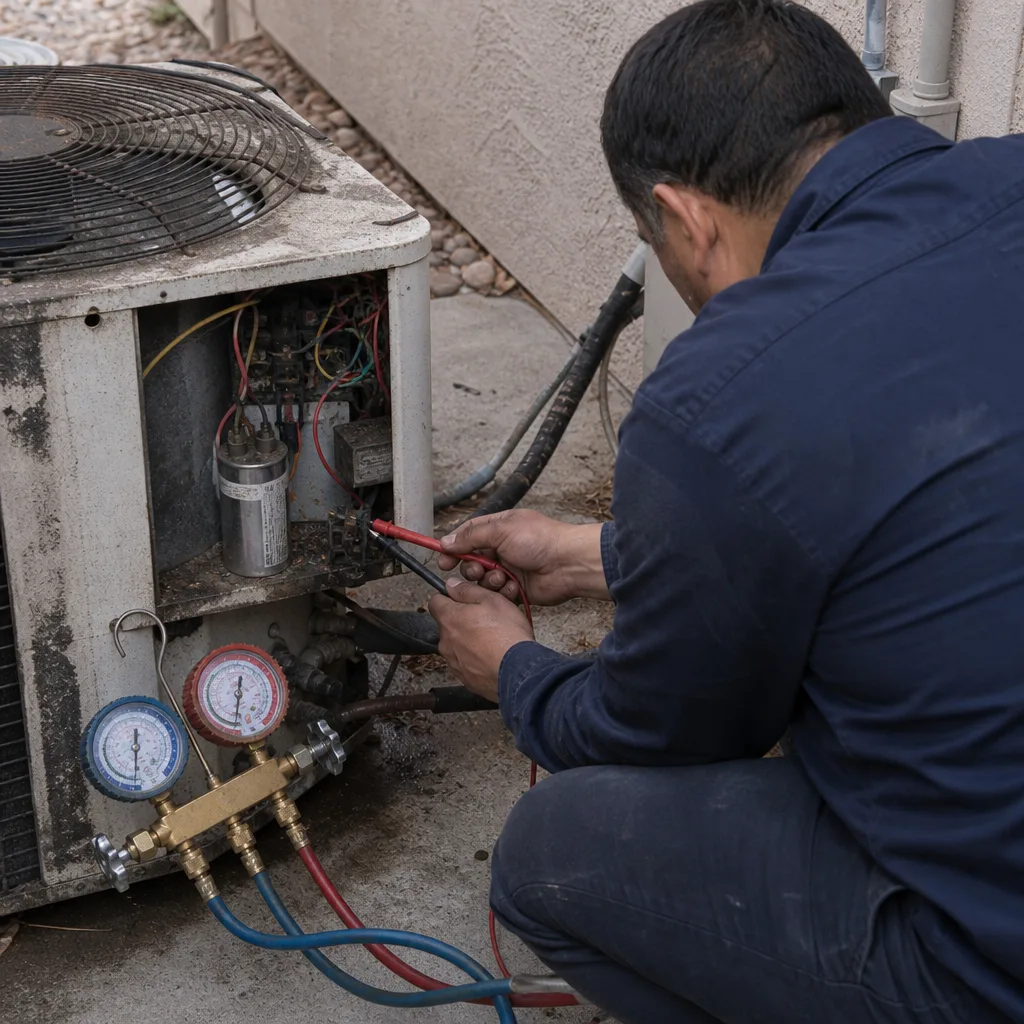 Before
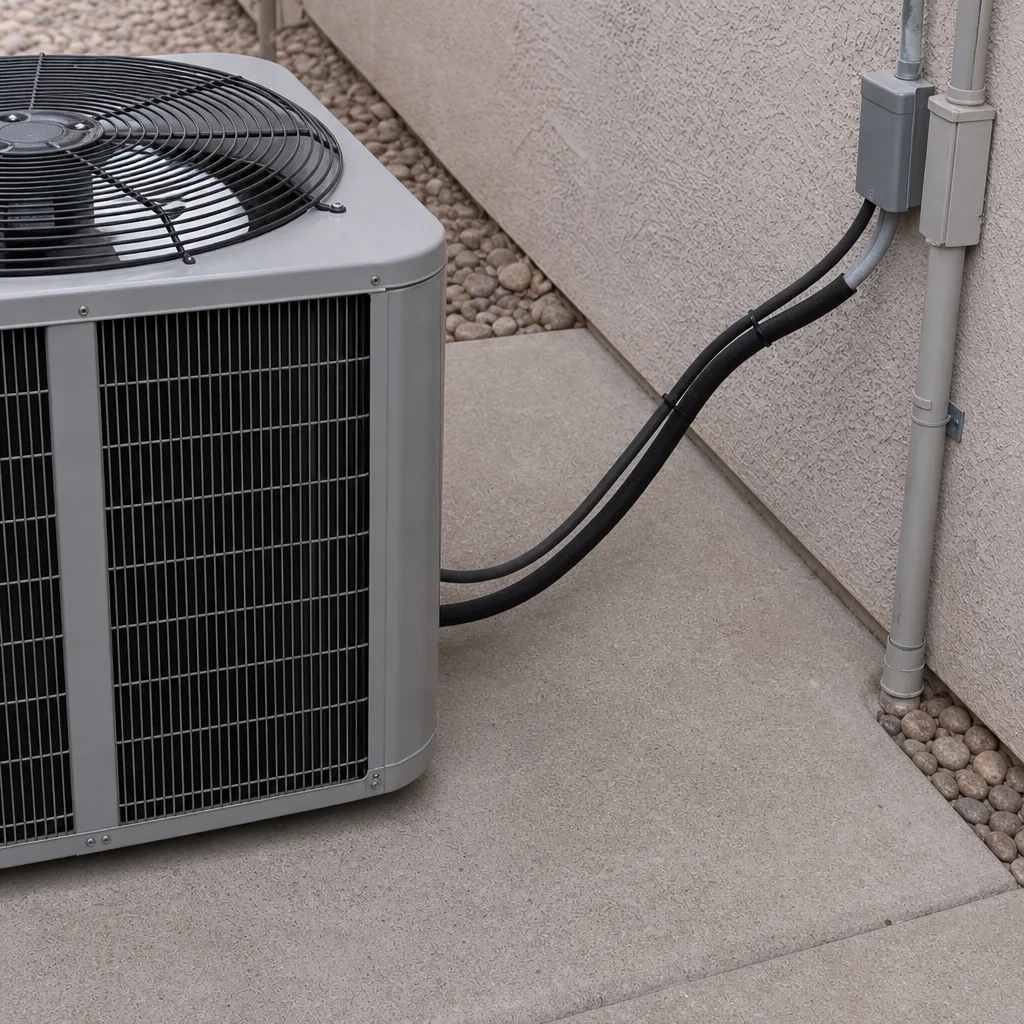 After
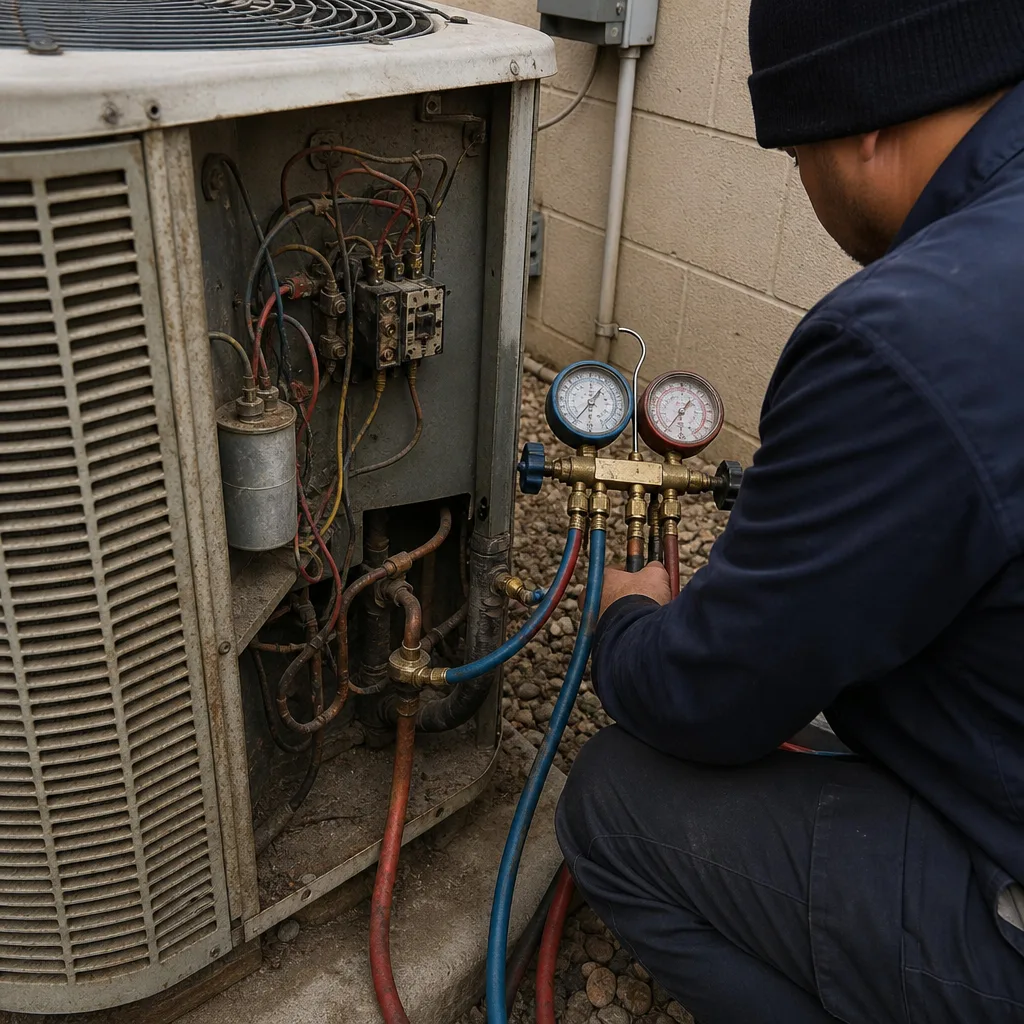 Before
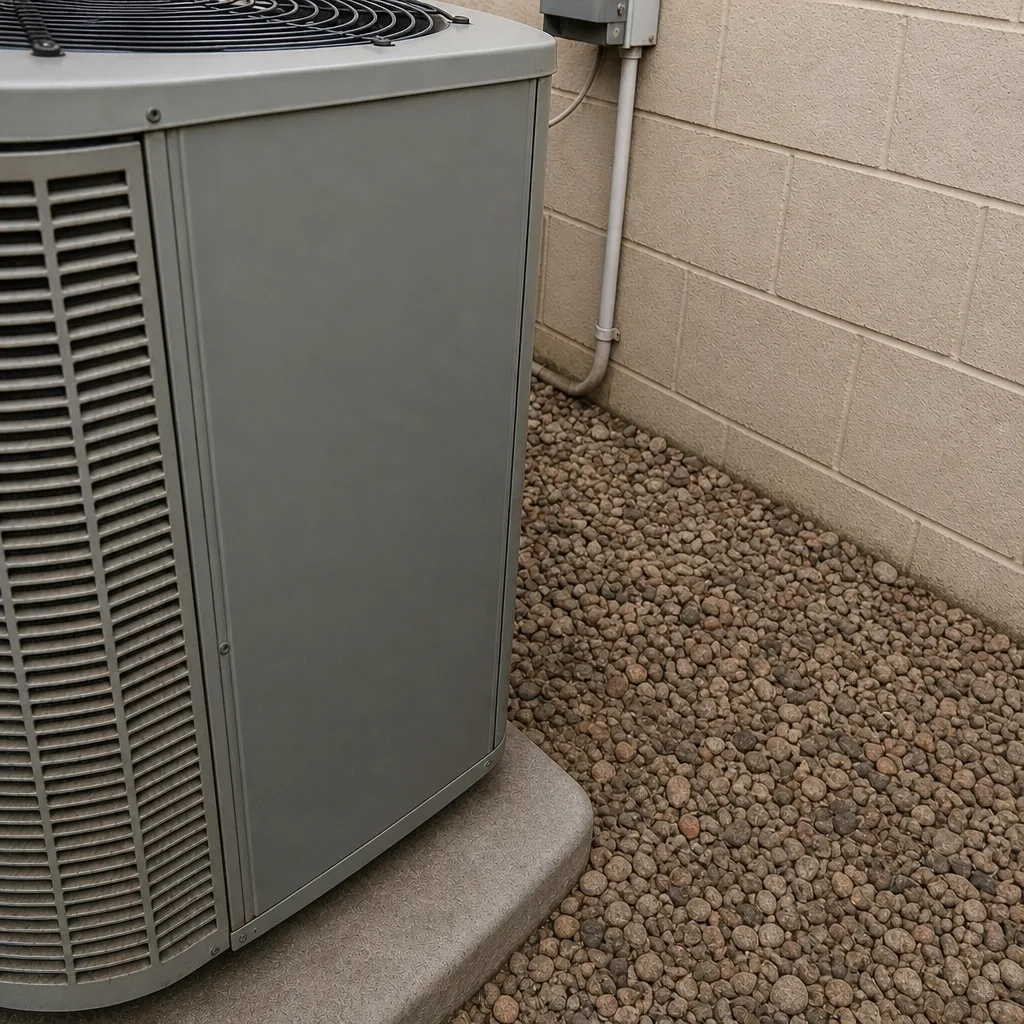 After
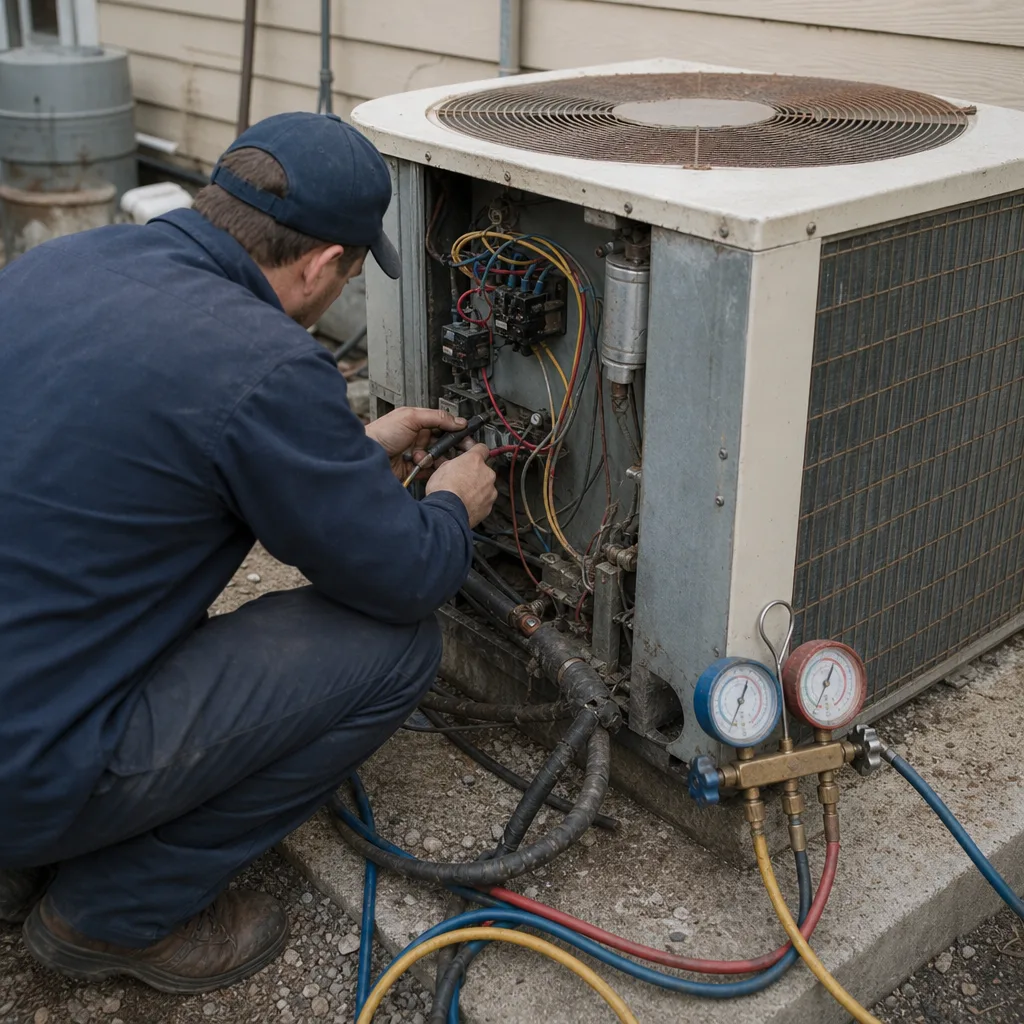 Before
 After
Why Most Winchester HVAC “Emergencies” Aren’t Actually Emergencies
We’ve rebuilt a lot of community relationships over 42 years, and the pattern hasn’t changed. Most of the calls that come in as emergencies were predictable failures the homeowner had no way to see coming, because nobody told them what to watch for. The compressor whose capacitor had been slowly dying for a year. The ignitor that worked last March and had a hairline crack that was there all summer. The condensate line that was one bit of algae growth away from backing up into the ceiling.
A seasonal tune-up doesn’t prevent every failure. Nothing does. But it catches most of them, and it catches them in April, not July. Our technicians have up to 8 years of experience and are trained on the nine major residential brands. That’s the leverage a homeowner actually has: get the failing part caught in the shoulder season, and the emergency never happens.
Our AC Repair & Installation in Winchester page covers what a summer failure actually looks like up close, and our Fireside Heating & Air Co. Winchester home page lays out the full range of what we do.
Common Mistakes to Avoid
- Waiting until the system fails to find a contractor. During a Winchester heat wave, first-time callers wait 48 to 72 hours. Customers with a tune-up history get same-day service. The difference isn’t luck, it’s preparation.
- Chasing the cheapest quote on a repair. A $150 capacitor that lasts a year is more expensive than a $280 capacitor that lasts ten. Ask what brand of part is going in and what the warranty is, not just the price.
- Resetting the breaker repeatedly. A breaker is doing its job when it trips. Reset it once. After the second trip, call for service.
- Adding refrigerant from a can. The most expensive “cheap fix” we see. This causes compressor damage that turns a $400 leak repair into a $2,000 system replacement.
- Running space heaters in bedrooms overnight when the furnace fails. A real fire and carbon monoxide risk. If you need warmth during a no-heat night, close off one room and use a single heater on a hard surface, attended, never while you sleep.
- Skipping the tune-up because “it’s working fine.” Tune-ups aren’t for systems that are failing. They’re for systems that are about to. We find ignitors, capacitors, and refrigerant issues a full season before they become crisis calls.
- Ignoring the tiny drip near the air handler. A small puddle during an AC failure in Winchester can turn into ceiling damage if the condensate line backs up overnight. Address water findings immediately.
When to Call a Professional
Some things are worth a phone call. Call us immediately when:
- You smell gas, or you smell burning near the furnace or air handler. Get out of the house and call the gas utility, then us.
- The breaker trips twice after being reset.
- The system is running but not cooling or heating, and the filter is clean.
- Water is pooling near the indoor unit, or dripping from the ceiling beneath the air handler.
- You hear grinding, screeching, or repeated clicking from the outdoor unit.
- Outside temperatures are below 40°F and you have no heat, especially for older residents or anyone with medical needs.
Fireside Heating & Air Co. Winchester offers free estimates in Winchester. Call (844) 783-5043. A live person answers every call, 24 hours a day, seven days a week, including the 2 a.m. no-heat emergency.
Frequently Asked Questions
For a home with a 15- to 20-year-old system, a reserve of $800 to $1,500 covers most likely failures (capacitors, contactors, ignitors, flame sensors, blower motor, refrigerant leaks) without over-saving. Adjust upward if the compressor or heat exchanger is the part at risk, since that’s often a replacement conversation. Call (844) 783-5043 for an exact quote on any repair. Estimates are free.
Because demand spikes far past available technician hours. During a sustained heat wave, contractors book out 48 to 72 hours, and existing customers with a service history are seen first. Establishing a relationship with a seasonal tune-up in spring is the most reliable way to get seen during a July crunch. Our phones are answered by a live person 24/7, so if you’re already a customer, you have a real number to call.
No. Capacitors hold a dangerous charge even when the power is off, and this is genuinely dangerous work. Symptoms of a failed capacitor (system won’t start, hums, trips a breaker) sound like a simple fix and aren’t. Call a trained technician. Our repair visit costs a fraction of an ER visit or a compressor replacement.
The rule of thumb we use: if the repair costs more than 30% of a new system and the equipment is over 12 years old, replacement usually makes sense. Under 10 years old, repair almost always wins. The nuance is real, so ask a technician to walk you through it. We offer a free second opinion on any written estimate, which is exactly what you want before committing to a $6,000+ replacement.
Close blinds on sun-facing windows, use fans in occupied rooms, move activity to the lowest floor, and use a single window unit to create one cool room if you have one. Do not open windows during a 100°F afternoon, and do not attempt refrigerant or electrical repairs. For older residents or anyone with medical needs, don’t wait. Move to a cool location or call sooner rather than later.
Schedule a fall furnace tune-up in September or October, before the first freeze. The most common first-cold-snap failures are ignitors, flame sensors, and pilot assemblies, and all three are caught in a $89 seasonal tune-up. Doing this every year is the single highest-value preparation a Winchester homeowner can make. Call (844) 783-5043 to schedule.
The Bottom Line
HVAC emergencies in Winchester aren’t random. They follow weather, equipment age, and the maintenance that did or didn’t happen. A homeowner who understands the pattern holds three things: a small reserve that covers the realistic worst case, a documented service relationship with a company whose phone a live person actually answers, and a household protocol for the first 30 minutes. That’s the whole system. It costs one tune-up a season and an hour of thinking, and it converts most emergencies into same-day repairs and a few into non-events. Fireside Heating & Air Co. Winchester has been doing this work for over 42 years, and every job is backed by our 90-Day Done Right Promise: done right, or we make it right. Call (844) 783-5043 for a free estimate and to get a tune-up on the calendar before the next heat wave.
Written by the team at Fireside Heating & Air Co. Winchester.