
Last updated November 18, 2026
 Heat pumps
 AC repair
 Furnace & heating
 Ductless mini splits
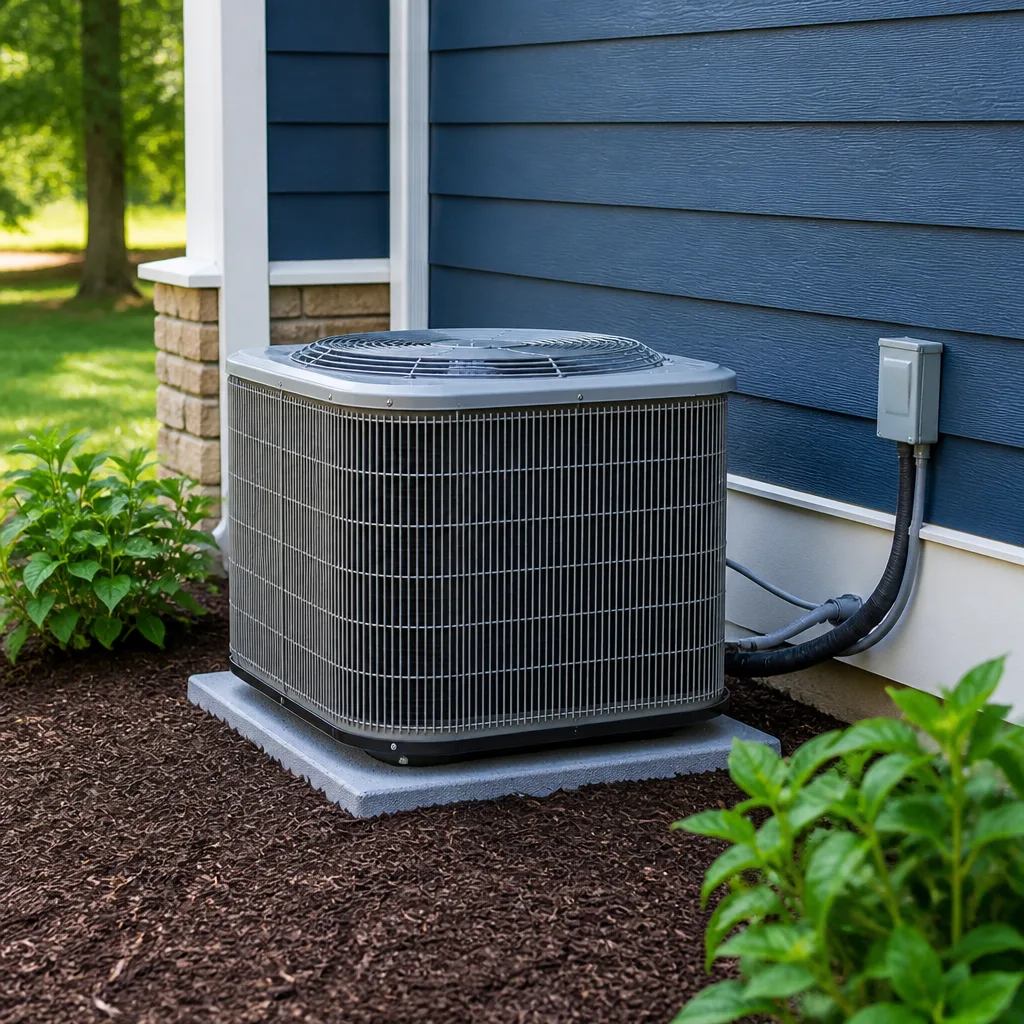 Carrier
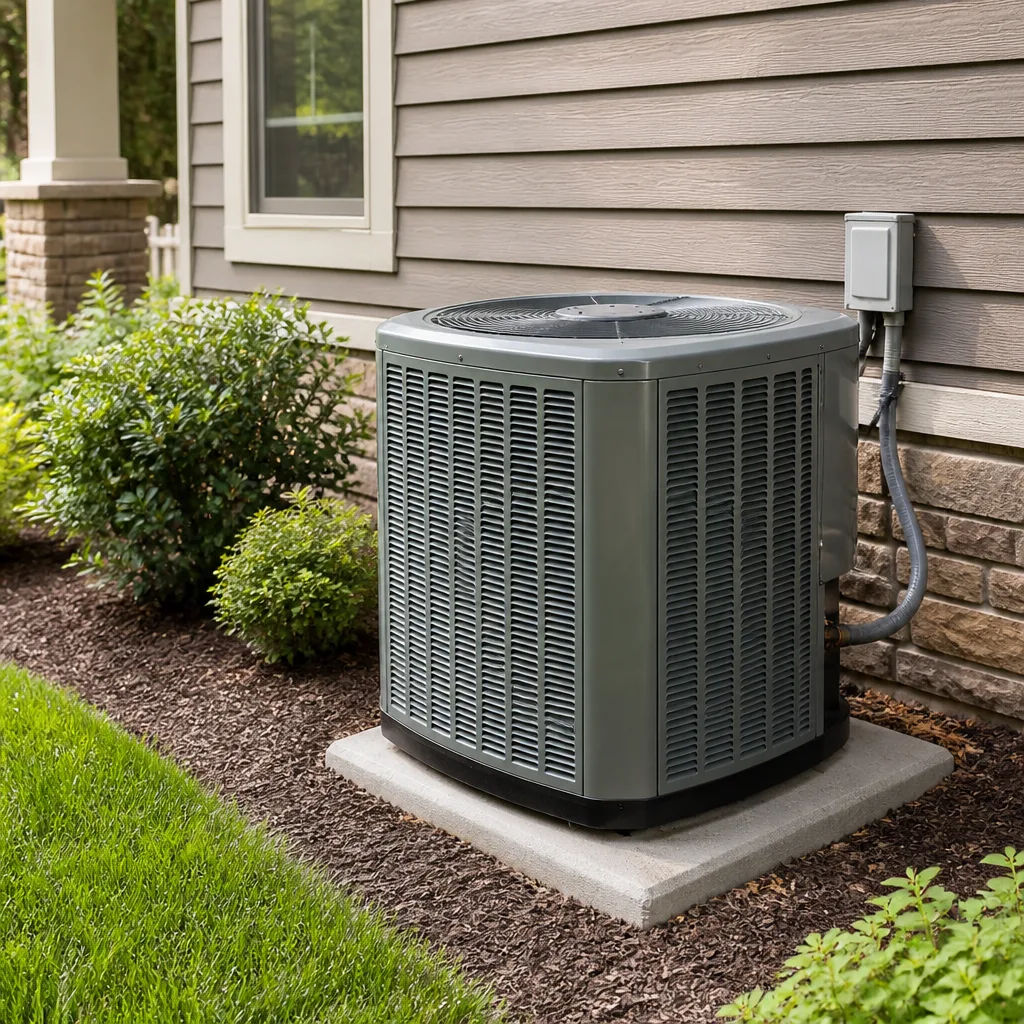 Trane
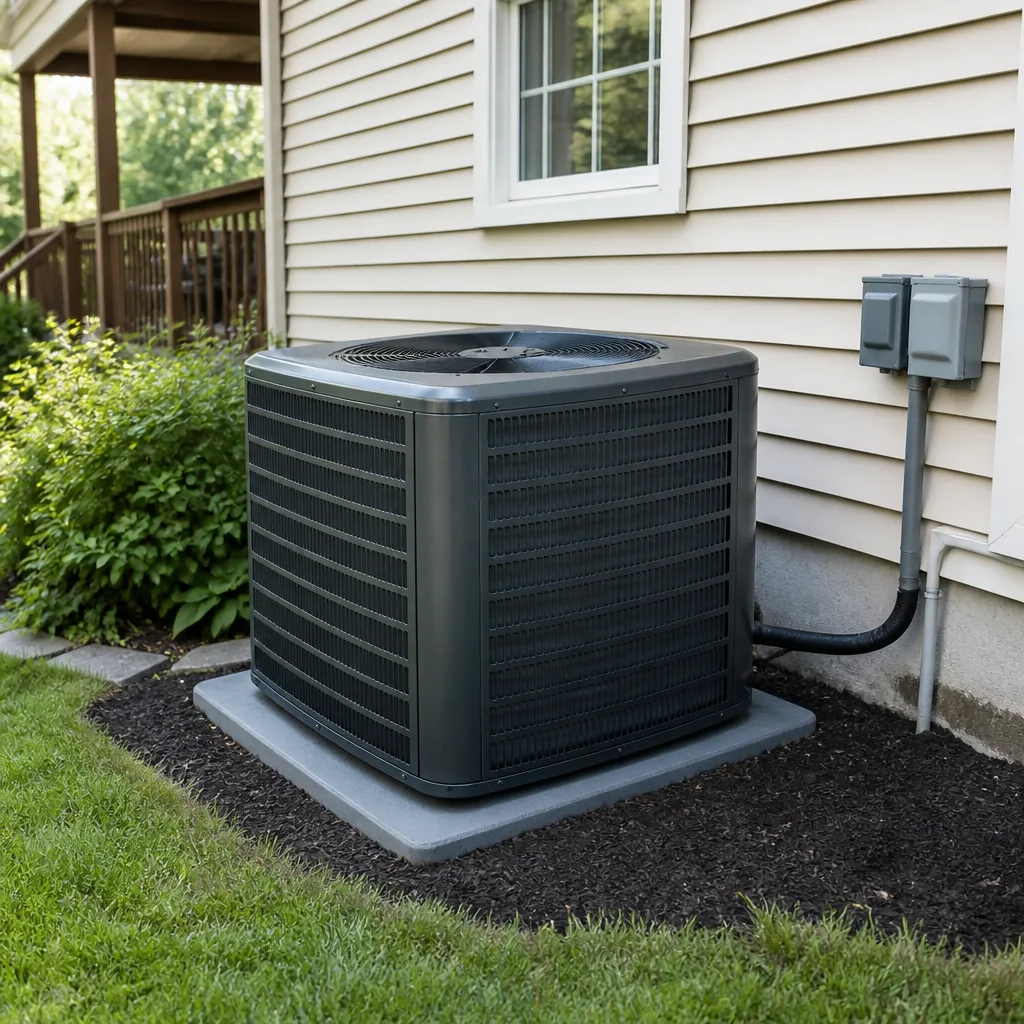 Goodman
Seasonal tune-up and full diagnostic on your Carrier, Trane, or Goodman system - readings shown to you before any repair is proposed
Diagnosis first, numbers second - you approve the repair price before a single part goes in.
Get your free estimateHeat Pump & Mini Split Troubleshooting: Common Problems and How to Fix Them
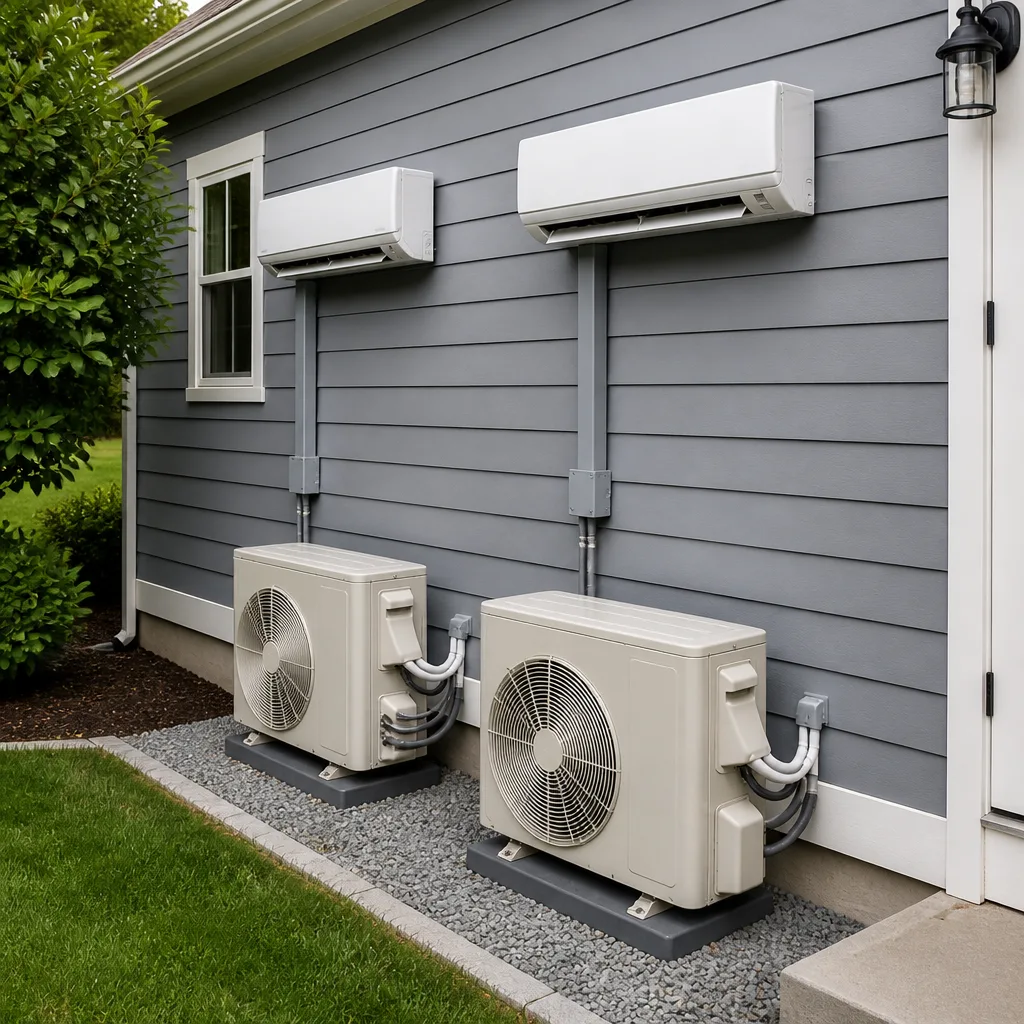
The most common mini split “breakdown” call we get isn’t a breakdown at all. The system is running exactly as designed. It’s just been set to a mode the homeowner never meant to select, and nobody ever explained what the little symbols on the remote actually mean. After more than four decades of service in Winchester, we’ve learned that most heat pump and mini split calls trace back to three or four root causes. Some you can rule out yourself in five minutes. The rest you can describe clearly enough that a technician starts the diagnostic at step four instead of step one. This guide is a triage tool, not a repair manual. It’ll help you figure out what’s wrong, what’s safe to check, and when to put the phone down and call.
Quick Answer
If your heat pump or mini split isn’t working, check three things before calling anyone: the remote’s mode setting, the air filter, and the breaker. Those three explain the majority of “system failure” calls. If the unit displays an error code, write the code down and note what the system was doing when it appeared. Anything involving refrigerant, ice on the outdoor unit that won’t clear, or repeated breaker trips needs a licensed technician, not a homeowner with a screwdriver.
Styles & brands we work with
- AC repair
- Furnace & heating
- Heat pumps
- Ductless mini splits
- Carrier
- Trane
- Goodman
Table of Contents
- No Heat: What to Check Before You Call
- No Cool: The Mini Split Is Running but Not Cooling
- Unit Running but No Air Movement
- How to Read a Mini Split Error Code
- Defrost Mode: When It Looks Broken but Isn’t
- Ice on the Outdoor Unit in a Winchester Winter
- The Three Homeowner-Safe Interventions
No Heat: What to Check Before You Call
A heat pump that won’t heat is the call we take most often between November and February, and it’s the one where a few minutes of checking saves the most time. Heat pumps work differently from furnaces: they move heat rather than generate it, which means they depend on the outdoor unit pulling warmth out of cold air. When something in that chain breaks, the indoor unit can run all day and never produce warm air.
Start with these checks in order:
- Confirm the mode. Press the mode button on the remote until the display shows the heat symbol (usually a sun). Mini split remotes are notorious for getting bumped. We’ve walked into Winchester homes where the “no heat” problem was a remote set to fan-only.
- Set temperature well above room temp. If the room is 62°F and the setpoint is 64°F, the system may not ramp up. Push it to 72°F and wait five minutes.
- Check the filter. A clogged filter restricts airflow and can trigger a high-pressure safety that shuts the compressor down. Pull it, hold it up to a light. If you can’t see light through it, that’s your problem.
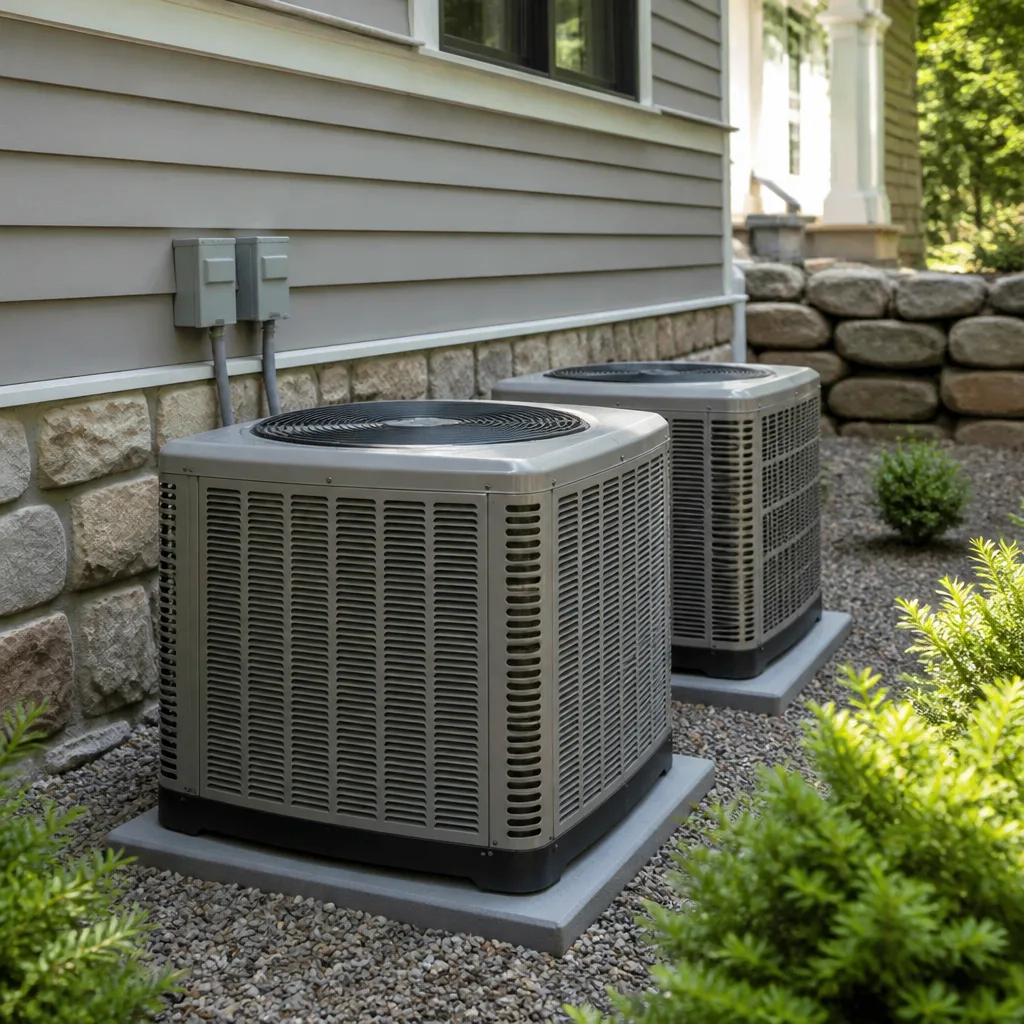
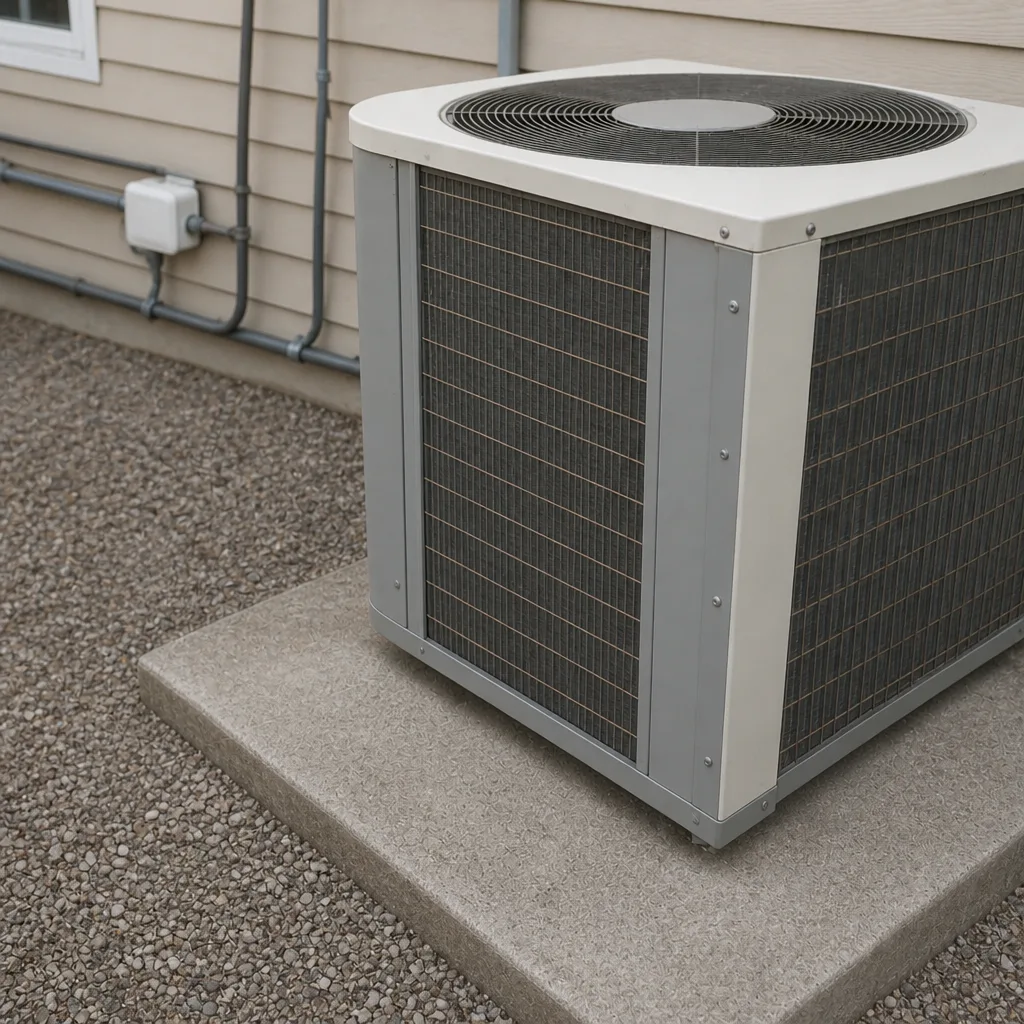
- Look at the outdoor unit. Is the fan spinning? Is there frost on the coil? Is the unit making a clicking sound or completely silent? Note each answer.
- Check the breaker. We cover the reset sequence in detail below. Don’t just flip it once and assume.
Winchester winters are mild compared to the mountains, but we still see enough cold snaps that heat pump performance matters. If the outdoor unit is running and the indoor unit is blowing lukewarm air, that’s a different problem than a system that’s completely dead. The first points toward refrigerant or reversing valve issues. The second points toward power or control board problems. Either way, once you’ve done these five checks, you have enough information to make a useful call.
If you need the full picture on how your system is meant to perform in cold weather, our guide to Heat Pump & Mini Split in Winchester walks through the basics of how these systems are designed to work.
No Cool: The Mini Split Is Running but Not Cooling
Running but not cooling is the summer version of the same frustration. The indoor unit is blowing air. The air just isn’t cold. After forty-two years of service, we can tell you that this symptom almost always points to one of four things.
Low refrigerant. Heat pumps don’t “use up” refrigerant the way a car burns oil. If it’s low, there’s a leak. A slow leak can take years to become obvious, and the first signal is often a unit that cools fine in spring and struggles by July.
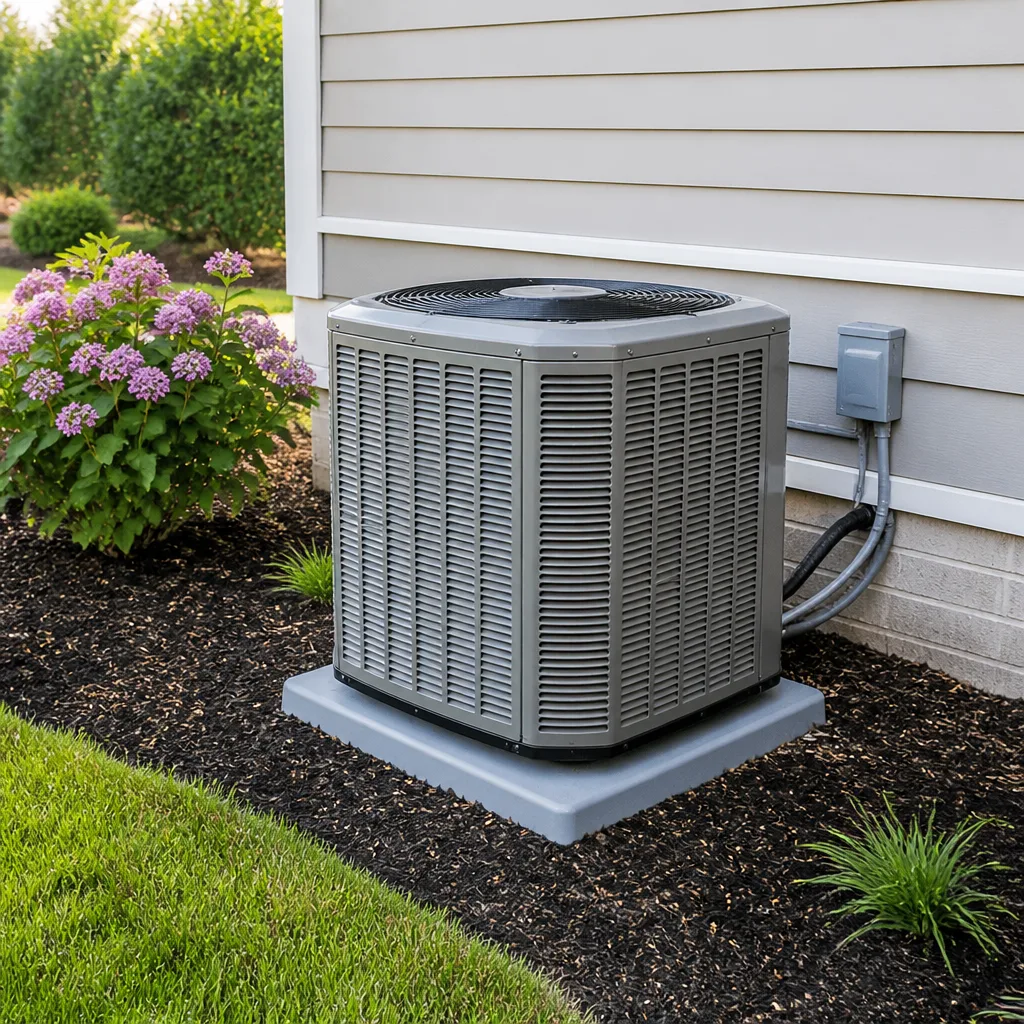
Dirty condenser coil. The outdoor unit pulls air across a coil to release heat. In a Winchester summer, with fine desert dust in the air, that coil can get packed with debris in a single season. If you can see dirt or cottonwood fluff in the fins, the system is working harder than it should and cooling less.
Blocked or dirty filter. Same story as the heating side. Restricted airflow means the indoor coil can freeze, which prevents cooling entirely. You’ll know it’s frozen if the indoor unit is dripping water or the copper lines entering the air handler are coated in frost.
Compressor or capacitor failure. The outdoor unit runs but the fan spins without the compressor engaging. That’s usually a start capacitor, and it’s a straightforward repair, not a death sentence for the system.
Before you call, take note of these details: is the outdoor unit fan spinning? Is the air coming from the indoor unit room temperature or slightly warm? Is there water pooling near the indoor head? Each detail helps us narrow the diagnostic before we arrive. Our AC Repair & Installation in Winchester page covers what to expect when a technician comes out for a cooling problem.
Unit Running but No Air Movement
You can hear the system running. The display is lit. But nothing is coming out of the indoor head. That’s a different failure than “blowing warm air,” and it narrows the possibilities quickly.
Mini splits use a blower wheel inside the indoor unit to push air through the coil and out the louvers. If that blower isn’t spinning, the causes are limited:
- Fan stalled by obstruction. Rare on a clean install, more common after years of use. The blower wheel can accumulate debris and bind.
- Blower motor failure. The motor itself has quit. On a mini split, this is a component replacement.
- Control board fault. The board commands the blower to run, and if it isn’t sending the signal, the blower never starts. Error codes usually accompany this.
- Frozen indoor coil. A coil packed with ice blocks airflow entirely. If you see ice on the indoor unit, that’s a refrigerant or airflow problem, not a blower problem.
Homeowners sometimes assume no airflow means the whole system is dead and they need a new one. That’s rarely the case. In Winchester, most no-airflow calls we handle end in a single-visit repair. A blower motor replacement or board swap keeps the rest of the system intact.
One thing worth checking yourself before calling: is the indoor unit set to a low fan speed and setpoint that’s already been met? Some systems drop to a slow cycle when they’ve reached temperature. If the display shows the setpoint is satisfied, everything may be working normally.
How to Read a Mini Split Error Code
Mini split display codes look intimidating because they’re written for technicians. But almost every code follows a simple pattern: a letter or number that identifies the type of fault, followed by a code that identifies the specific component. You don’t need a service manual to gather the right information.
Here’s how to decode what you’re seeing:
- Write down the exact code. Not a description. The literal letters and numbers. “E1” and “E-1” and “E01” can mean slightly different things on different brands.
- Note when it appears. Does the code show immediately on startup? After five minutes of running? Only when the outdoor unit tries to start? Timing narrows the cause.
- Identify the brand. A code from a Trane means something different than the same code on a Lennox or a Goodman. Tell the technician the brand and model number, usually on a sticker on the side of the outdoor unit or inside the indoor unit’s cover.
- Note what the system is doing when the code displays. Running? Silent? Fan spinning? Compressor engaging? Each datapoint matters.
What to have ready when you call:
- The exact error code
- Brand and model number
- Whether the indoor or outdoor unit is displaying it
- What the unit was doing when the code appeared
- Whether the code clears on reset or returns immediately
We’ve seen this go both ways. A homeowner who calls and says “I have an E5 code on a Rheem mini split, shows up about ten minutes after the system starts, clears on reset and comes back” gets a faster diagnosis than one who calls and says “it’s not working.” The first call starts at step four of the diagnostic. The second one starts at step one. That’s half the visit, and often a different repair price.
Mini split codes on some brands overlap with heat pump codes and some don’t. If you’re working with a traditional heat pump and not a ductless mini split, our Heating & Furnace in Winchester guide covers the codes you’ll see on those systems.
Defrost Mode: When It Looks Broken but Isn’t
Every winter, we field calls about a “broken” heat pump that’s actually running its defrost cycle. We understand why. In defrost mode, the system does things that look like a malfunction to anyone who hasn’t seen it before.
Heat pumps pull heat out of outdoor air. When the outdoor coil gets cold enough, moisture in the air freezes on it. The system has to periodically reverse itself to melt that ice. During defrost:
- The outdoor fan stops spinning.
- The outdoor unit may release a cloud of steam or vapor.
- The system may make a whooshing or clunking sound as the reversing valve shifts.
- A strange smell may come through the indoor vents. That’s dust burning off the coil as it heats up, and it’s normal.
- Indoor heating stops for several minutes. Some systems blow cool air during defrost. Some shut the indoor fan off entirely.
Defrost cycles typically last three to ten minutes and run periodically throughout cold weather runs. On a Winchester winter day with high humidity after rain, defrost cycles run more often. That’s normal too.
What’s not normal: defrost cycles that last twenty minutes or more. Defrost cycles that run every few minutes back to back. Frost that forms on the outdoor unit and stays after defrost should have cleared it. Ice that builds up thick at the base of the unit. Any of those point to a fault in the defrost control board, the defrost thermistor, or the reversing valve. Those need a technician.
The defrost smell is the one that catches people off guard. That faint burning smell the first time the system runs a full defrost cycle after a cold snap is coil dust and dust on the indoor heater. It’ll fade after a few cycles. If it persists, or if it smells like electrical burning rather than dust, shut the system off and call. The difference matters.
Ice on the Outdoor Unit in a Winchester Winter
Ice on the outdoor unit in winter looks alarming, and homeowners usually assume the system is broken. Sometimes it is. Often it isn’t. Here’s how to tell the difference.
Normal: A light, even layer of frost on the outdoor coil early in a cold cycle. It should melt during a normal defrost cycle and stay clear until the next cold run. This is the system doing its job.
Not normal: Ice building up at the bottom of the outdoor unit while the top stays clear. That signals defrost isn’t completing properly, and it can damage the compressor if it’s ignored. Ice on the coil itself that doesn’t clear after a defrost cycle. Ice so thick it blocks the fan. Those are refrigerant-side or control-side problems.
Winchester cold snaps push temperatures well below what our systems are used to, and heat pumps that handle a typical winter fine can struggle when the desert temperature drops into the low twenties for several nights in a row. That’s when the defrost cycle runs more often, and that’s when an already-marginal system starts showing its limitations.
What happens if you ignore it: the compressor runs against a blocked coil. It pulls higher amps, gets hotter, and can fail outright. A compressor replacement on a heat pump costs more than most homeowners expect, and it’s the repair most likely to make the repair-versus-replace conversation complicated. If your outdoor unit is icing up and not clearing, get it looked at before the next cold snap. Don’t wait for the compressor to force the decision.
If you’re not sure whether your system’s ice is normal or not, that’s a fair call to make with a technician on the phone. Fireside Heating & Air Co. answers every call with a live person, twenty-four hours a day, and we’ll tell you straight whether it can wait until morning.
The Three Homeowner-Safe Interventions
Most of what a heat pump or mini split needs takes tools, gauges, and training. But there are three interventions you can safely try yourself, and each has a clear stopping point where you should put the screwdriver down and pick up the phone.
1. Filter check and replacement.
Pull the indoor unit’s filter. Hold it up to a light. If light doesn’t pass through, replace or wash it (depending on whether it’s disposable or reusable). On most mini splits, filters pull out with a light tug on the front panel. Reinstall, run the system, and see if performance changes. That’s the full extent of what’s safe to do inside the indoor unit.
Stop point: If the filter is clean and the symptoms persist, stop. Don’t open the indoor unit’s cover beyond the filter access panel. The blower wheel, electronics, and coil are all behind there and are not homeowner-serviceable.
2. Breaker reset sequence.
Go to your electrical panel. Find the breaker labeled for the HVAC system, usually a double-pole 240-volt breaker. Flip it fully off. Wait sixty seconds. Flip it back on. Then go to the thermostat or remote and turn the system on. Give it five minutes to respond.
Stop point: If the breaker trips again immediately, stop. Don’t reset it a second time. Repeated tripping points to a short, a failing compressor, or a control board fault, and resetting it repeatedly can damage the system further. Call us.
3. Remote control mode reset.
Press the mode button through every setting and land on the one you want (cool, heat, or auto). Set the temperature well above or below room temperature so the system has a real target to hit. On some mini split remotes, you also need to confirm the fan speed isn’t set to a low setting and that the unit isn’t in a timer or sleep profile.
Stop point: After the mode reset, if the system runs but performs wrong (cooling in heat mode, heating in cool mode, not responding to setpoint changes at all), the fault is on the control side. Call us.
Everything else – refrigerant, compressor, reversing valve, defrost board, control board, electrical diagnostics, blower motor replacement – needs a licensed technician. Heat pumps and mini splits involve high-voltage electrical connections and pressurized refrigerant. We’re not going to walk you through opening those panels, and no honest guide should.
For homeowners who want context on how mini splits fit into a whole-home comfort plan, our Fireside Heating & Air Co. Winchester home page gives the wider picture.
Common Mistakes to Avoid
- Assuming no heat means a dead heat pump. In Winchester, we’ve found heat pumps “dead” that were simply set to cool mode on the remote by mistake. Check the mode before you assume the worst – it takes ten seconds and saves a service call.
- Resetting a tripped breaker repeatedly. The breaker trips for a reason. If it trips again after the first reset, stop. Resetting it repeatedly can fry a control board or damage the compressor.
- Ignoring ice on the outdoor unit through the winter. Winchester cold snaps are real, and a system that ices up and doesn’t clear will eventually damage the compressor. Catch it early and it’s a repair. Let it go and it’s a replacement.
- Hosing down the outdoor unit with a pressure washer. A garden hose on low pressure is fine for the fins. A pressure washer bends the fins and forces water where it doesn’t belong. Skip it.
- Calling defrost mode “broken.” Steam, whooshing, a paused fan, and a faint smell during defrost are all normal. If you call before you know what defrost looks like, you may pay for a visit that finds nothing wrong.
- Covering the outdoor unit in winter. A cover seems protective. It actually traps moisture and prevents defrost from working. Don’t do it in Winchester – the humidity here during winter is high enough that a cover creates more problems than it solves.
- Buying a new system before getting a real diagnosis. Some repairs cost less than a quarter of what a new system does. Get a real diagnostic first, then decide. Fireside offers a free second opinion on any written estimate if you’ve already been told you need a replacement.
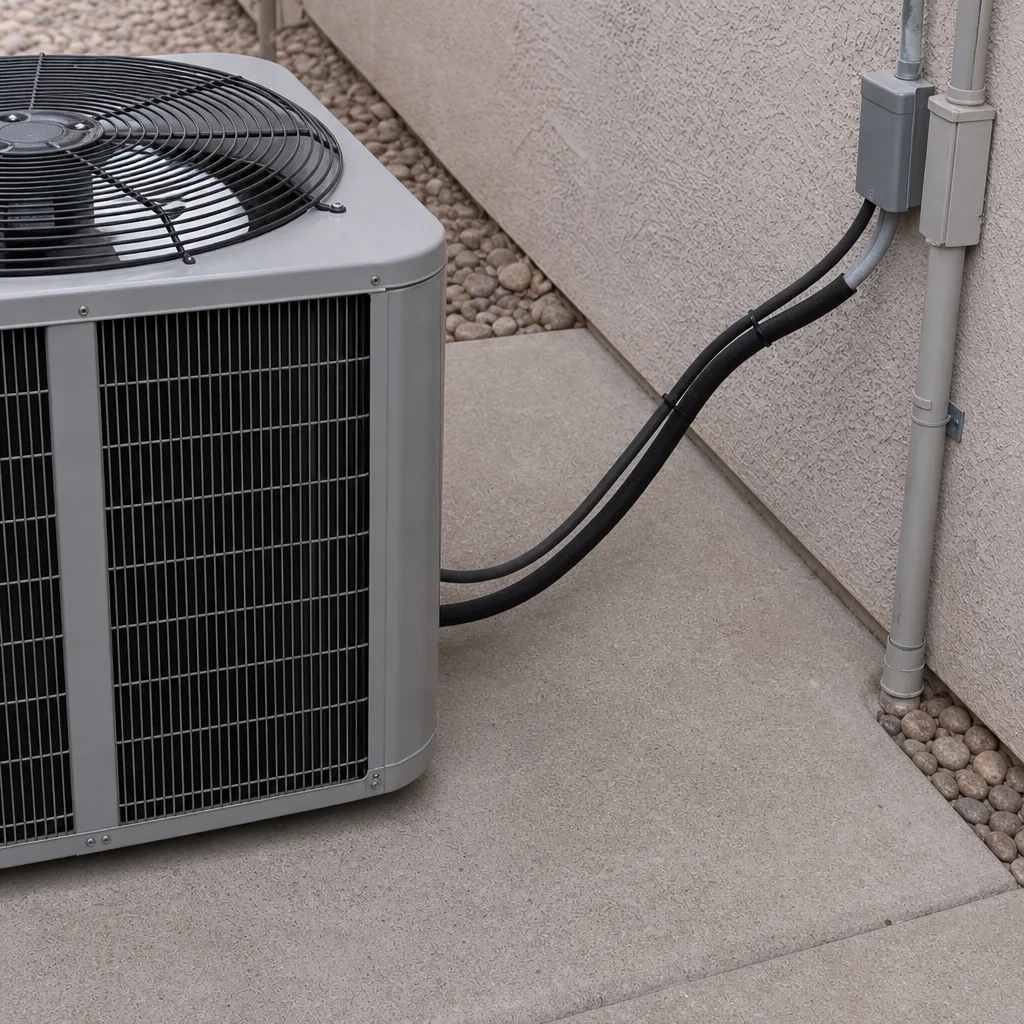
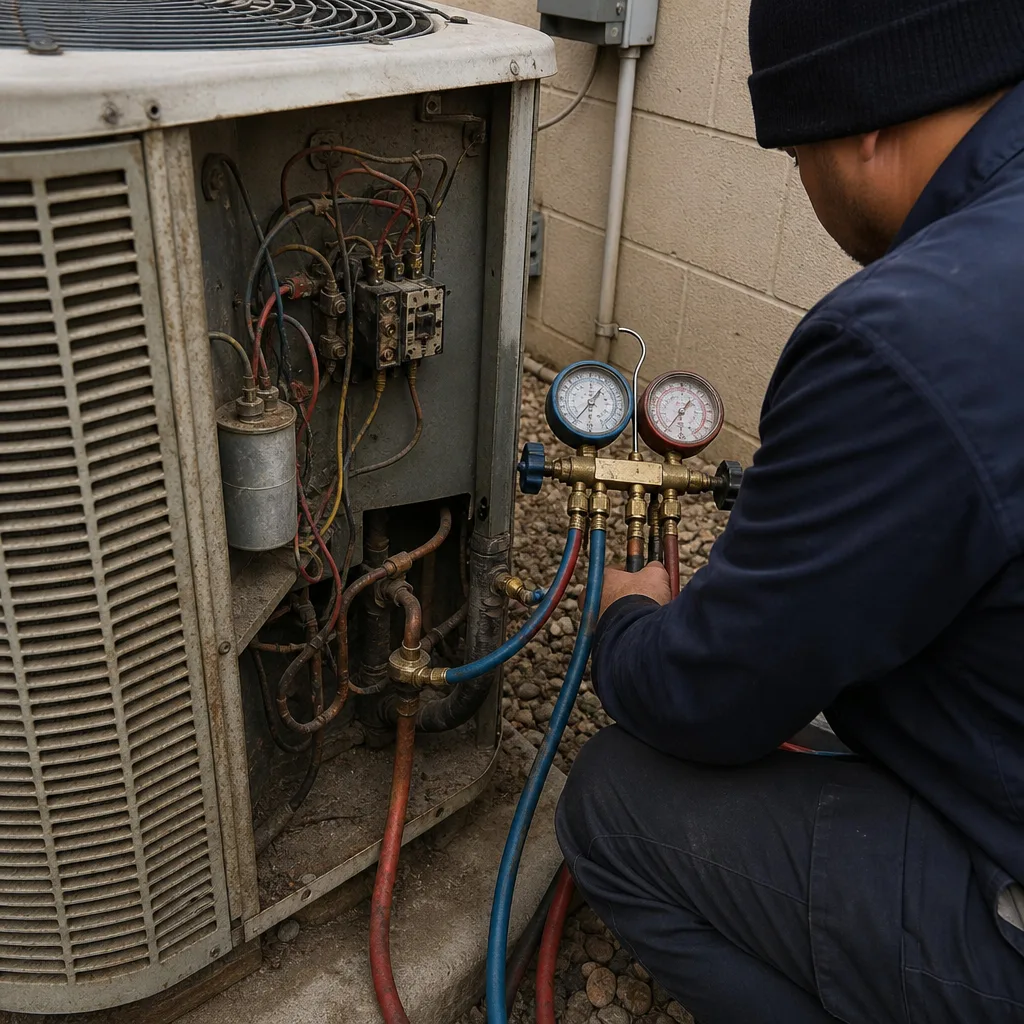
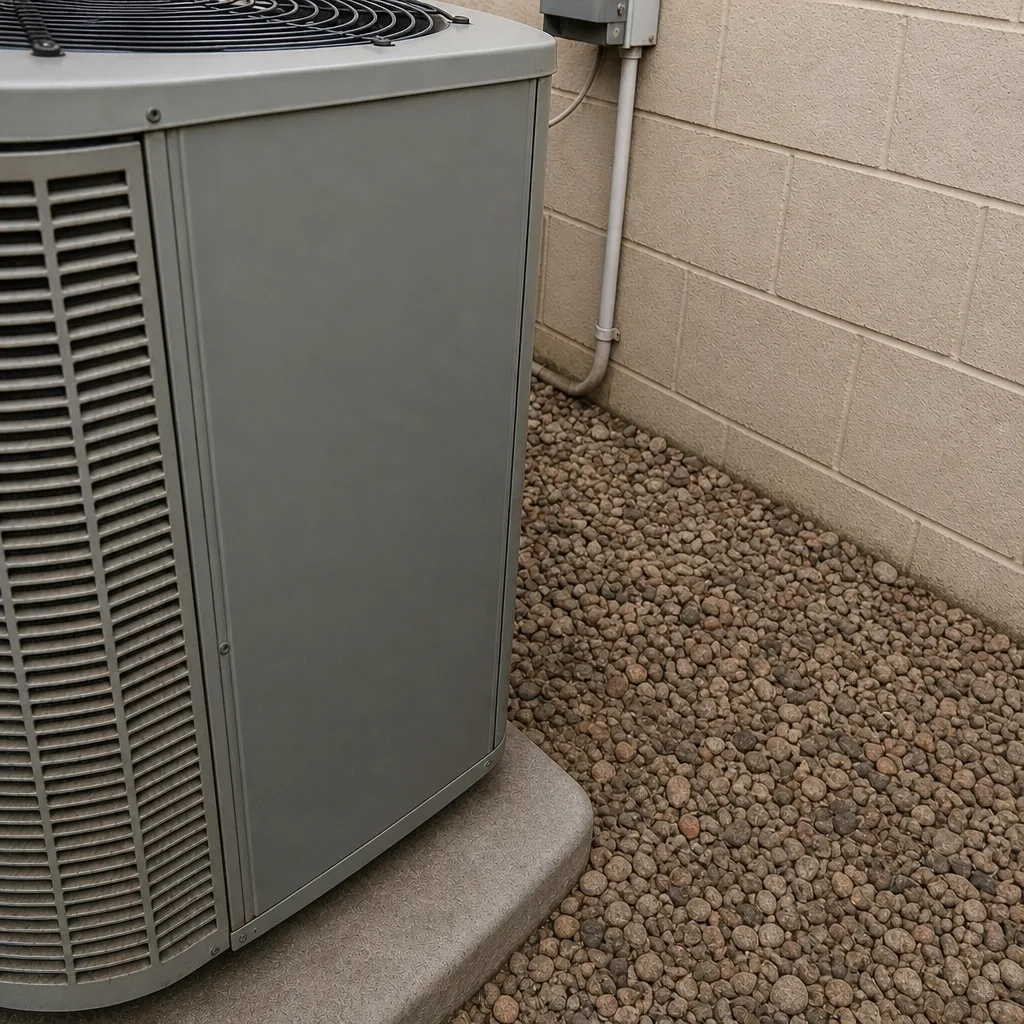
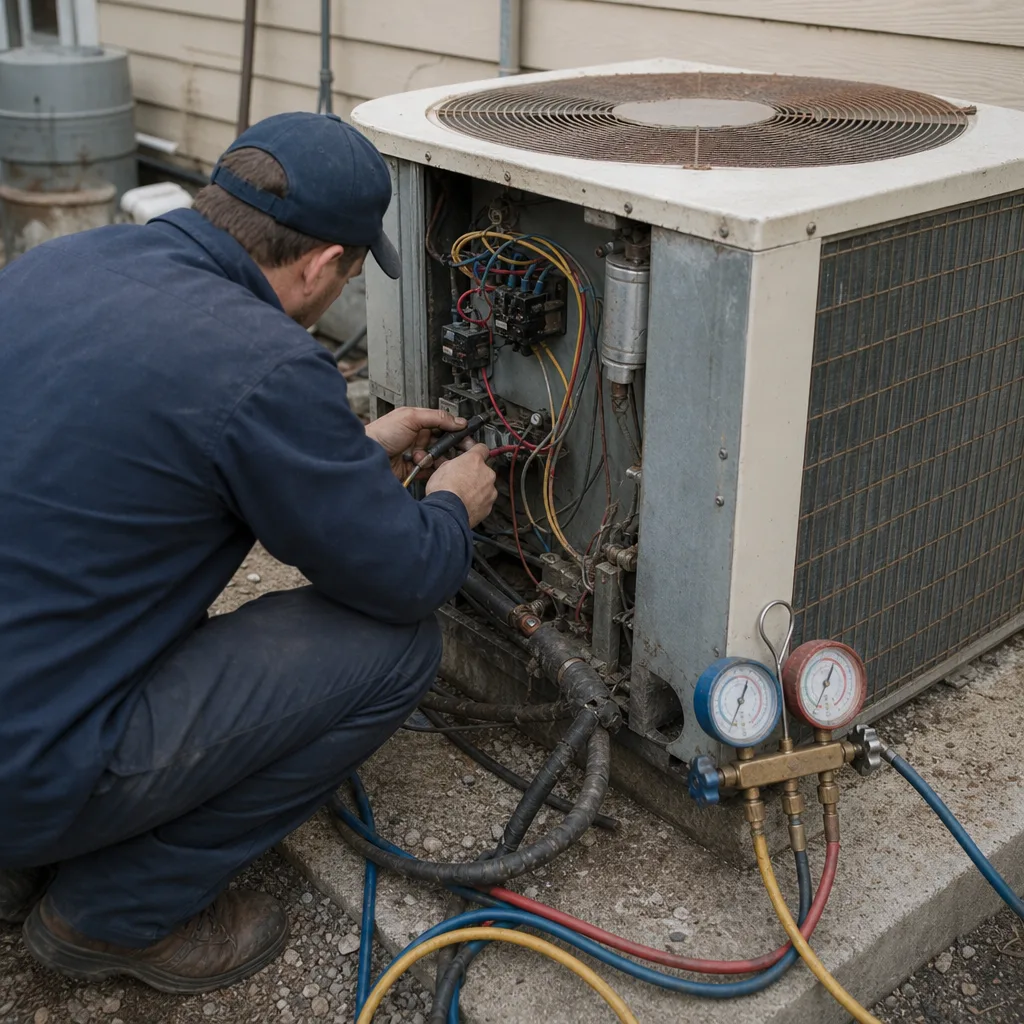
See the difference
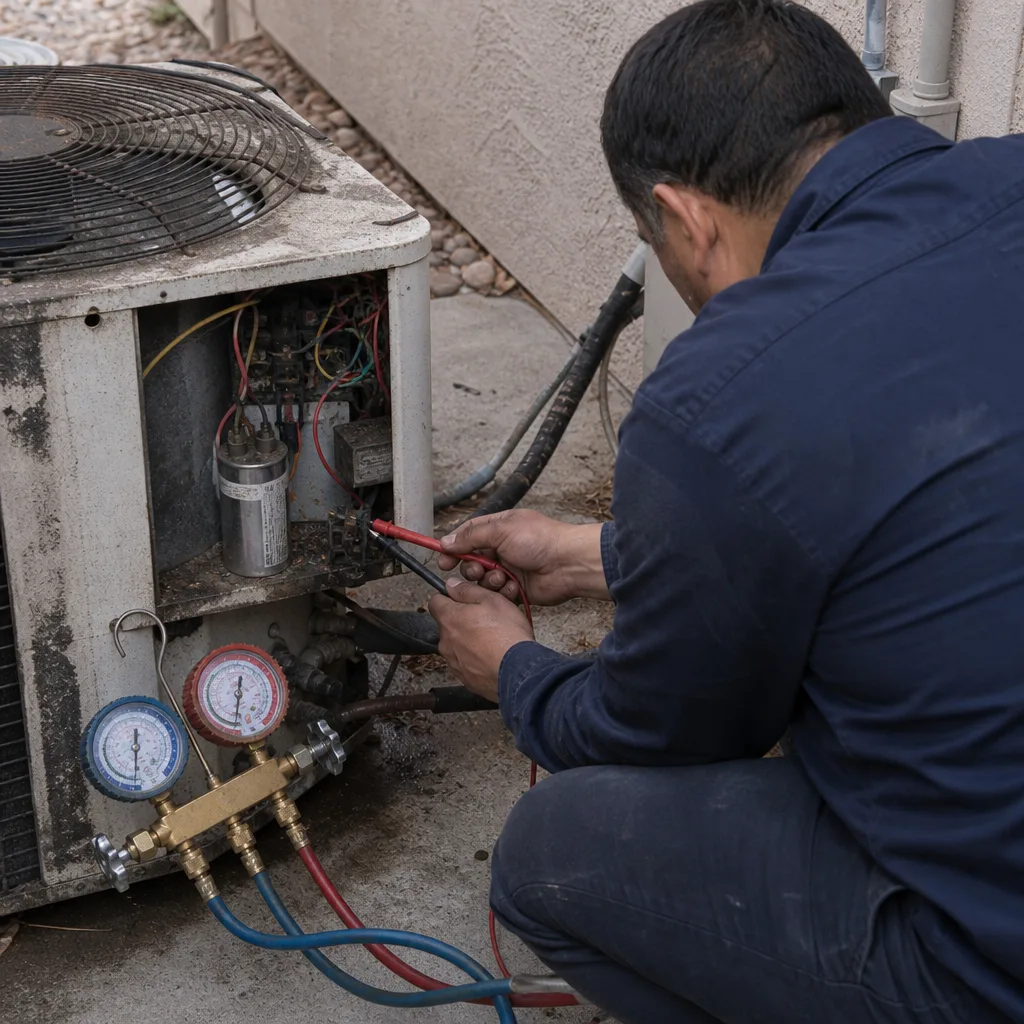 Before
 After
 Before
 After
 Before
 After
When to Call a Professional
Call a licensed HVAC technician for any heat pump or mini split issue that involves refrigerant, high-voltage electrical work, compressor or blower motor replacement, control board faults, or ice that recurs on the outdoor unit after the first defrost cycle. Stop and call immediately if you smell burning, see sparks, hear repeated breaker trips, or notice water pooling inside the home. These are the situations where one more hour of waiting can turn a repair into a replacement. Our technicians have up to eight years of experience with the systems that matter in Winchester, and we’re trained on nine major brands including Trane, Lennox, Goodman, and Rheem. Fireside Heating & Air Co. Winchester offers free estimates in Winchester. Call (844) 783-5043 – a live person answers, day or night.
Frequently Asked Questions
That smell is almost always dust burning off the indoor coil as it heats up, especially after a cold night. It’s normal during the season’s first few runs and usually fades after a week. If the smell persists or smells like burning plastic or electrical, shut the system off and call. A persistent smell after twenty-plus cycles is not a “burn-in” smell and shouldn’t be treated as one.
Frequent defrost cycles mean the system isn’t completing defrost properly, and the defrost control or thermistor likely needs attention. Short cycles between defrosts can also mean low refrigerant or a blocked outdoor coil. Neither is a homeowner repair. Call and describe how often it happens – that detail alone shortens the diagnostic.
Most mini split repairs in Winchester run between one hundred and six hundred dollars, depending on the component. A capacitor or blower motor replacement is on the low end. A control board, reversing valve, or compressor repair sits at the high end. Fireside quotes the price upfront before any work begins, and the price quoted is the price paid. Call (844) 783-5043 for an exact quote – estimates are free.
You can safely handle filters, breaker resets, and remote settings. Everything past that involves either high-voltage electrical connections or pressurized refrigerant, and both are genuinely dangerous to work on without training. Even experienced handymen get hurt on heat pumps. The line is clear: filters and resets, yes. Panels and gauges, no.
Light frost that clears during a defrost cycle is normal. Ice that lingers, ice at the base of the unit, or ice that comes back within a few minutes of defrost is not. In Winchester, we treat recurring ice as a refrigerant-side or defrost control issue until we’ve proven otherwise. Ignoring it is what turns a repair into a compressor replacement.
The general rule is that if a repair costs more than a third of what a new system would cost, and your system is more than ten to twelve years old, replacement starts to make sense. Under that threshold, repair usually wins. We’ll talk through it plainly – no pressure to replace a system that has years left in it, and no reason to keep repairing one that doesn’t. The Heat Pump & Mini Split in Winchester page covers the replacement side of that conversation if you want to look before you call.
The Bottom Line
Heat pump and mini split problems usually trace back to a handful of root causes: a mode setting, a dirty filter, a tripped breaker, a defrost cycle doing its job, or a real fault that needs a technician. Check the three safe things first. If those don’t fix it, write down what you’re seeing and hear – the exact code, the brand and model, when it happens, and what the system does when it does. That information is what turns a diagnostic visit from a two-hour puzzle into a forty-minute repair. And when the job needs a professional, Fireside Heating & Air Co. Winchester is here with live phone answers around the clock, upfront pricing, and a 90-Day Done Right Promise behind every job. Done right, or we make it right.
Call (844) 783-5043 for a free estimate on any heat pump or mini split concern in Winchester. A live person answers every call, every day of the year.
Written by the team at Fireside Heating & Air Co. Winchester.