
Last updated November 18, 2026
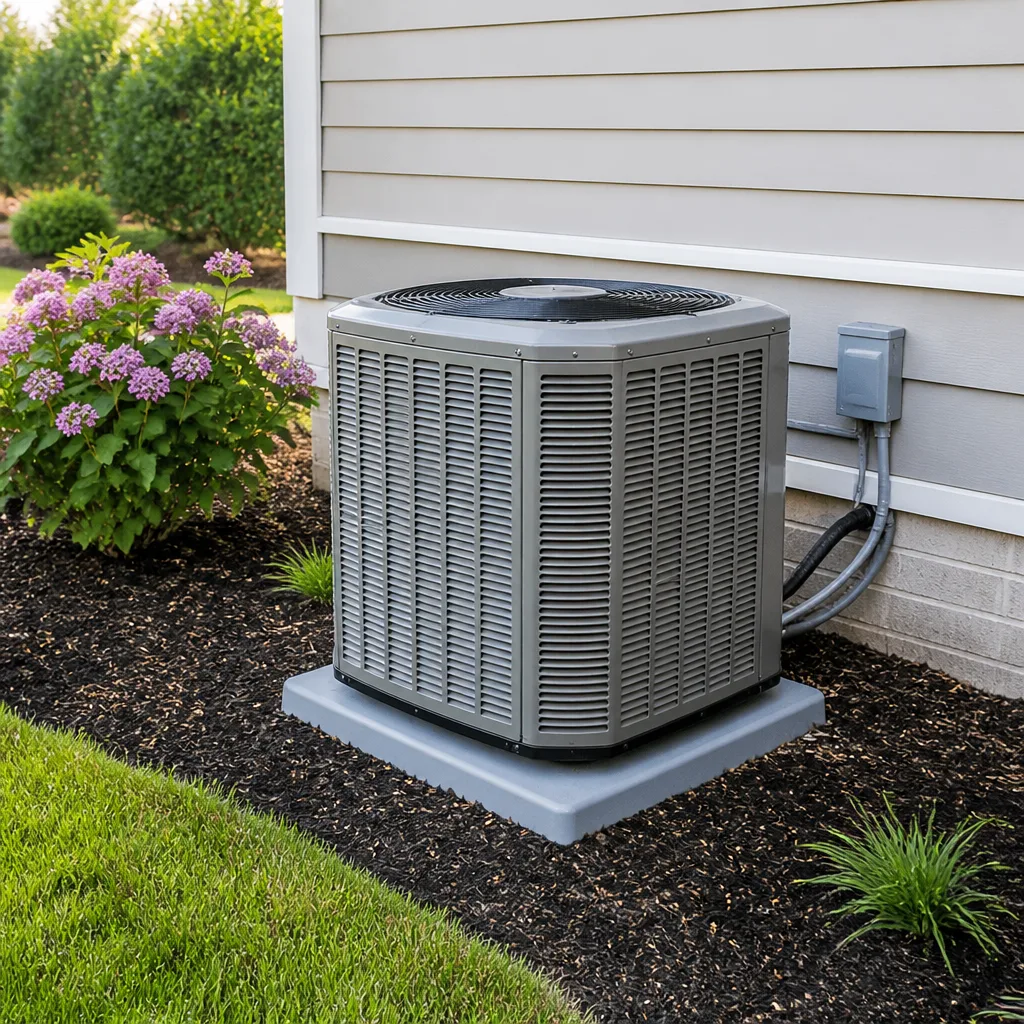 AC repair
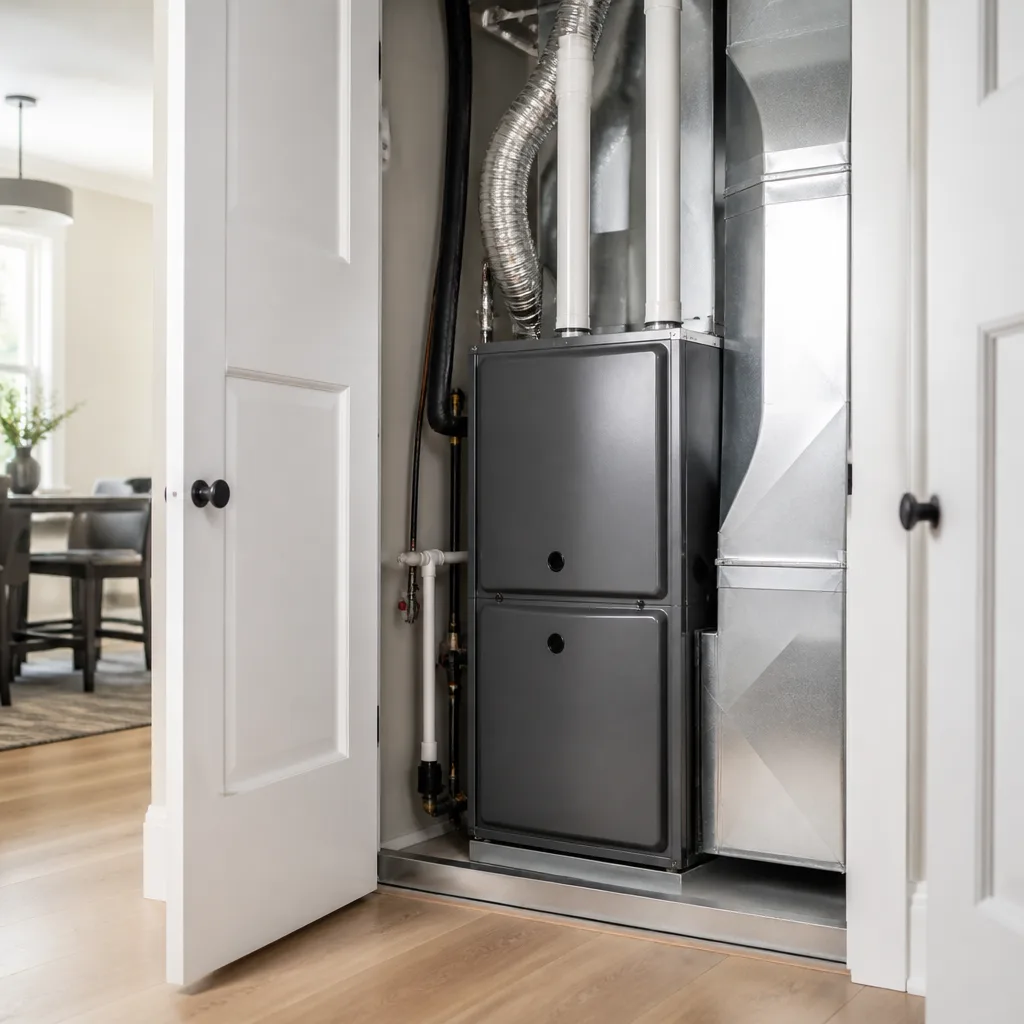 Furnace & heating
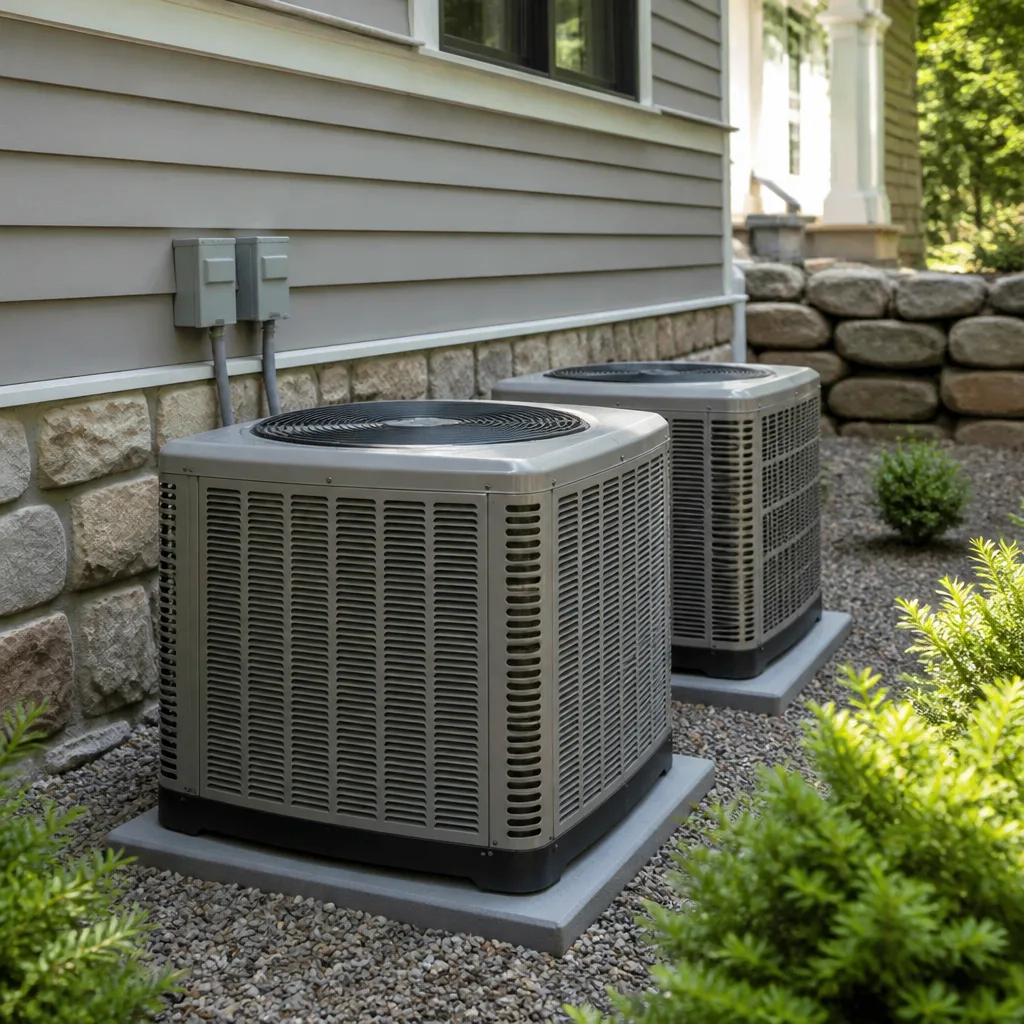 Heat pumps
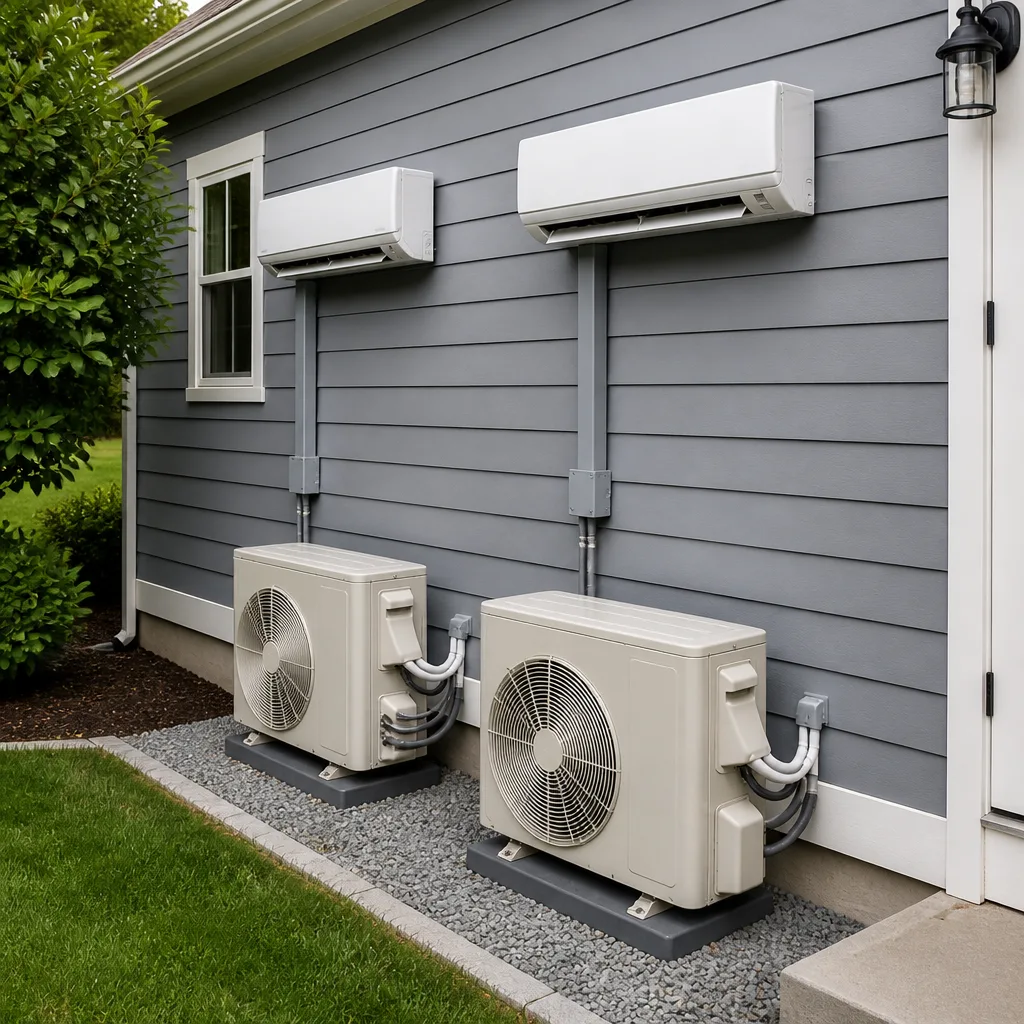 Ductless mini splits
 Carrier
 Trane
 Goodman
Seasonal tune-up and full diagnostic on your Carrier, Trane, or Goodman system - readings shown to you before any repair is proposed
Diagnosis first, numbers second - you approve the repair price before a single part goes in.
Get your free estimateHow Long Does Emergency & Commercial HVAC Take? Timelines and What to Expect
A commercial condenser replacement that runs one day in Las Vegas can take three to five days in Winchester. That gap has nothing to do with how fast local contractors work. It comes down to freight: commercial equipment isn’t stocked in this corner of Nevada, and expedited shipping to a rural market costs more than most business owners expect until they’re already in an emergency. We’ve watched that surprise hit restaurant owners, property managers, and shop owners mid-summer, and it’s avoidable with the right planning. This guide covers real timeline ranges for the most common commercial repairs, how parts sourcing shapes your realistic repair window, what emergency service really promises, and how to protect your operations while a system is down.
Quick Answer
Most commercial HVAC repairs take between four hours and three business days, depending on the part and whether it’s stocked locally. Basic failures like capacitors or contactors are often same-day. Compressor swaps and refrigerant leak repairs typically run one to three days because parts ship in from regional distributors. A full rooftop unit (RTU) replacement usually takes three to seven days in the Winchester area once equipment is on site, longer if the unit has to be ordered from the factory. Any contractor who quotes a firm completion time before diagnosing the system is guessing.
Styles & brands we work with
- AC repair
- Furnace & heating
- Heat pumps
- Ductless mini splits
- Carrier
- Trane
- Goodman
Table of Contents
- Why Commercial Timelines Are Harder to Predict Than Residential
- Real Timeline Ranges for the Most Common Commercial Repairs
- How Parts Sourcing Affects Your Repair Window in Winchester
- What “Emergency Service” Actually Means (And What to Get in Writing)
- Keeping Your Business Running During an HVAC Outage
- How Age and Brand Affect Parts Availability
- Temporary Cooling Units and Phased Repair Options
- How to Plan Ahead So a Breakdown Doesn’t Stop Your Business
Why Commercial Timelines Are Harder to Predict Than Residential
Residential HVAC follows a fairly steady script. Most homes in Winchester run one furnace and one air conditioner, and the parts to fix them are common across the major brands. Commercial systems are a different animal. A strip mall anchor tenant might run six rooftop units tied to one control system. A restaurant runs make-up air, exhaust, and a dedicated cooling circuit. A small warehouse runs a split system sized far larger than anything a house would carry. Each of those setups pulls different parts, and every one of them can fail in a place that isn’t obvious until a technician has it open.
Here’s what actually drives the timeline:
- Diagnosis time. Residential diagnostics often run 30 to 60 minutes. Commercial diagnosis can take two to four hours on a multi-unit building, because the technician has to isolate which system is failing and confirm nothing else is feeding the problem.
- Parts availability. A residential capacitor is a phone call away. A commercial compressor for a Rheem or York RTU may need to ship from Salt Lake City, Phoenix, or Los Angeles.
- Access and safety. Rooftop units mean ladders, roof access, and lockout procedures. A crew can’t move as fast on a roof as it can in a garage.
- Equipment size and weight. A commercial condenser swap involves a crane or a lift. That scheduling alone can add a day.
- Permits and inspections. Commercial replacement work in Winchester can require permits and inspection scheduling, which adds turnaround time on top of the physical install.
Any of these can shift a job by a day. Two of them together can shift it by a week. That’s why a straight answer about timing depends on the system in front of the technician, not on a phone call. If you want a straight read on what your building needs, our Fireside Heating & Air Co. Winchester home page is the place to start.
Real Timeline Ranges for the Most Common Commercial Repairs
These ranges come from what we’ve seen on commercial jobs around Winchester. They assume a technician has diagnosed the problem and the parts are either on hand or ordered. If the part has to ship, add the freight window below.
- Capacitor replacement: Same day, usually one to two hours once the technician is on site. Capacitors are small and often stocked on the service vehicle. This is the most common commercial failure we see.
- Contactor replacement: Same day, one to two hours. Same story as capacitors. Small part, common failure, low freight risk.
- Blower motor replacement: One to three days. Motors are less universal than capacitors and often need to be matched to the specific unit. On a Bryant or Daikin system, the motor spec matters.
- Refrigerant leak repair: One to two days for the repair itself, plus time for the leak test and recharge. Larger commercial systems can take longer to leak-test because the charge volume is bigger.
- Compressor swap: Two to four days in a rural market. The compressor is heavy, brand-specific, and often needs to ship. On a rooftop, add a day for the crane or lift.
- RTU replacement: Three to seven days once equipment is on site. Longer if the unit has to be ordered from the factory or if duct modifications are needed. That window doesn’t include the freight time to get the unit to Winchester.
- Control board or thermostat replacement: Same day to two days. Control boards are more universal than compressors, but a commercial control board for a specific York or Rheem system may still need to ship.
If your building is running a heat pump instead of a packaged unit, the timeline picture lines up with what we cover on our Heat Pump & Mini Split in Winchester page, with the caveat that commercial heat pump parts are sometimes harder to source locally than residential ones.
How Parts Sourcing Affects Your Repair Window in Winchester
This is the part that catches people. Winchester isn’t a major metro, and the nearest full-line commercial HVAC distributor isn’t down the street. That changes the math on every repair that needs a part not stocked on the service vehicle.
Here’s roughly how it plays out:
- Parts stocked on the service vehicle: Capacitors, contactors, common thermostats, fuses, and standard filters. Same-day service for anything that needs only these.
- Parts stocked at a local supply house: Motors, thermostats, some control boards. Typically next-day service, sometimes same-day depending on what the supplier is carrying.
- Parts from a regional commercial distributor: Compressors, commercial control boards, heat exchangers, and most brand-specific components. Ground freight from Phoenix, Salt Lake City, or Los Angeles typically lands in two to three business days. Expedited freight can cut that to next day, but the cost is real.
- Factory-ordered parts or equipment: New RTUs, commercial condensers, and older discontinued parts can run two to six weeks from order to arrival. This is where a “quick fix” turns into a real project.
What this means in practice: a commercial repair in Winchester can be same-day, next-day, or a week out, and the difference often comes down to whether anyone had a plan before the system failed. On a 95-degree July afternoon, expedited freight to rural Nevada runs several times what a ground shipment would have cost if the part had been ordered in April. In our experience, the business owners who avoid that surcharge are the ones who have us out for a seasonal inspection in spring, so worn parts get flagged before they fail. If you haven’t had a commercial system checked recently, our AC Repair & Installation in Winchester page covers what a commercial cooling inspection includes.
What “Emergency Service” Actually Means (And What to Get in Writing)
Here’s the honest version, and it’s worth hearing before you’re in a crisis.
“24/7 emergency service” means a live person answers the phone at any hour. It does not always mean a technician can be on site immediately, and it does not promise a repair that same night. What it promises is this: someone is reachable, someone can help you stabilize the situation, and someone can commit to a response window you can plan around.
What a good contractor should be upfront about:
- Live phone coverage, not a voicemail tree. Phones answered by a live person around the clock, including holidays, are the baseline. A recording that promises a callback within 24 hours is not emergency service.
- Realistic response time. From a Winchester base, a commercial emergency call typically gets a technician dispatched the same day during business hours. After hours, response depends on crew availability and the severity of the call. A restaurant with food spoiling or a veterinary clinic with animals inside gets priority over a shop that can run fans until morning.
- What “immediate” means. If the system has failed in a way that risks equipment damage or product loss, the priority is stabilization: shut off what needs shutting off, isolate the failed unit, and get temporary cooling on site if needed.
- No overtime charge unless it was disclosed. Ask directly. Ask whether there’s a premium for after-hours calls and how it’s calculated.
Before you agree to an emergency dispatch, ask three questions: What’s your response window tonight? Is there an after-hours premium, and what is it? And can you confirm in writing what I’m paying before you start work? Any real service company will answer those clearly. That last question is why we quote upfront on every job. The price quoted is the price paid.
Keeping Your Business Running During an HVAC Outage
A failed HVAC system doesn’t pause your business. Restaurants lose food, retail loses foot traffic, offices empty out, and equipment that needs cooling can be damaged by the heat. The right question isn’t just “when will it be fixed” but “how do we keep operating until then.” A good commercial contractor should bring that up before you ask.
Options that buy you time:
- Temporary cooling units. Portable cooling trailers and spot coolers can be rented and on site within 24 to 72 hours in most of the Winchester area. They’re not cheap, but they’re cheaper than a week of lost revenue.
- Partial system operation. Many commercial buildings run multiple rooftop units. If one fails out of four, the three still running may be enough to keep the space functional while the fourth is repaired. A technician can assess this quickly and tell you which zones will hold.
- Phased repair. If a compressor is the problem and freight is going to take three days, a contractor can sometimes restore partial cooling to the affected zone while the replacement compressor ships, then complete the swap once it arrives. Not always possible, but worth asking.
- Operational shifts. Adjusting hours, consolidating the space into the coolest zone, and reducing internal heat loads (computers, lighting, cooking equipment) can stretch what cooling capacity you still have.
Ask for this proactively. If a contractor’s only plan is “wait for the part,” that’s a thin plan. Fireside has handled enough Winchester commercial calls to know that the businesses that recover fastest are the ones with a continuity plan in place before the failure.
How Age and Brand Affect Parts Availability
Two systems can fail the same way and need completely different timelines based on age and brand. A brand that’s still manufactured and widely serviced moves fast. A discontinued model from 18 years ago is a scavenger hunt.
Here’s how to assess your own risk before an emergency happens:
- Check the age plate. Every commercial unit has a data plate with the model and serial number. Have a technician read it during your next inspection. If the system is over 15 years old, parts risk goes up sharply.
- Identify the brand and confirm it’s still serviced. Rheem, York, Daikin, and Bryant are all still in production and parts are generally available, though not always locally. If your unit is from a manufacturer that’s been acquired or discontinued, parts sourcing gets harder every year.
- Ask about known failure points. On older units, specific components tend to be the first to fail. A technician who services your brand regularly can tell you which parts are on the shortlist and whether to keep a spare on site.
- Watch the repair-to-replace math. Once repairs start adding up to more than 30 to 40 percent of the cost of a new system, and the equipment is past 15 years, replacement is usually the better call. A repair is a fix. A replacement resets the clock.
If your commercial system is nearing the end of its life and you want a real conversation about repair versus replace, our Heating & Furnace in Winchester page covers the heating side and we’re happy to do a free second opinion on any written estimate you’ve already received.
Temporary Cooling Units and Phased Repair Options
If a commercial system goes down and the part is going to take days, a rental cooling unit buys you operating time. Most commercial HVAC contractors can get portable units or a cooling trailer on site within one to three business days in the Winchester area, depending on availability and the size your building needs.
What to know:
- Cost scales fast. Rental cooling carries a daily rate plus setup and freight. For a small building, that may be $200 to $500 a day; for a larger or higher-capacity setup, more. Plan to spend a few thousand dollars on short-term rental if the outage runs a week.
- Power and placement matter. A cooling trailer needs a 240V circuit and clear space. Plan where it goes and who’s responsible for hooking it up.
- Phased repair is often the cheaper option. If only one of several units failed, partial cooling plus a few strategic changes to how the building is used beats the cost of a full rental.
Ask your contractor for both options and the price on each before you pick. A good contractor will lay out the cost of a rental, the cost of phased repair, and the cost of the eventual repair, and let you make the call.
How to Plan Ahead So a Breakdown Doesn’t Stop Your Business
Most commercial HVAC emergencies are foreseeable. Not the exact failure date, but the risk. Equipment age, service history, climate, and parts availability all point in the same direction if you look at them in advance.
Here’s a plan that works:
- Get a seasonal commercial inspection in spring and fall. Spring catches cooling issues before the summer rush. Fall catches heating issues before the first cold snap. An inspection doesn’t prevent every failure, but it catches most of the ones that would have cost you days in parts freight.
- Know your equipment. Write down the model and serial numbers for every commercial unit on your property. Note the brand and the approximate age. Keep it where your office manager can find it.
- Have a continuity plan. Decide now what you’ll do if the main system fails. Who you’ll call, what zones you’ll consolidate, whether you’ll take a temporary cooling unit, and what your daily revenue loss would be. The time to make that decision is before you need it.
- Pick a contractor before the emergency. A contractor you already know, who’s already been on your roof, who already has your equipment list, and who answers the phone at 2 a.m. will get you back up faster than a stranger you’ve never called.
- Replace on your schedule, not the failure’s. If equipment is past 15 years and repairs are stacking up, plan replacement for a slow season rather than an emergency in July.
This is the kind of planning we walk through with commercial customers around Winchester. It’s the difference between a nuisance and a shutdown.
Common Mistakes to Avoid
- Accepting a firm repair time before diagnosis. Any timeline quoted over the phone before a technician has looked at the system is a guess. Ask for a range and a diagnosis first.
- Not asking about parts freight cost. Expedited freight to rural Nevada can run several hundred dollars, sometimes more than the part itself. Ask before you approve the order.
- Skipping the seasonal inspection. A commercial system that hasn’t been looked at since last summer is the one that fails on the hottest day of the year, when everyone else is also calling.
- Not having a backup plan for operations. Restaurants without a temporary cooling plan lose product. Retail without one loses customers. Line this up before the emergency.
- Hiring on price alone from an unknown contractor. A low bid from someone who won’t answer the phone in three weeks isn’t a deal. It’s a gamble on your business.
- Keeping a 20-year-old unit alive past its time. At a certain point, every repair is buying weeks, not years. Once repairs outpace the math on replacement, the aging unit becomes a business risk.
- Assuming “24/7” means immediate on-site service. It means someone answers the phone. Get the response window in writing before you agree to be billed for an emergency call.
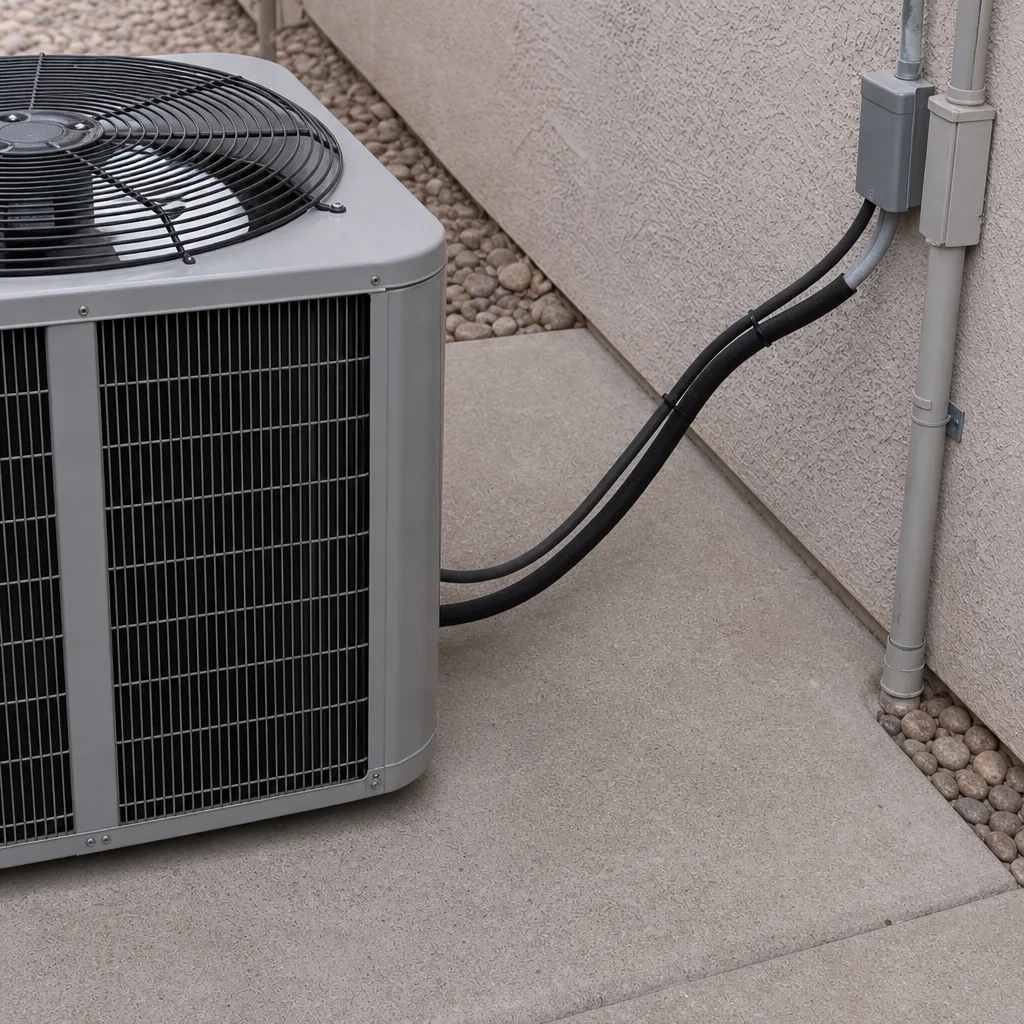
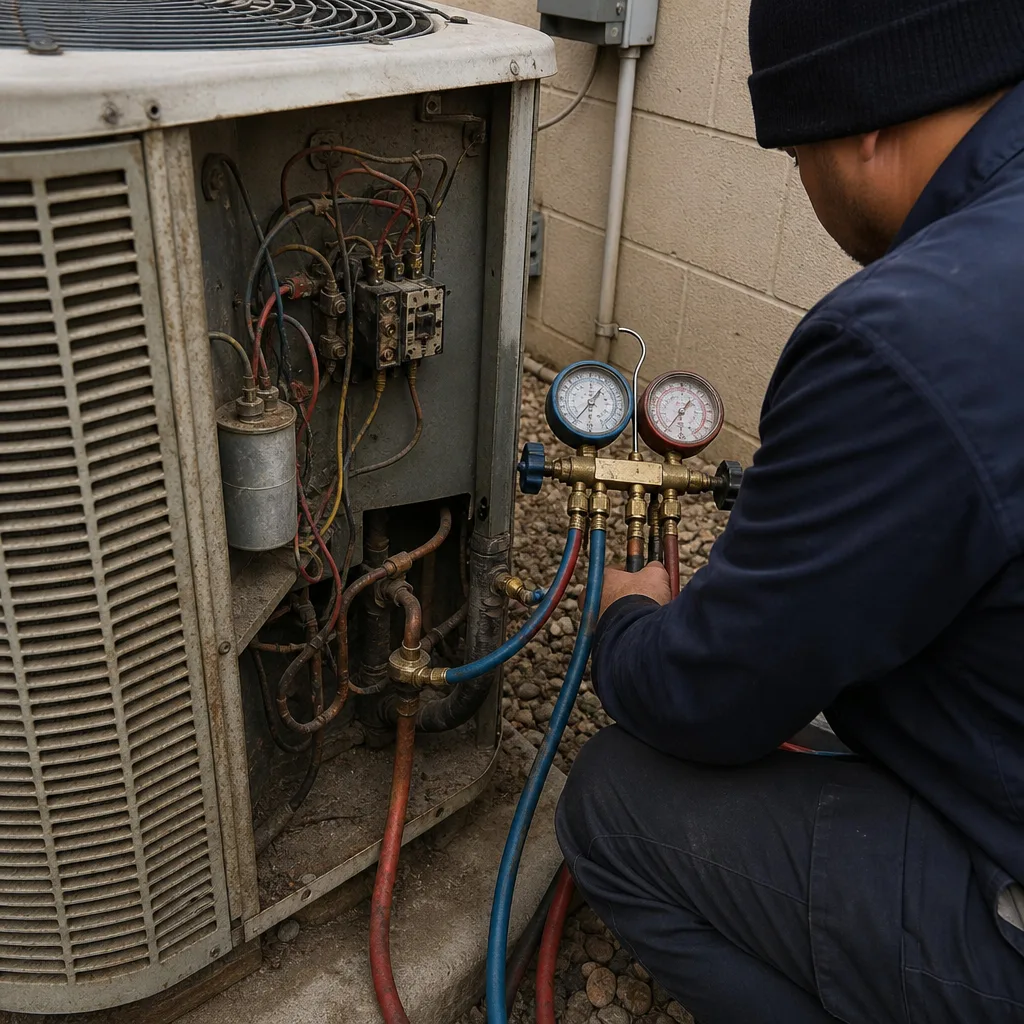
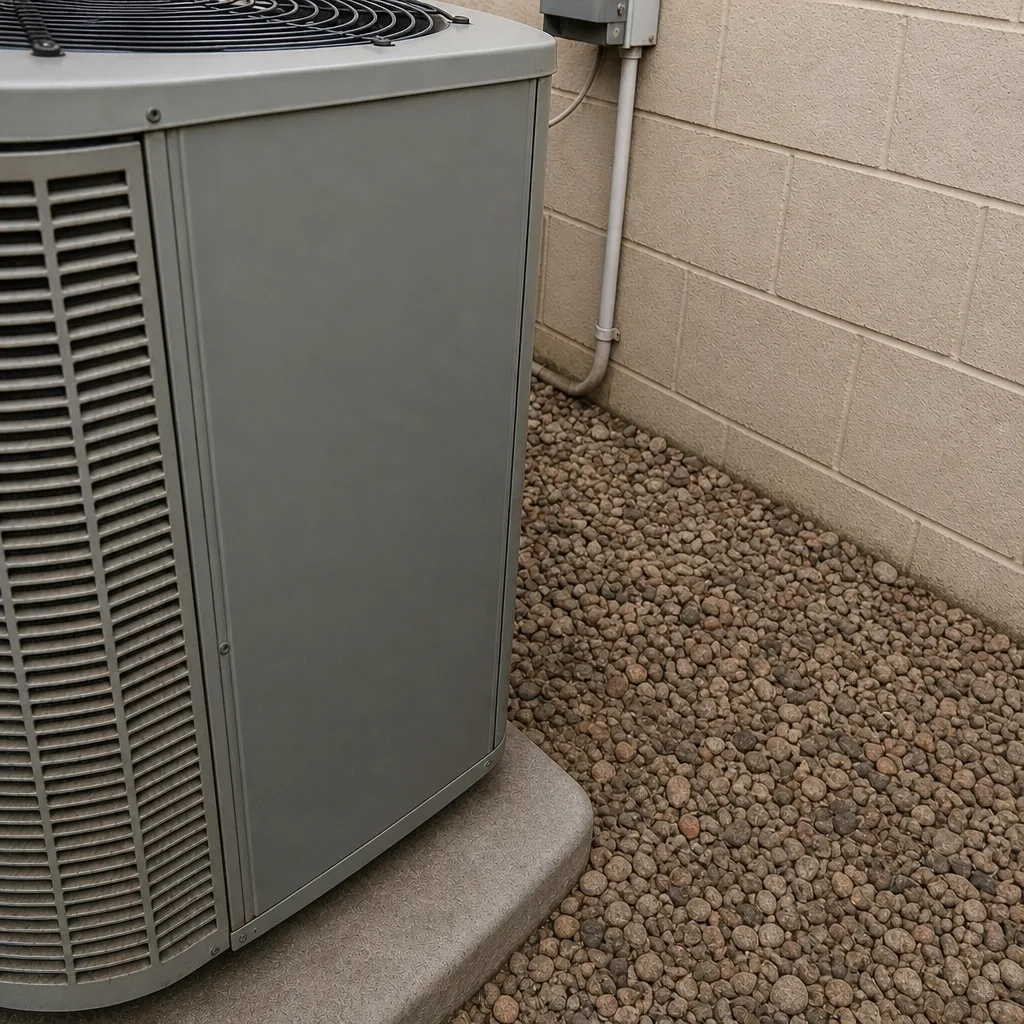
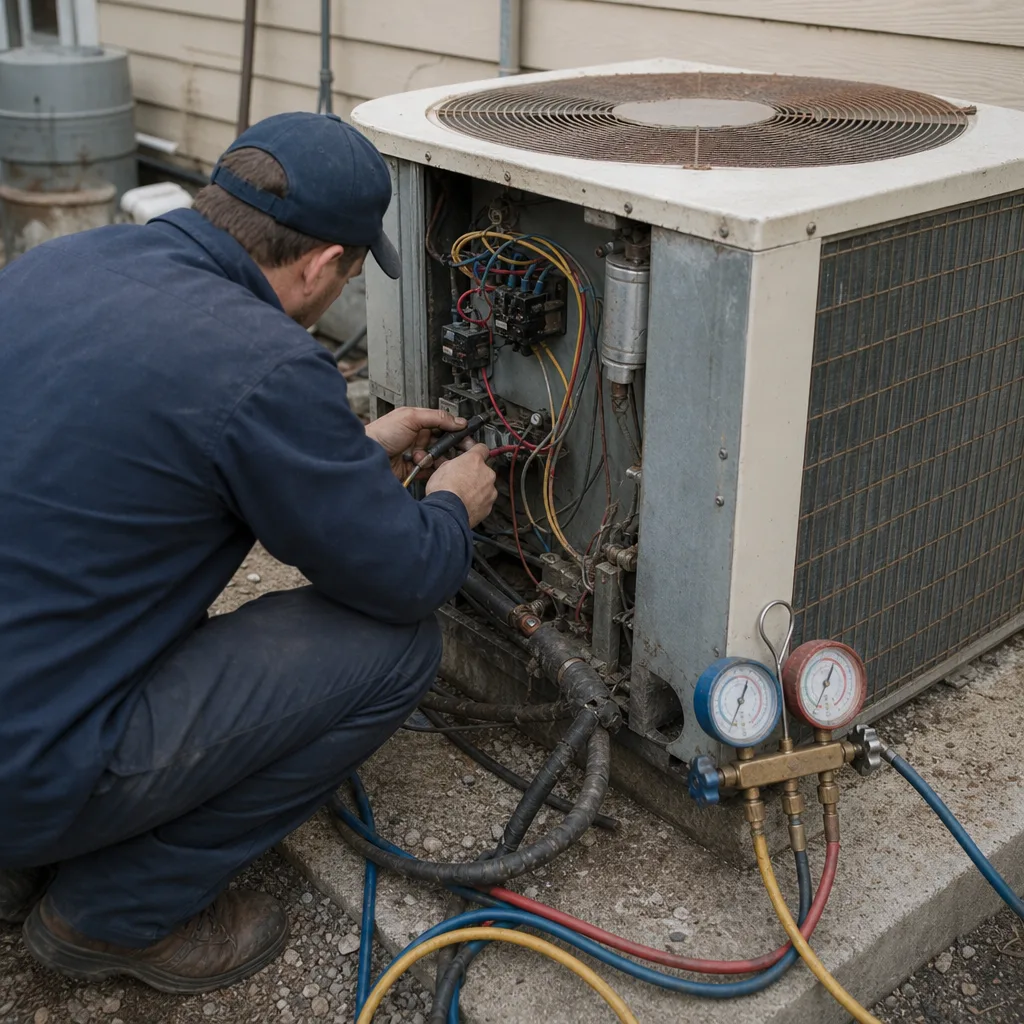
See the difference
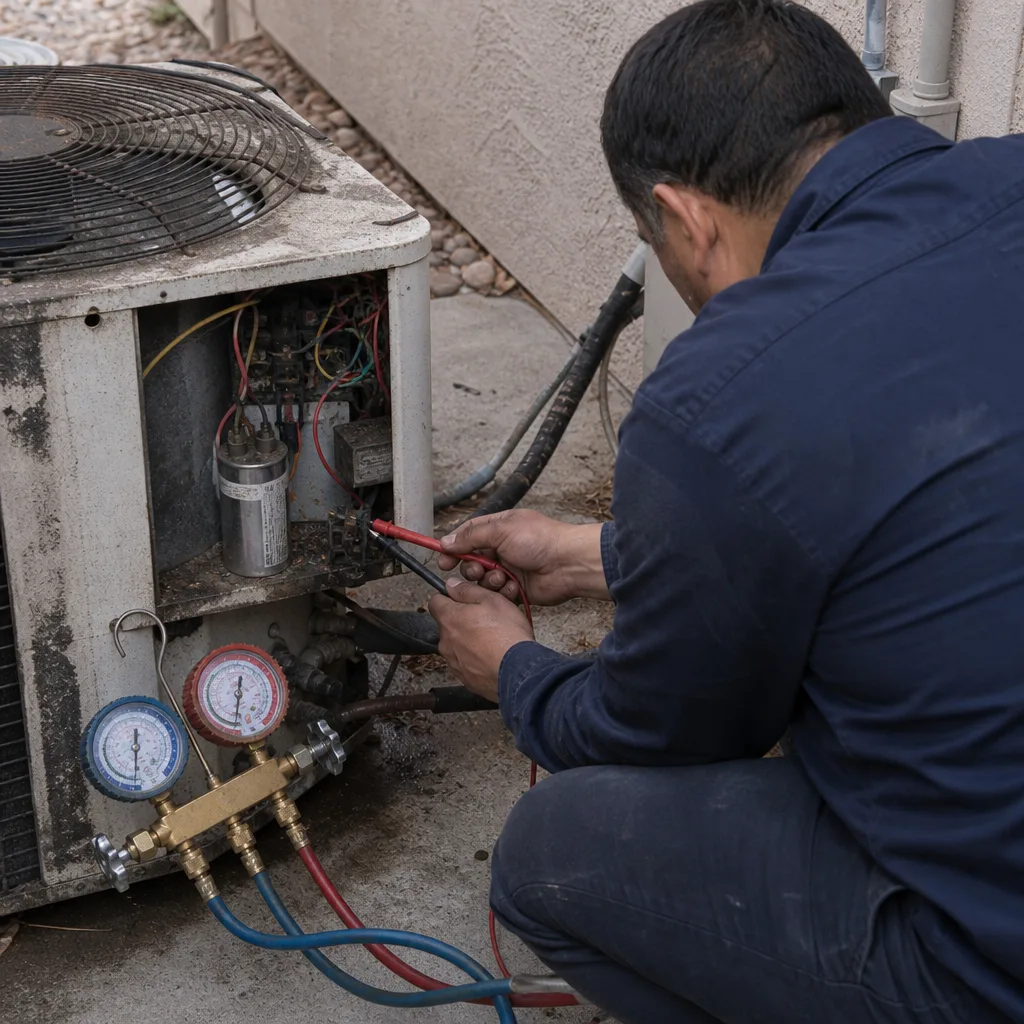 Before
 After
 Before
 After
 Before
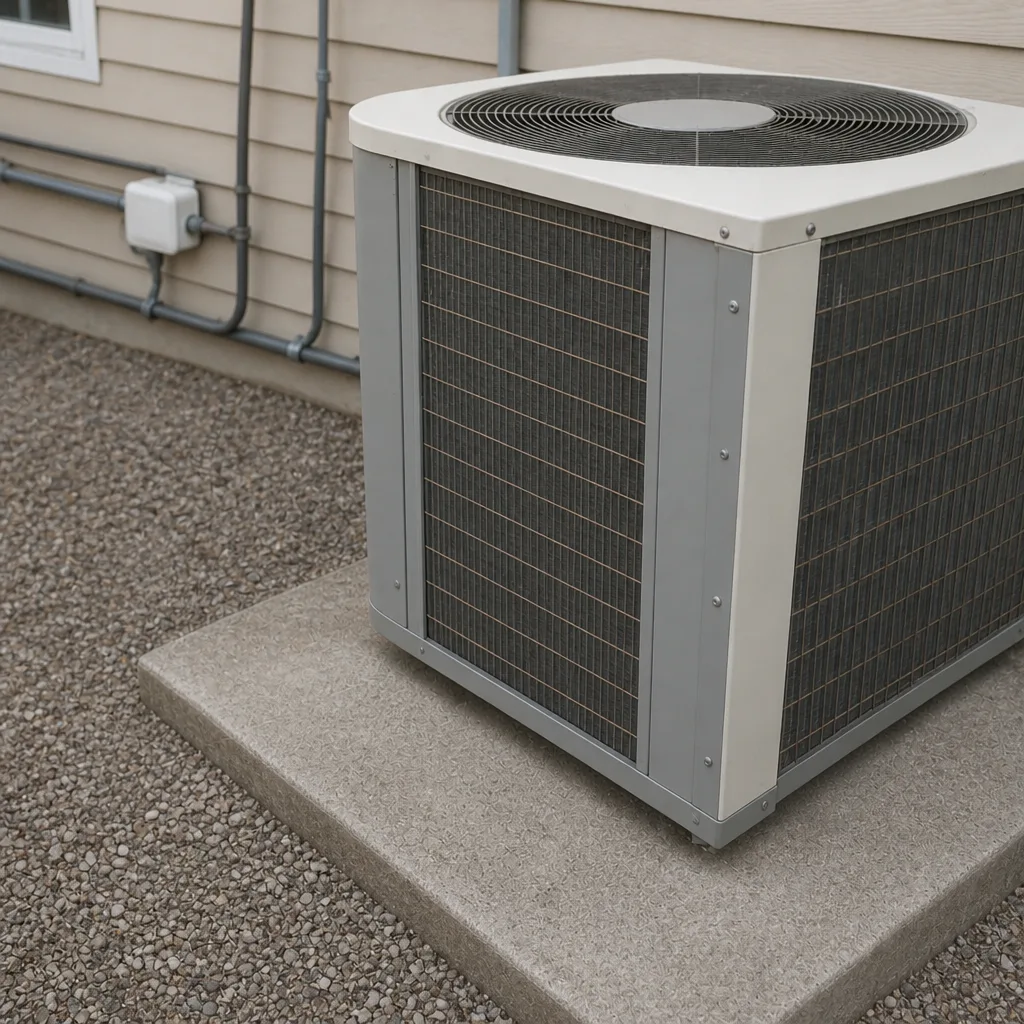 After
When to Call a Professional
Some things are worth calling about right away. If a commercial system stops cooling during business hours, if you hear banging or rattling from a rooftop unit, if you see ice on the indoor coil, if the system is blowing warm air, or if a breaker trips every time the system starts, get a technician out. Commercial systems don’t fix themselves, and a small refrigerant leak or a failing compressor gets more expensive the longer it runs.
For homeowners and small commercial customers in Winchester, free estimates are available. Call (844) 783-5043, and a live person will answer, day or night. We’ll give you an honest read on what’s happening, what it’ll take to fix, and what it’ll cost before any work begins. Whether it’s a rooftop unit on a strip mall or an aging furnace in a home you’ve lived in for 25 years, we’ll be there when we say. Done right, or we make it right, in writing, for 90 days.
Frequently Asked Questions
Most commercial repairs take between four hours and three business days. Capacitor and contactor replacements are typically same-day. Compressor swaps and refrigerant leak repairs usually run one to three days because parts ship from regional distributors. RTU replacements run three to seven days once equipment is on site. Call (844) 783-5043 for an exact timeline on your system.
Sometimes. Small-part failures like capacitors, contactors, and thermostats are often same-day because those parts are stocked on the service vehicle. Larger failures like compressors, motors, and control boards usually need to ship in, which puts the repair one to three days out. A live person answers our phone around the clock, so you’ll know your response window when you call.
Emergency HVAC service means a live person answers the phone 24 hours a day, every day of the year, and you get an honest response window. It doesn’t guarantee a same-night repair, because parts and crew availability vary. What it does guarantee is someone to stabilize the system, isolate the failure, and get you a plan before you’re in a crisis. Call (844) 783-5043 to speak with a live person now.
If your commercial system is over 15 years old and a repair is going to cost more than 30 to 40 percent of a new system, replacement is usually the better call. The same is true if the same part has failed twice in a season, or if parts are getting hard to source. Ask for a free second opinion on any written estimate you’ve already received. Call (844) 783-5043 to schedule one.
Yes, and it’s the single biggest variable in rural commercial HVAC. Parts not stocked locally ship from regional distributors in Phoenix, Salt Lake City, or Los Angeles, which can add two to three business days. Expedited freight cuts that to next-day, but costs several times more. Seasonal inspections catch worn parts before they fail and avoid the expedited surcharge entirely.
Usually, yes. We can arrange temporary cooling units, isolate the failure to keep partial cooling running on the remaining zones, and phase repairs so you’re back to partial operation before the full fix is done. Ask for a continuity plan when you call. Call (844) 783-5043 and we’ll walk through the options for your building.
The Bottom Line
Commercial HVAC timelines are genuinely harder to predict than residential. The variables that actually drive them are parts availability, system age, brand, freight distance to rural Nevada, and whether the building has a continuity plan in place before the failure. A firm completion time quoted before diagnosis is a guess. A real timeline comes from a technician on site, a parts order you can track, and a contractor who’s upfront about the cost and the response window. Plan ahead, service the system in spring, know your equipment, and pick a contractor before you need one. Call (844) 783-5043 for a free estimate in Winchester. A live person answers, every time, and the price we quote is the price you pay. The work is backed in writing for 90 days. Done right, or we make it right.
Written by the team at Fireside Heating & Air Co. Winchester.