
Last updated November 18, 2026
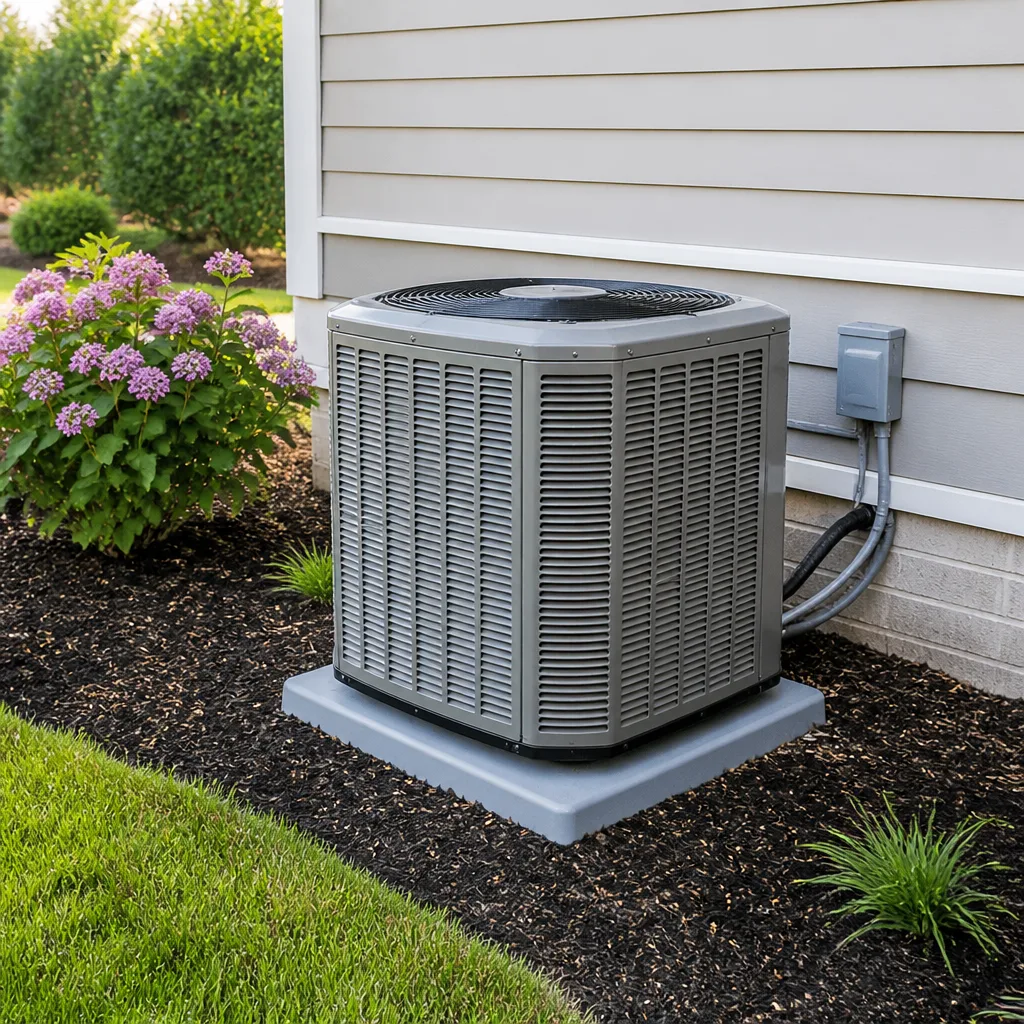 AC repair
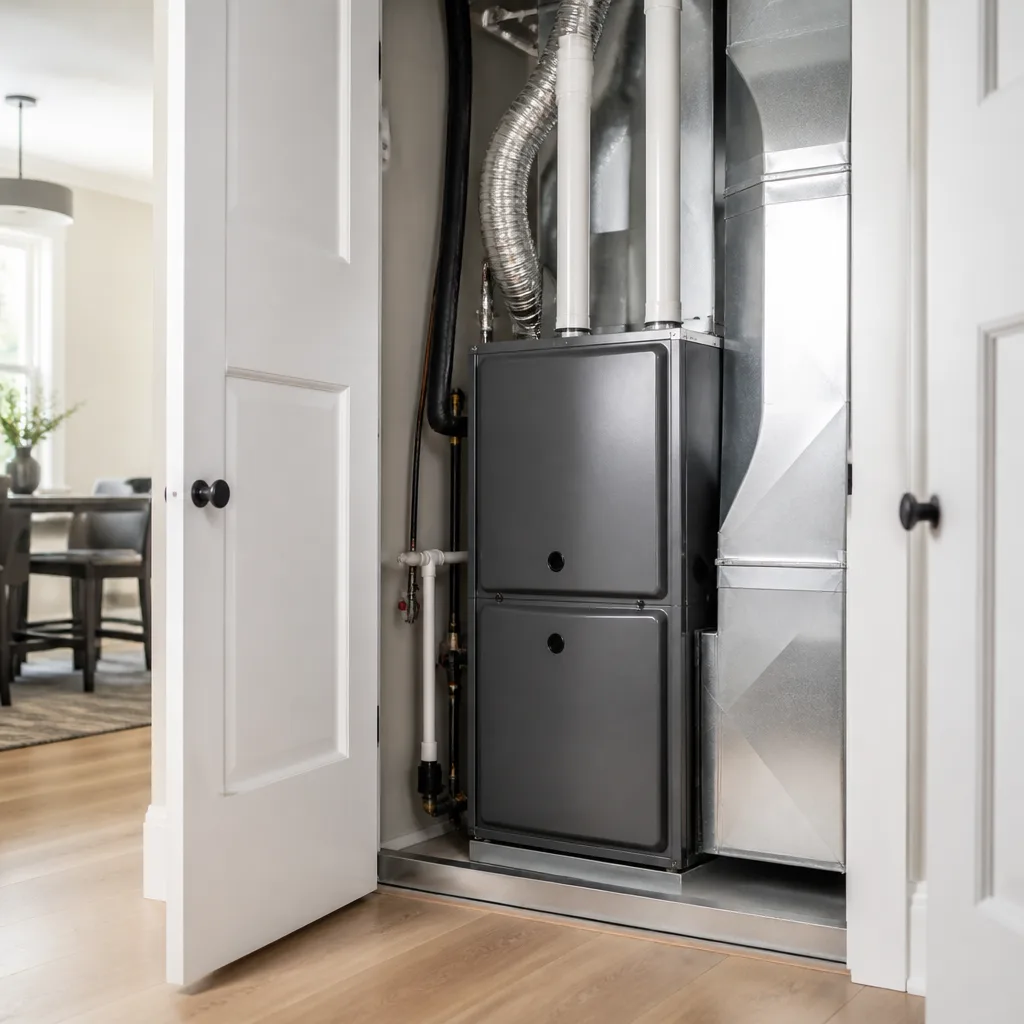 Furnace & heating
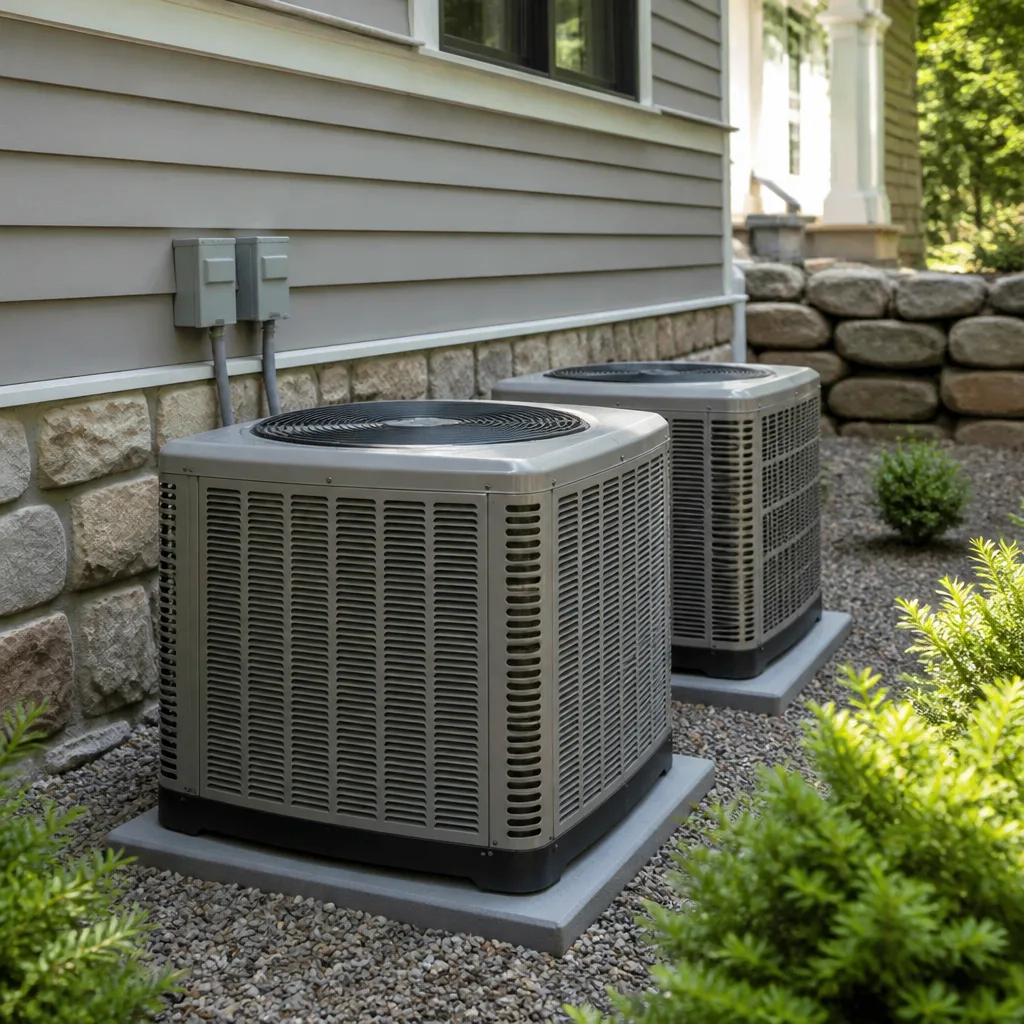 Heat pumps
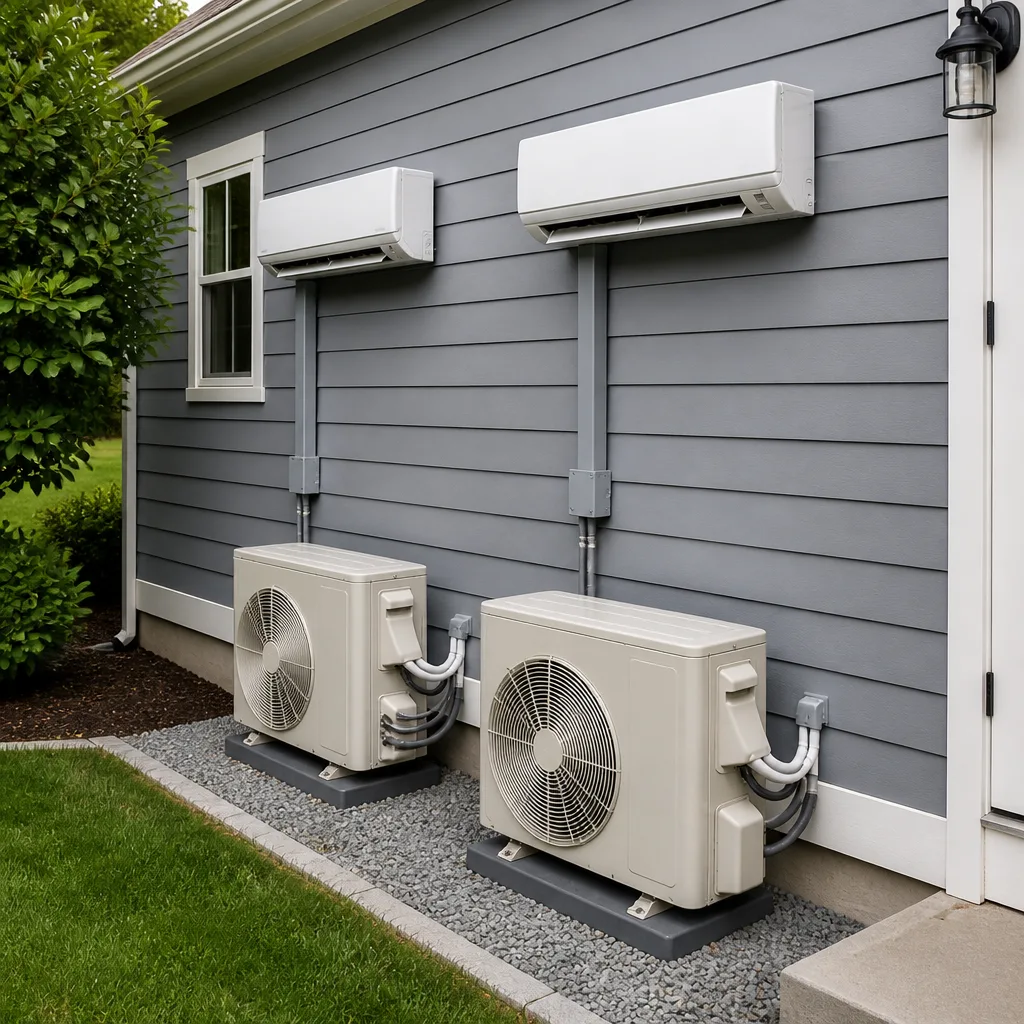 Ductless mini splits
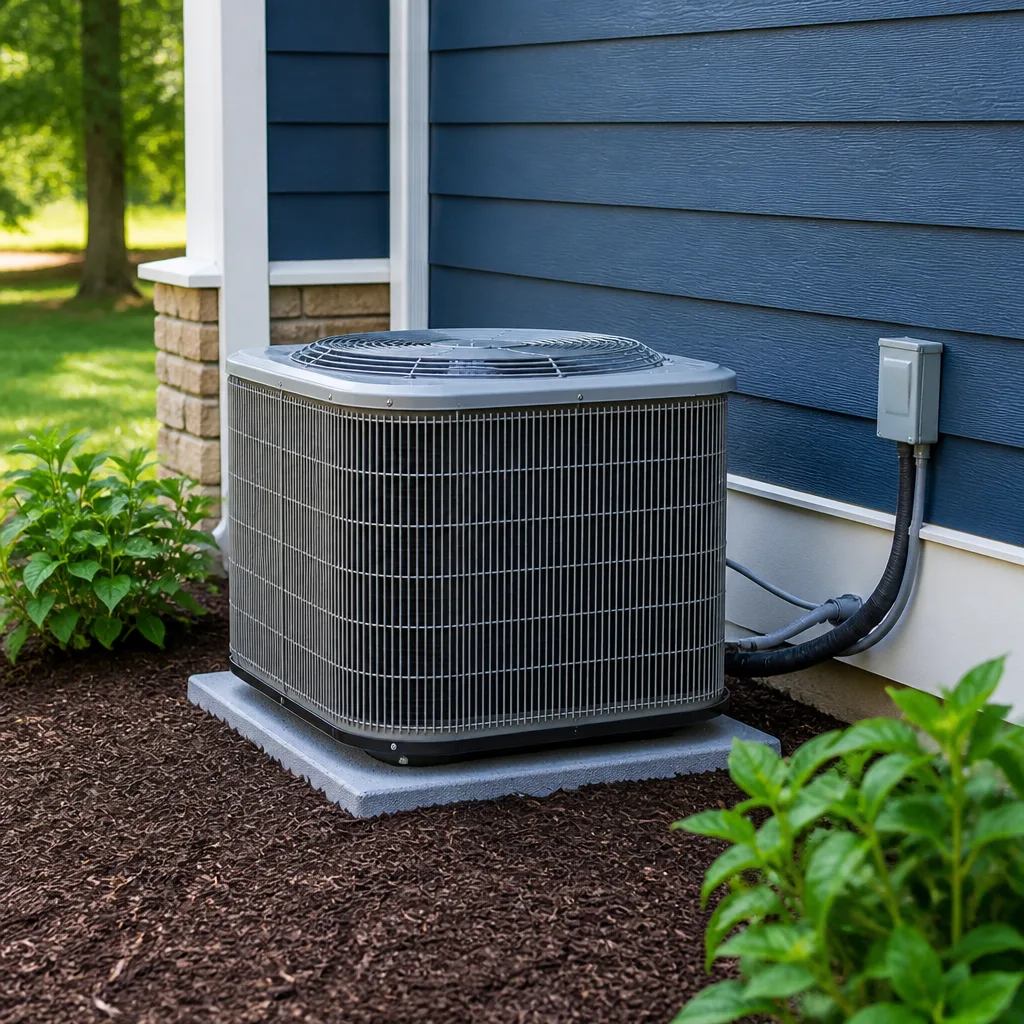 Carrier
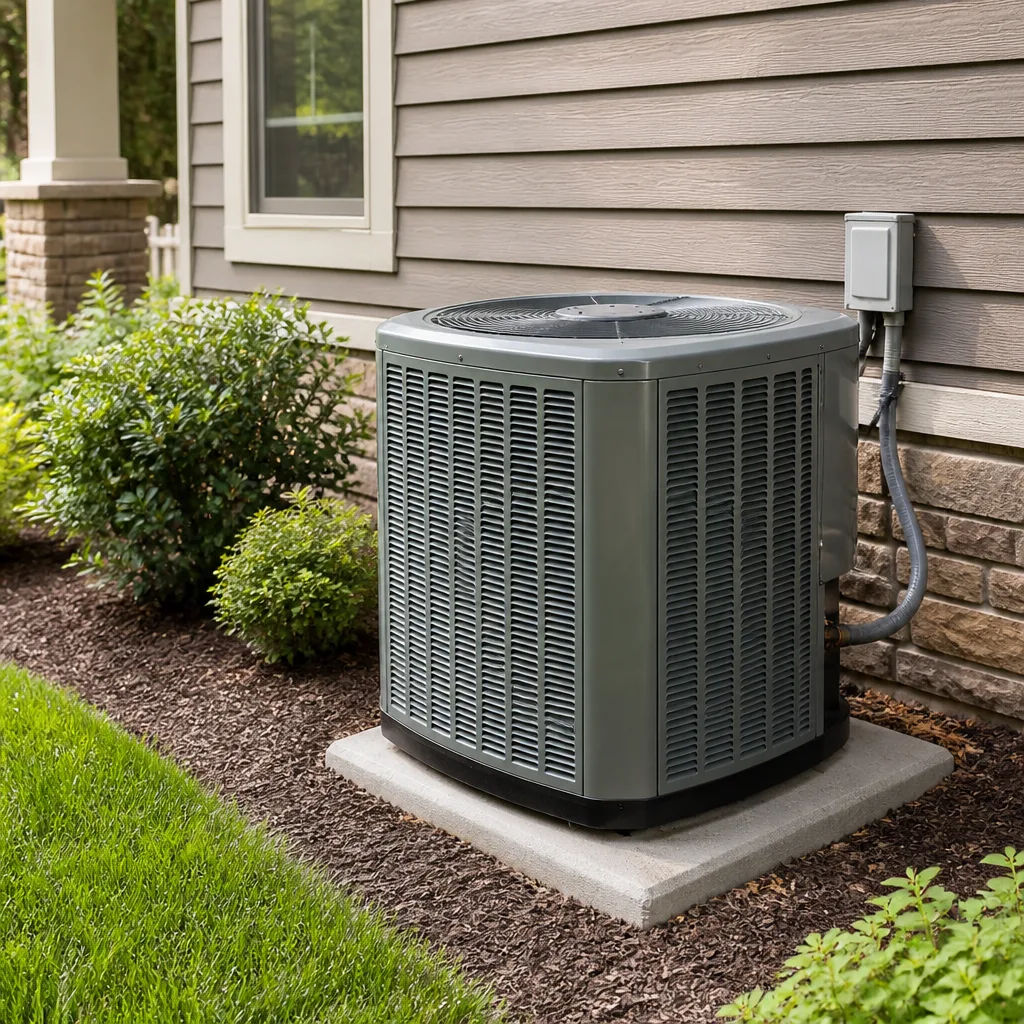 Trane
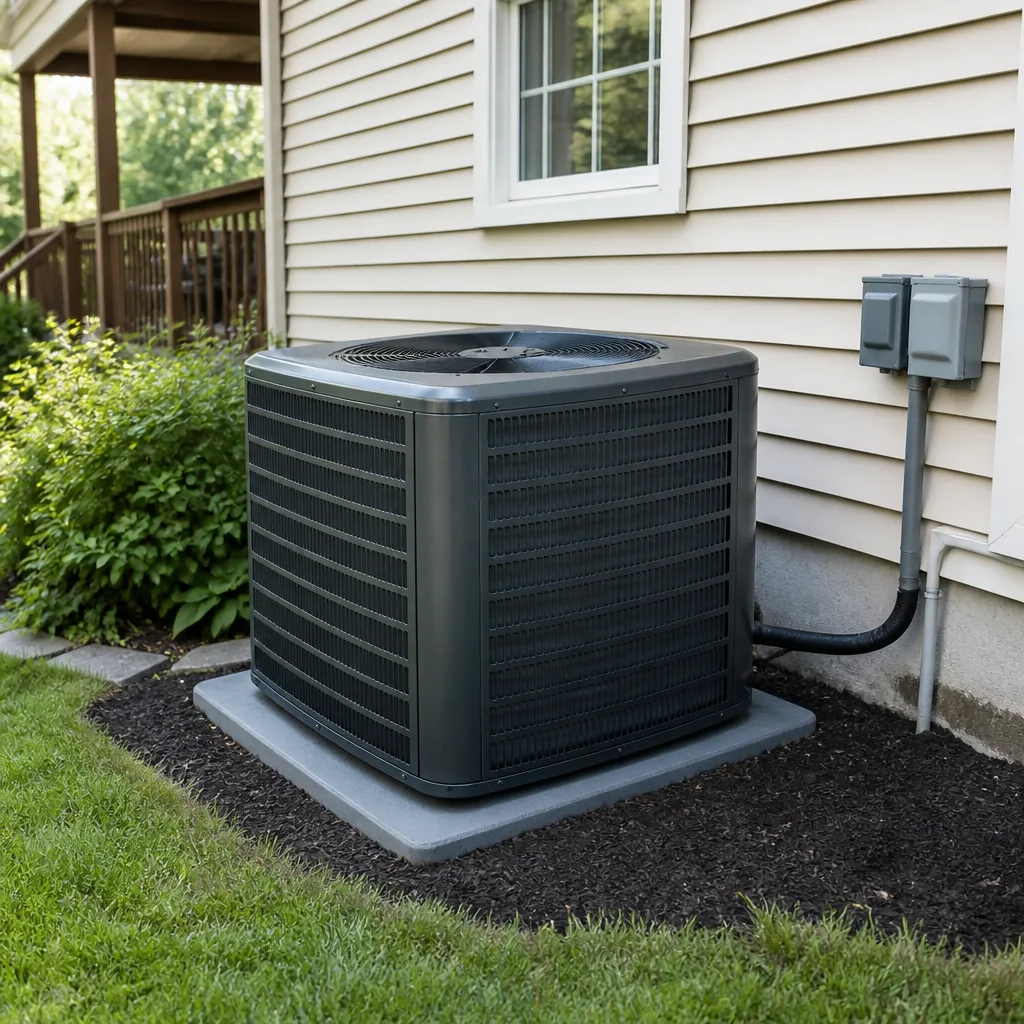 Goodman
Seasonal tune-up and full diagnostic on your Carrier, Trane, or Goodman system - readings shown to you before any repair is proposed
Diagnosis first, numbers second - you approve the repair price before a single part goes in.
Get your free estimateEmergency & Commercial HVAC Maintenance Schedule: What to Do and When
The number one cause of mid-summer commercial HVAC failure isn’t skipped maintenance. It’s maintenance done on a residential schedule applied to a commercial system that runs 12 to 16 hours a day. A rooftop unit packing twice the run hours of a home furnace needs service intervals roughly twice as frequent, and almost no commercial owner in Winchester has been told this directly. Manufacturer literature is written by the people who build the box, and their liability ends at the unit. This guide works from the other direction: it starts with the failures that actually shut a business down, then works backward to the tasks and timing that prevent them.
Quick Answer
Commercial HVAC maintenance should be scheduled by run hours, not calendar months: a system running 12 to 16 hours a day needs service every 3 to 4 months, roughly double the residential cadence. In Winchester, that means a pre-summer refrigerant and condenser check before sustained 100°F days arrive, a fall heating inspection, and a documented log of every visit for insurance purposes.
Styles & brands we work with
- AC repair
- Furnace & heating
- Heat pumps
- Ductless mini splits
- Carrier
- Trane
- Goodman
Table of Contents
- Why Run Hours Beat Calendar Months
- How to Calculate the Right Service Interval
- Rooftop Units vs. Commercial Split Systems: Different Tasks Entirely
- The Winchester Seasonal Maintenance Window
- What a Commercial Maintenance Agreement Must Document
- Building a Maintenance Log Your Insurer Will Accept
- Emergency Preparation: What to Do Before You Need It
Why Run Hours Beat Calendar Months
A home heat pump in Winchester may log 1,800 to 2,400 run hours a year. A restaurant rooftop unit running 14 hours a day sits closer to 5,100. Filters load up on a curve tied to air volume moved, not to the date on the calendar. Belts crack after a set number of flex cycles. Condenser coils foul in proportion to how much air they pull across their fins.
That gap explains a pattern we see constantly around Winchester: a unit that was “just serviced in spring” fails in late July, and the owner assumes the contractor cut corners. Usually they didn’t. They followed a residential interval that was never right for the load. Change the interval and the failure pattern changes with it.
A quick frame for the three common duty levels:
- Light commercial (an office open 9 to 5, five days a week): 6-month intervals hold up fine.
- Standard commercial (retail, clinic, 10 to 12 hours a day): 4-month intervals.
- Heavy commercial (restaurant, gym, 24-hour operation): 3-month intervals, and monthly filter checks in cooling season.
None of this replaces the manufacturer’s maintenance schedule, which governs your warranty. Treat run-hour math as the layer on top. Where the two conflict, the stricter number wins.
How to Calculate the Right Service Interval
You don’t need a spreadsheet to get this right. You need three numbers your thermostat or building controls already hold: daily runtime, weekly operating days, and the manufacturer’s stated annual service interval. Run these steps once a year.
- Log one week of actual runtime. Pull it from the thermostat history or a building automation report. Don’t estimate from memory; a business owner’s guess is usually low.
- Multiply to get annual hours. Example: 12 hours a day, 6 days a week, 52 weeks = 3,744 run hours.
- Divide by the residential baseline. A typical home system runs about 2,000 hours a year and gets two visits. That’s one service per 1,000 run hours.
- Apply that ratio to your unit. 3,744 run hours ÷ 1,000 = 3.7 visits a year. Round up to 4.
- Build in a fallback trigger. If you don’t have runtime data, use 4 months for anything running 10-plus hours a day.
Two adjustments apply here in Winchester. First, our dust load is heavy: spring winds carry desert particulate straight into condenser coils, so add a mid-summer coil rinse for anything on a roof. Second, cooling season is longer than most schedules assume. Units here often run hard from May into October, so the front half of the year carries more service weight than the back.
Rooftop Units vs. Commercial Split Systems: Different Tasks Entirely
These two system types get lumped into one schedule all the time, and it’s a real mistake. The tasks diverge sharply once you’re above residential size. A rooftop unit is a packaged system: everything sits in one cabinet under the sky. A commercial split system separates the condenser outdoors from an air handler indoors, often ducted through a ceiling plenum or mechanical room.
Rooftop unit (RTU) specific tasks
- Curbs and flashing: check seams and gaskets for water intrusion after monsoon season. Leaks into a ceiling grid are an insurance claim fast.
- Economizer dampers: verify operation and linkage. A stuck-open economizer runs the compressor all summer for nothing.
- Condensate pan and drain line: clear algae and standing water. Roof drains clog with dust and cottonwood.
- Hail guard and coil fins: straighten and clear debris after storm events.
- Roof access: document how technicians reach the unit so service isn’t delayed by finding a ladder.
Commercial split system specific tasks
- Refrigerant line insulation and supports: check for UV degradation on the run to the outdoor unit.
- Air handler access panels: confirm gaskets and screws are intact. A leaking panel defeats the filter.
- Refrigerant line set leak check at fittings, which are more numerous on a split system.
- Filter access: split systems often use larger filter racks. Verify the correct MERV rating; a mismatched filter strangles airflow.
On either system type, a manufacturer’s schedule is a starting point, not a substitute for judgment. If your building runs Carrier or Daikin equipment, we can quote service on the exact model in your mechanical room or on your roof. When a rooftop unit gets close to replacement age, the math to weigh is repair versus replace, and that call is worth a second opinion before you commit.
The Winchester Seasonal Maintenance Window
Winchester’s climate sets a hard cutoff. Summer highs climb past 100°F for sustained stretches, and a marginal system that limped through a 95°F afternoon will fail the week the temperature sits at 108°F for five days. That gives you a clean deadline: the refrigerant and condenser check must be done before the sustained heat arrives, which in practice means late April through May.
Here’s the realistic seasonal shape for a Winchester commercial property:
- March to April: spring startup. Refrigerant charge check, condenser coil clean, electrical connections tightened, filter replacement, economizer test.
- June to August: mid-season inspection for heavy-duty units. Filter change, condensate drain clear, belt and bearing check on belt-drive units.
- September to October: fall heating inspection. Heat exchanger check, gas train and ignition test, burner clean, controls verification.
- November to February: heating mid-season check for anything running long hours, plus freeze protection review for rooftop water lines and drain pans.
Local climate handling matters more than most owners realize. Desert dust coats condenser coils much faster than in coastal or humid climates, so those coils need cleaning more often than a national service schedule recommends. Ask for coil condition to be documented each visit. If a contractor’s report never mentions the coil, they didn’t look at it.
What a Commercial Maintenance Agreement Must Document
The difference between a maintenance agreement and an annual handshake is documentation. Manufacturers and insurers both expect a written record, and your service provider should be able to hand you one after every visit. Ask them to commit to these in writing:
- Date, time, and technician on each visit, with hours on site.
- Filter size and MERV rating installed, plus part number if it’s non-standard.
- Refrigerant charge reading in subcooling or superheat, not just “checked.”
- Coil condition with a photo if it’s accessible.
- Electrical readings: amp draw on compressors and fan motors, and torque on the contactor.
- Belt and bearing condition on belt-drive equipment.
- Economizer and damper position verified and documented on RTUs.
- Deficiencies found itemized separately, with a recommended action and separate price, not rolled into the service charge.
- Next visit scheduled, with the interval between visits stated.
A good agreement includes at minimum the number of visits per year, the tasks included per visit, the response time for a call after a service visit, and a stated process for emergencies after hours. If a contractor won’t put those in writing, ask what they can put there.
Building a Maintenance Log Your Insurer Will Accept
If a system failure causes business interruption, your commercial property policy will want proof the loss wasn’t the result of neglect. A log that satisfies the adjuster answers four questions: what was done, when, by whom, and what repair was recommended and when it was declined. The last one matters most. If a technician flagged a failing compressor in May and no action was taken, the failure in July is documented as a maintenance issue, not a mystery.
Build the log this way:
- Keep one physical binder or shared folder per property, not per contractor.
- File every service report the day it arrives, with the invoice.
- Note any declined recommendations, with the date of the quote.
- Archive the manufacturer’s original startup documents and warranty terms with the log.
- Add any equipment tag numbers so the adjuster can match the report to the unit.
This is a good place to loop in a Winchester home service team that keeps its own records, since your log should match what your contractor has on file. Make a copy of the log once a year and store it off-site or in the cloud. A binder that only exists in a mechanical room that just flooded isn’t a log.
What to Do Before You Need It
Emergency preparation is a separate discipline from scheduled maintenance, and it needs its own plan. Suppose a rooftop unit fails on a Sunday in July. What happens in the first hour determines whether you lose a day of revenue or half a week.
Have these ready before the weather turns:
- Emergency contacts posted at the unit and in the office, with the number your provider answers after hours.
- Model and serial numbers of every unit on file, so parts can be ordered on the first call.
- Portable fans and a backup plan for occupied spaces when a unit goes down.
- A documented shutdown procedure to protect the compressor from further damage before the technician arrives.
- A written commitment to answer the phone at 2 a.m. rather than route to voicemail. In practice, this is the single most useful item on the list.
We treat emergencies as a standing obligation rather than a side business, and the annual maintenance agreement is the best preparation available. Fireside’s standing offer is $89 for a seasonal tune-up, and we handle both emergency and commercial coverage. While the plan is in place, check your air conditioning at the first sign of trouble with routine AC repair and installation in Winchester, and confirm your heating is ready for fall with a heating and furnace visit in Winchester well before the first cold snap.
See the difference
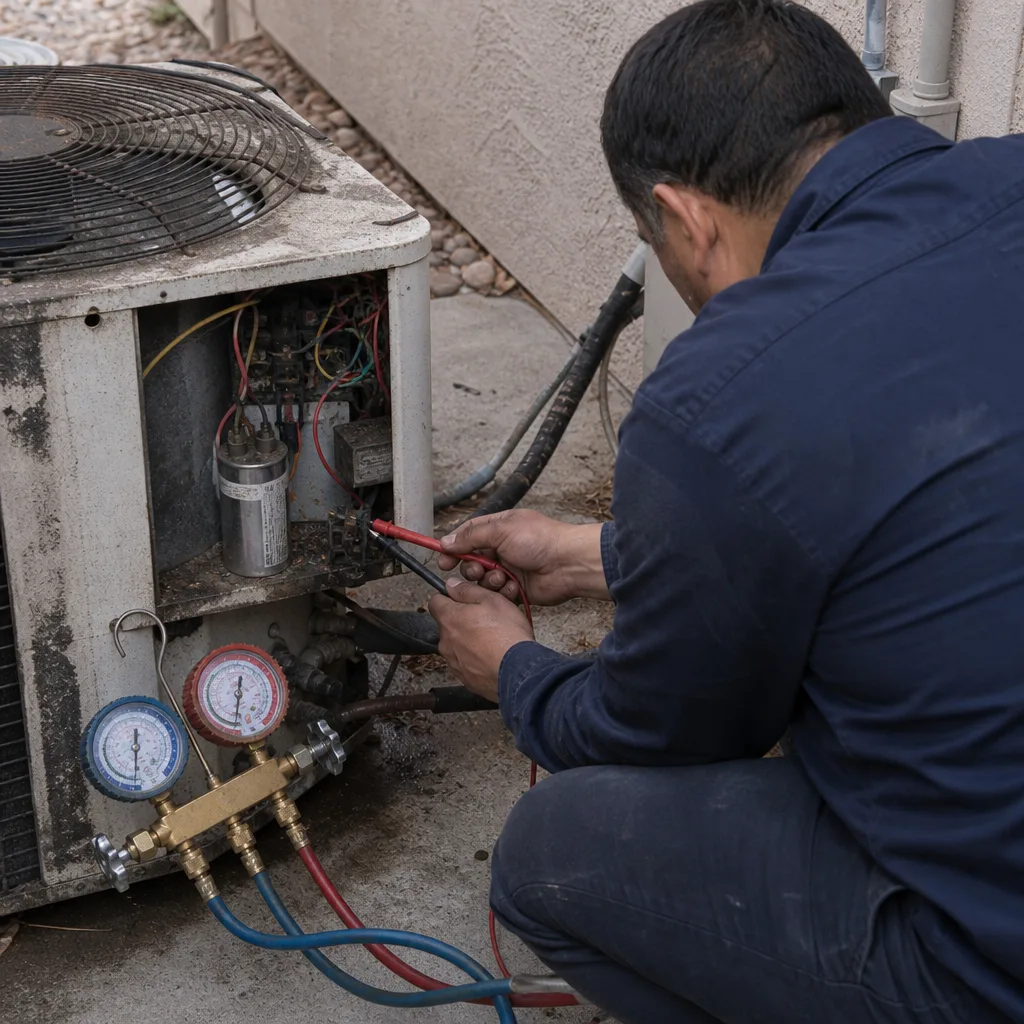 Before
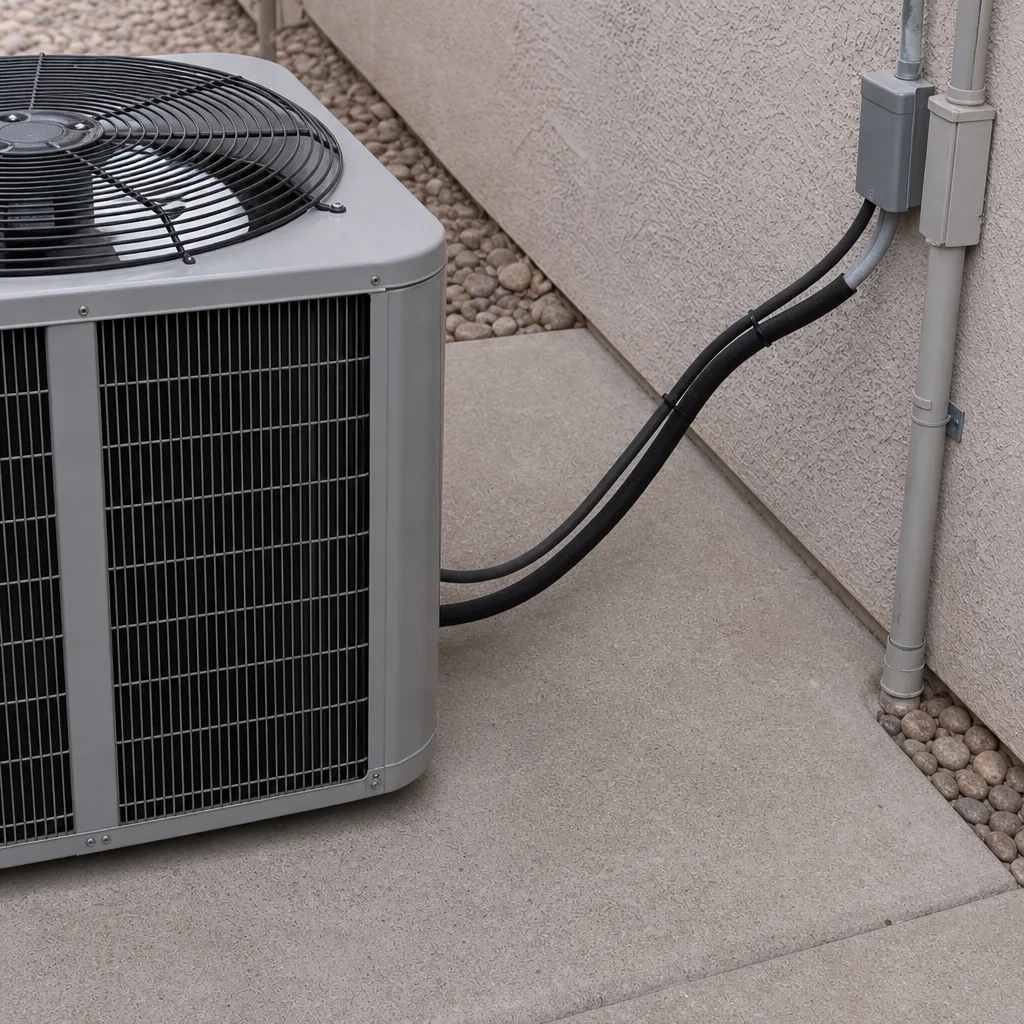 After
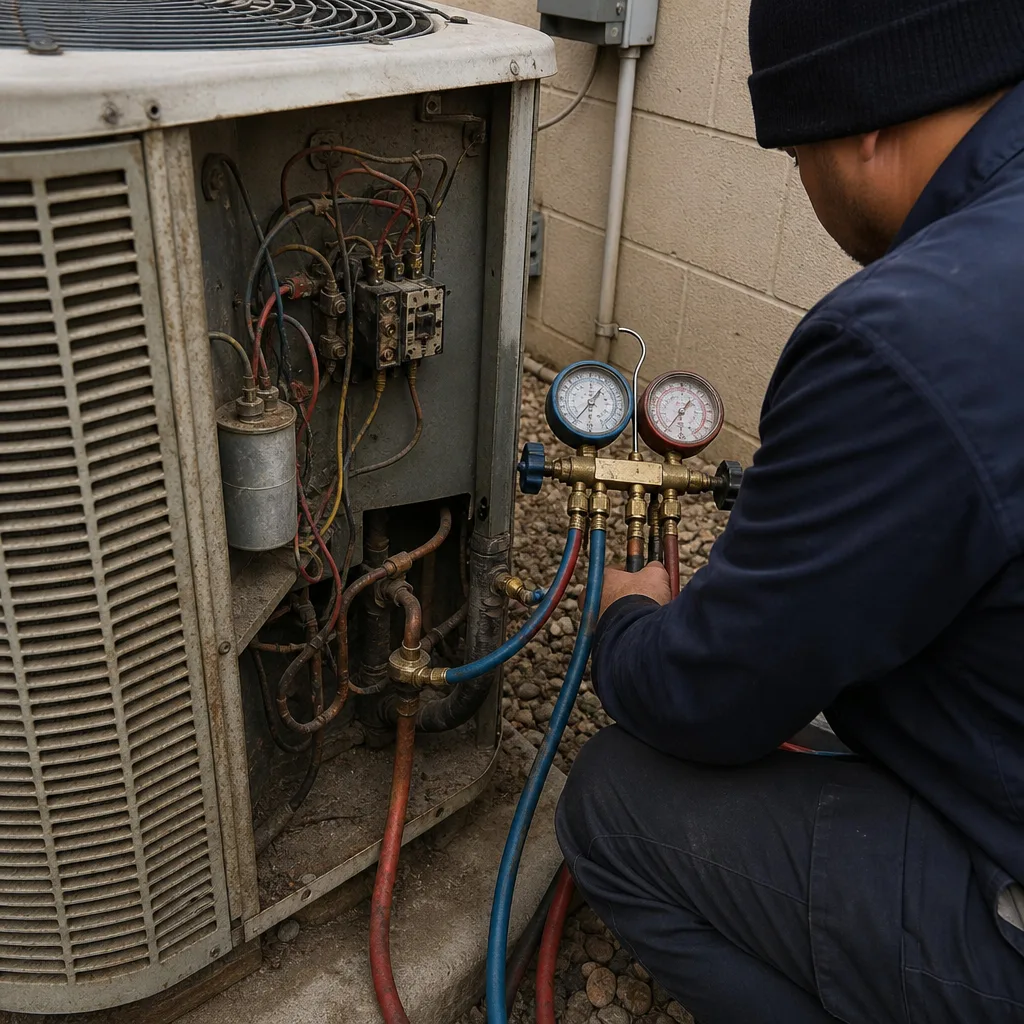 Before
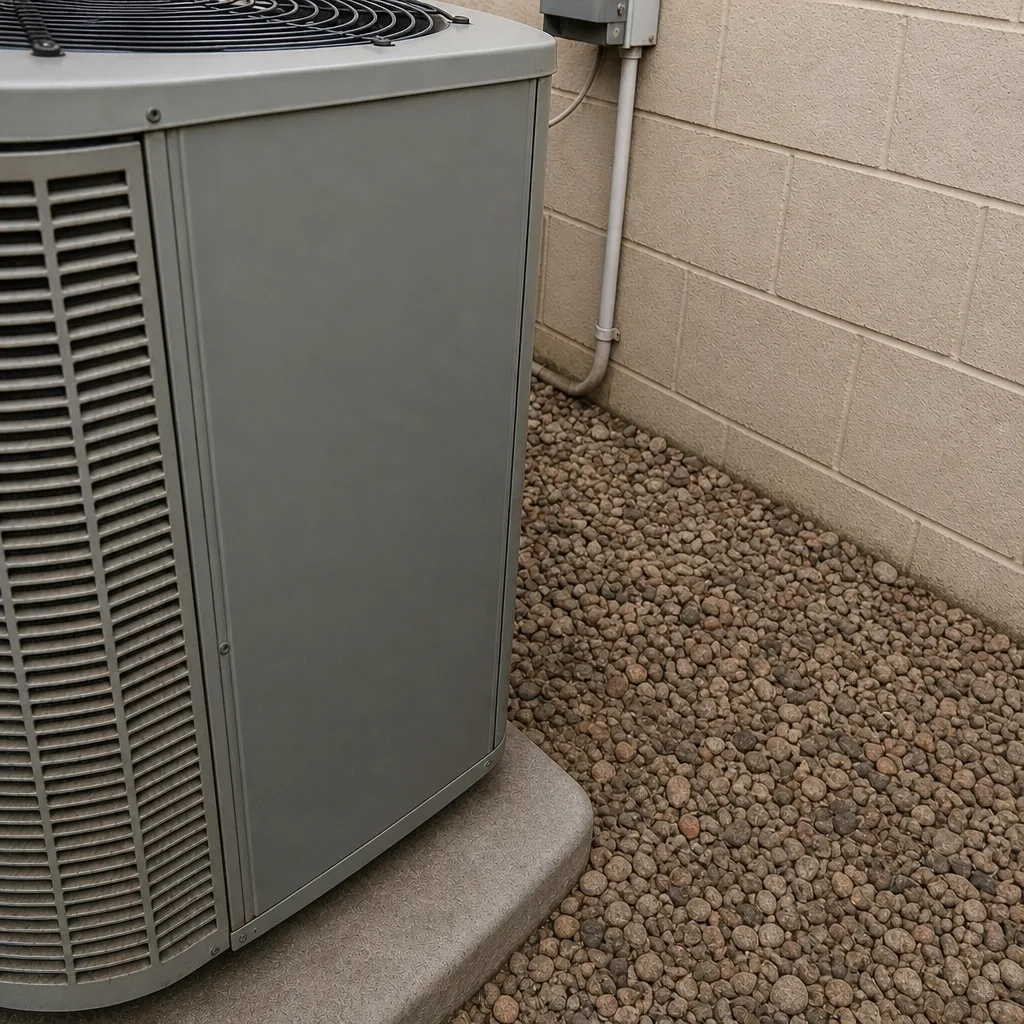 After
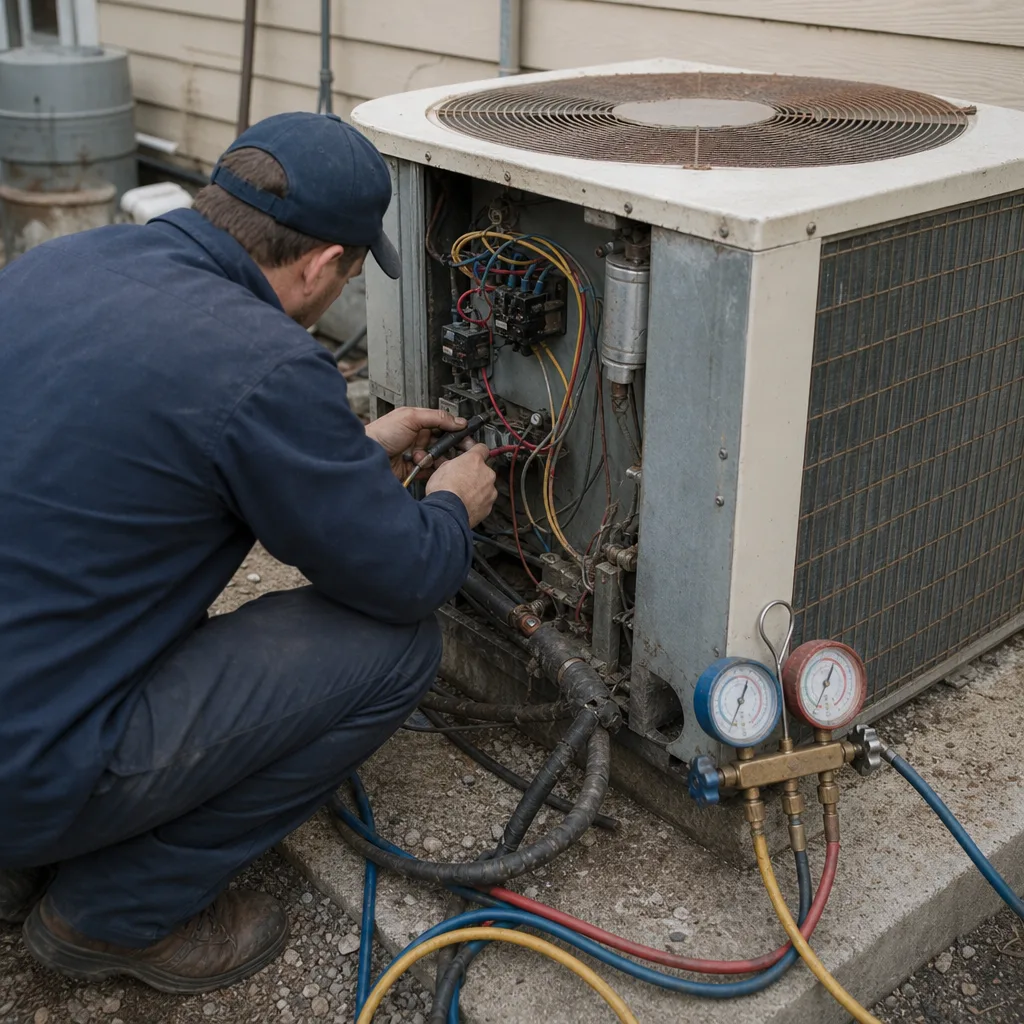 Before
 After
Common Mistakes to Avoid
- Running a commercial schedule on a residential calendar. If you’re on quarterly visits for a restaurant running 14 hours a day in Winchester, you’re effectively on a half-schedule.
- Skipping the coil inspection because the report said “serviced.” A visit that doesn’t mention coil condition didn’t include it. Desert dust fouls condenser coils faster than a schedule assumes.
- Treating RTU and split system maintenance as interchangeable. They aren’t, and the tasks on one don’t cover the other. Ask your provider which tasks they do on your specific system type.
- Wait for a failure to test the after-hours phone line. Call the number at 9 p.m. in March and see what happens. A live answer now is worth more than a promise in July.
- Filing service reports only with the contractor. Keep your own copy. It’s the difference between a covered insurance claim and a rejected one.
- Rolling recommendations into the maintenance invoice. Good service reports list deficiencies separately. If they’re mixed in, you can’t tell what was found from what was fixed.
- Letting a marginal unit ride through the summer. A system that can’t hold 72°F at 100°F will fail at 108°F, and the failure usually happens on the hottest day. Get a second opinion on any written estimate; it’s free.
When to Call a Professional
Call a technician when the system won’t hold setpoint during the hottest part of the day, when you smell refrigerant or hear a compressor short-cycling, when a breaker trips more than once on a unit, or when you have a sealed refrigerant circuit you suspect is leaking. Those are not maintenance items. They’re repair calls, and putting them off is how a $400 fix becomes an $1,800 one. Call sooner than later if the system is well past its service interval and summer is close. Fireside Heating & Air Co. Winchester offers free estimates in Winchester, a live person on every call around the clock, and the 90-Day Done Right Promise on every job, with a free second opinion on any written estimate. Call (844) 783-5043.
Frequently Asked Questions
Every 3 to 4 months for a system running 12 to 16 hours a day, and every 6 months for light commercial use. Add filter checks monthly during cooling season. Run hours, not calendar months, is the right unit of measure. Call (844) 783-5043 for an exact quote on a schedule built for your system.
April or early May for cooling, and September or October for heating, before the extremes. Winchester hits sustained 100°F stretches in summer, so the refrigerant and condenser check must be done before those arrive. The fall visit should land before the first cold snap.
Only if it says so in writing. Most agreements include scheduled visits but not emergency response, and many charge a premium for after-hours service. Ask specifically what happens after hours, and test the number before you need it.
Filters and visible coil debris, yes. Refrigerant circuits and electrical components, no. High-voltage components and pressurized refrigerant lines cause serious injury without training, and refrigerant handling requires certification. Call (844) 783-5043 for anything inside the cabinet.
Yes, if it’s detailed and complete. Insurers look for dates, technicians, readings, and declined recommendations. A binder of reports filed over time is far more useful than a single invoice. Call (844) 783-5043 to talk through a schedule that produces that record.
Replace when repair costs exceed about half of the new installed price and the unit is past its ordinary service life, or when it can’t hold setpoint on your hottest days. In Winchester, units that can’t maintain temperature at 108°F are practically failing. Get a written estimate and a free second opinion before deciding, then call (844) 783-5043.
The Bottom Line
Commercial HVAC maintenance is a run-hour problem, not a calendar one. Count the hours your system actually runs, double the residential interval, and document every visit with the specific readings your insurer will ask for. In Winchester, put the cooling check before sustained 100°F heat and the heating check before the first cold snap. Treat rooftop units and split systems as separate systems with separate task lists. And keep a written log that lives outside the mechanical room. Do that, and the system stops failing at the worst possible moment. Fireside Heating & Air Co. Winchester is here to help build and run that schedule, with honest talk about what your system needs and what it will cost.
Written by the team at Fireside Heating & Air Co. Winchester.