
Last updated November 18, 2026
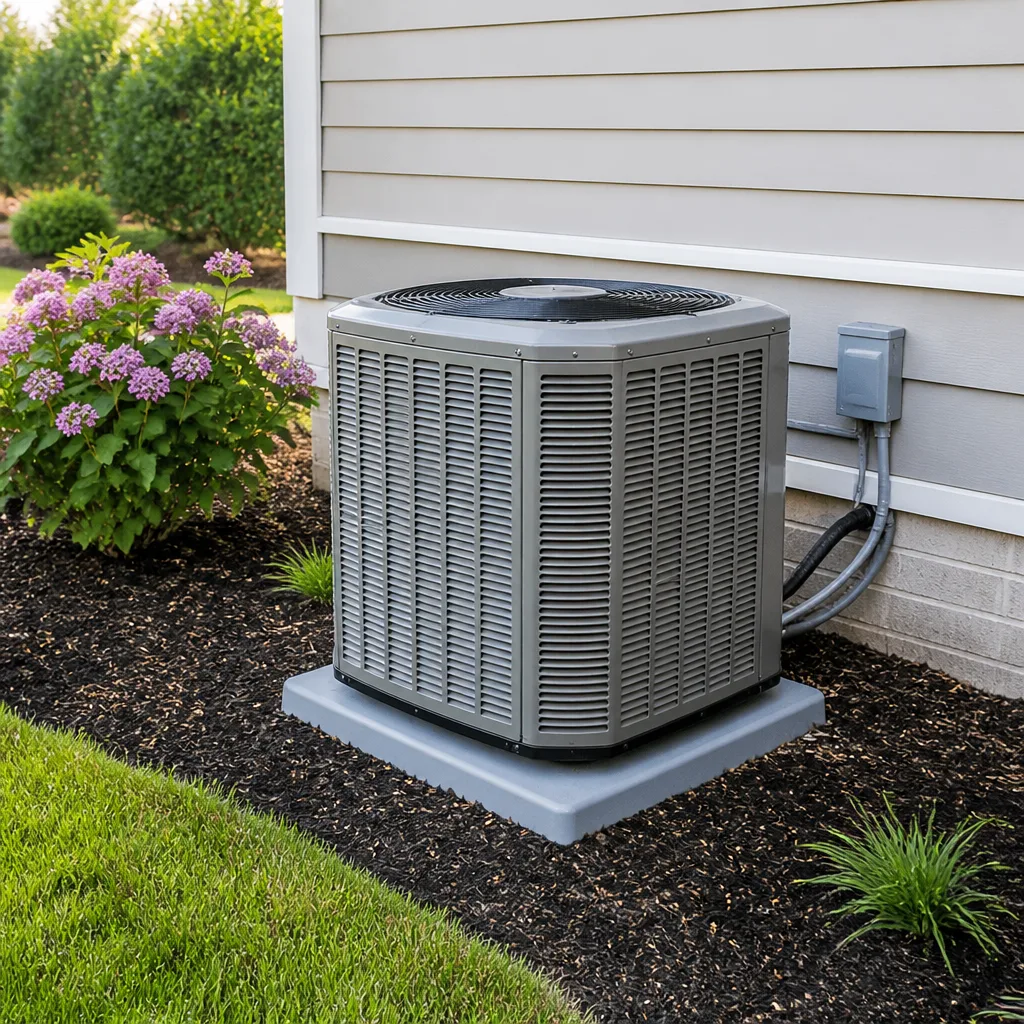 AC repair
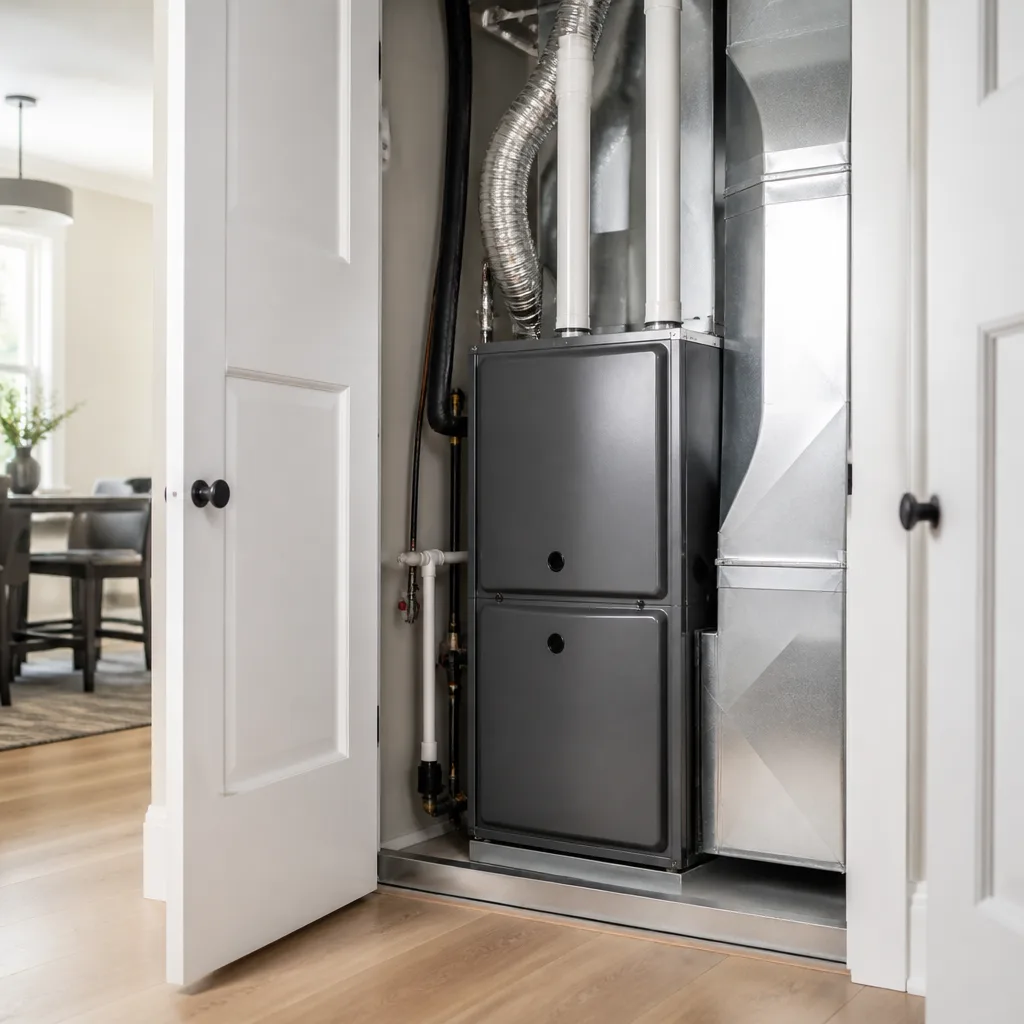 Furnace & heating
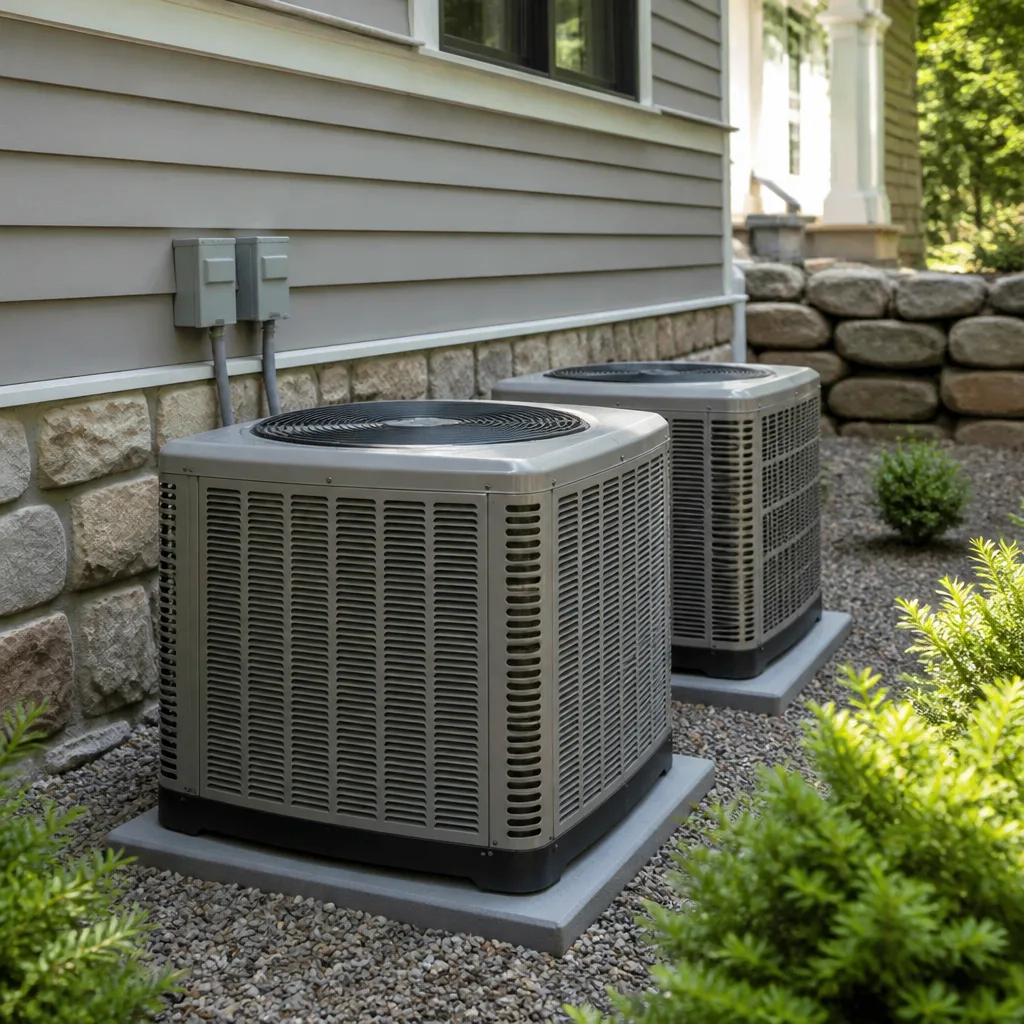 Heat pumps
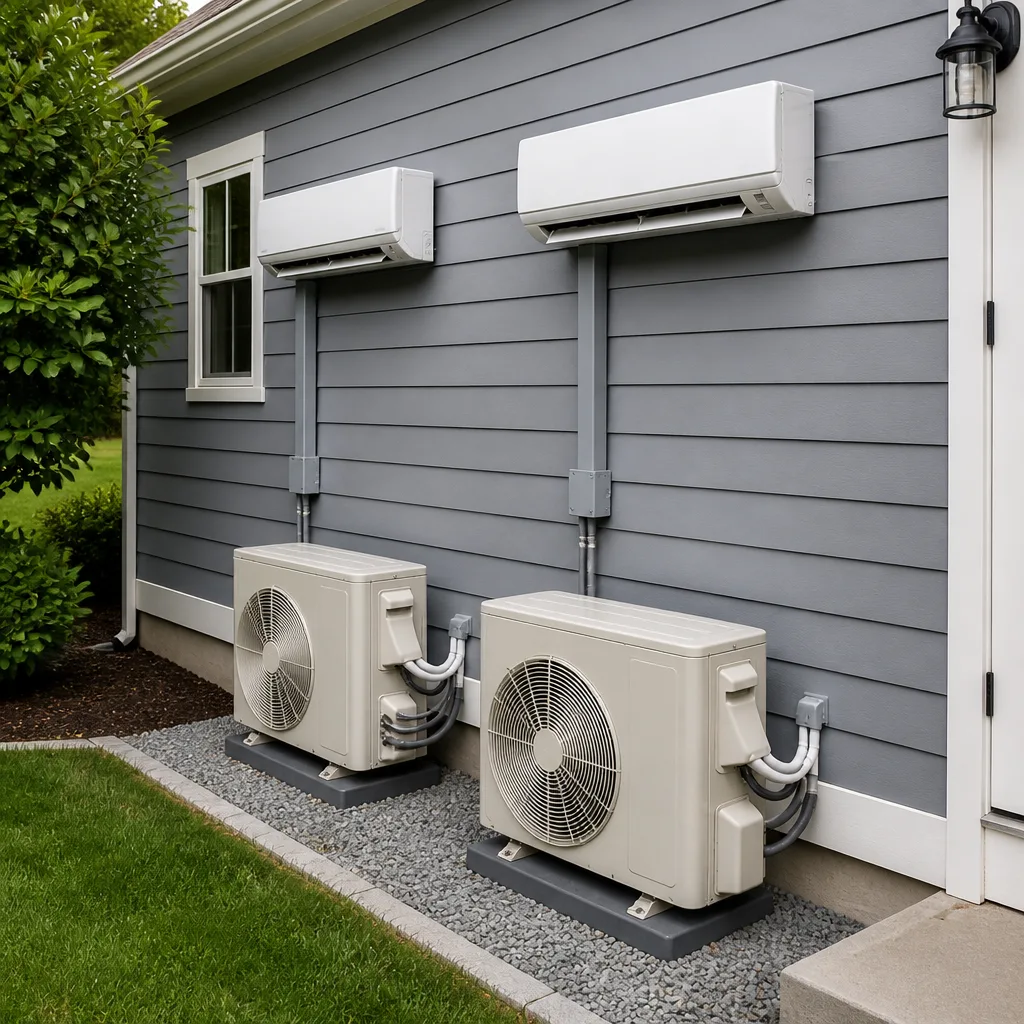 Ductless mini splits
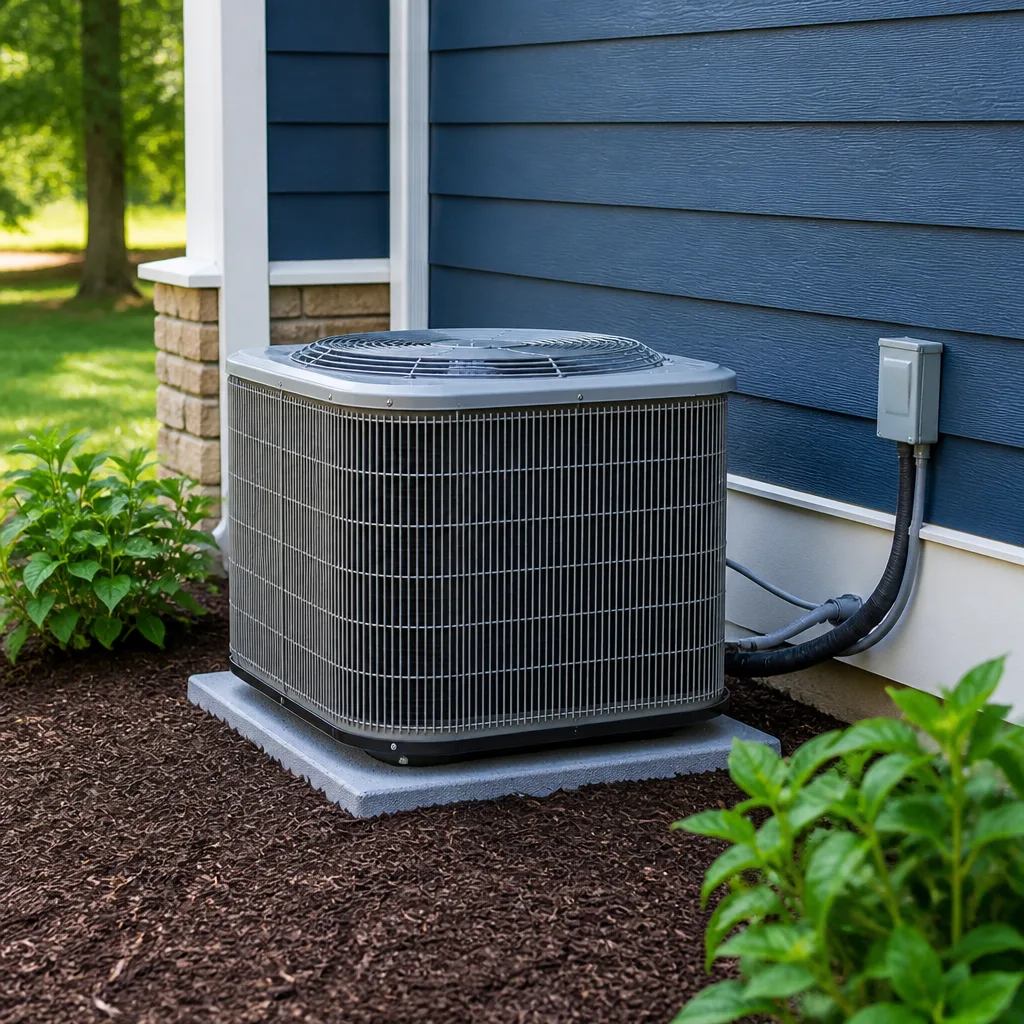 Carrier
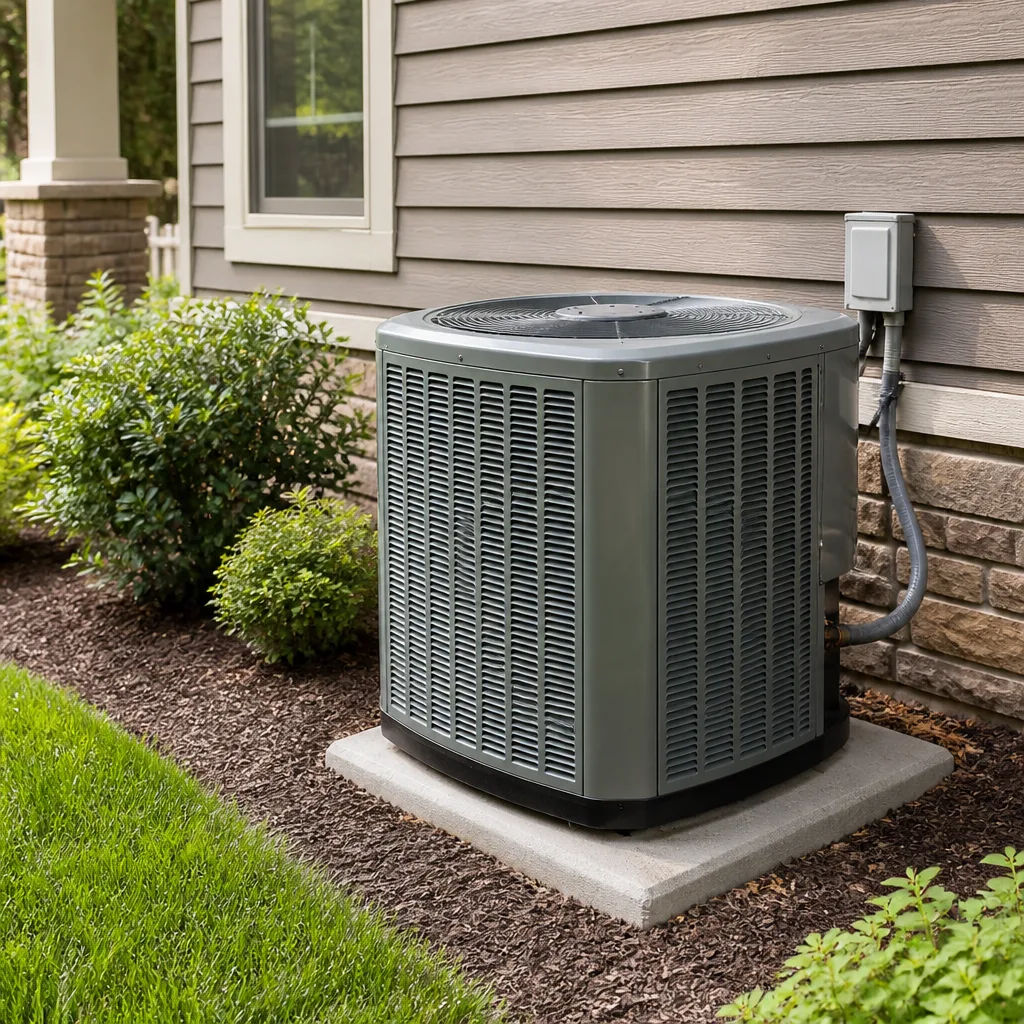 Trane
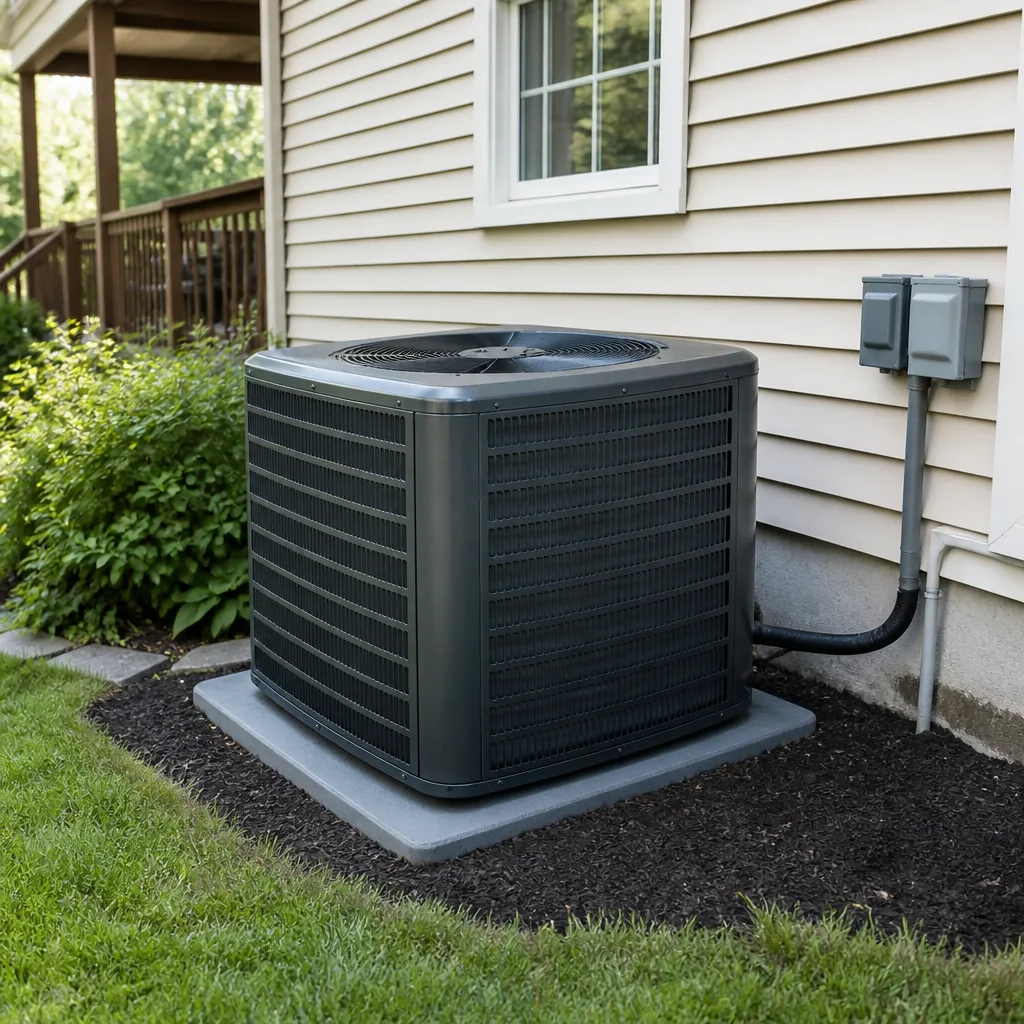 Goodman
Seasonal tune-up and full diagnostic on your Carrier, Trane, or Goodman system - readings shown to you before any repair is proposed
Diagnosis first, numbers second - you approve the repair price before a single part goes in.
Get your free estimateDIY vs Professional HVAC: The Winchester Homeowner’s Decision Guide
In Nevada, buying or handling refrigerant without an EPA Section 608 certification is a federal violation. Not a contractor’s opinion, not a company policy – an actual federal statute under the Clean Air Act. Yet if you spend an evening reading through HVAC repair forums, you’ll find a steady stream of homeowners describing exactly that: ordering refrigerant online, topping off their own system. Here in Winchester, where summer afternoons climb past 105°F and a struggling air conditioner isn’t a nuisance but a genuine health concern, that temptation is understandable. This guide draws a clear line between what’s genuinely yours to handle and where picking up a wrench starts costing you more than it saves – legally, financially, and in the warranty language nobody reads until it’s too late.
Quick Answer
Winchester homeowners can legally and safely handle basic HVAC maintenance themselves: filter changes, thermostat swaps, condensate drain clearing, and gentle cleaning of the exterior condenser unit. Everything involving refrigerant, electrical components inside the unit, gas lines, or diagnosing why a system is behaving strangely requires a licensed professional – both because federal and Nevada law require certification and because a homeowner-applied fix on these systems often hides a larger failure that gets worse while you think the problem is solved.
Styles & brands we work with
- AC repair
- Furnace & heating
- Heat pumps
- Ductless mini splits
- Carrier
- Trane
- Goodman
Table of Contents
- Where Nevada Draws the Legal Line on HVAC DIY
- What Winchester Homeowners Can Legally Do Themselves
- How DIY Electrical Work Hits Your Insurance and Warranty
- The Skill Ceiling Problem: Tasks That Look Simple But Aren’t
- Three Symptoms That Look DIY-Fixable But Aren’t
- Why Winchester’s Desert Climate Changes the Calculation
- The Real Cost Comparison: DIY vs Professional in Winchester
- A Decision Framework You Can Actually Use
Where Nevada Draws the Legal Line on HVAC DIY
The DIY versus professional conversation usually starts with money. In Winchester, it should start with law, because the legal boundary here is sharper than most homeowners realize. Three distinct regulations shape what you can and can’t touch on your own equipment.
Refrigerant handling (federal). The EPA’s Section 608 program, established under the Clean Air Act, requires certification for anyone who buys, handles, or disposes of regulated refrigerants. This covers R-410A, the standard refrigerant in most modern residential systems, and the newer R-454B formulations appearing in equipment from Carrier and Trane. It applies to homeowners. Skill level doesn’t matter. A retired engineer with forty years of mechanical experience still needs the certification to legally open a refrigerant circuit. Buying refrigerant without it is a violation on both ends of the transaction.
Electrical work (Nevada). Nevada requires licensed electricians for work beyond simple device replacement like swapping a switch or outlet cover. HVAC electrical components – contactors, capacitors, compressor wiring, control boards – sit squarely in licensed territory. A homeowner replacing a capacitor in a Winchester garage on a Sunday afternoon may believe they’re doing routine maintenance. From an insurance and code standpoint, they’re doing unlicensed electrical work on a permanently wired appliance.
Gas lines and combustion (Nevada and federal). Any work on gas piping or the combustion side of a furnace requires licensing and, in most jurisdictions, a permit and inspection. This is the highest-stakes category in the entire conversation. We’ll say it plainly: nobody without training should be opening a gas furnace.
None of this is designed to protect contractors’ livelihoods. It exists because refrigerant releases damage the atmosphere, unlicensed electrical work starts fires, and gas work kills people. Every few years we read about a Winchester-area homeowner injured by a furnace they tried to service. The regulation is the floor, not the ceiling.
What Winchester Homeowners Can Legally Do Themselves
Here’s the encouraging part. A meaningful slice of HVAC care is entirely within your rights, costs almost nothing, and genuinely extends equipment life. These aren’t consolation prizes – they’re the tasks that matter most for day-to-day performance in Winchester’s dusty, hot climate.
Tasks that are legally yours, safe, and effective:
- Filter changes. The single highest-value maintenance task on any system. In Winchester, where spring winds carry fine desert dust and summer pollen, most homes need a filter change every 30 to 60 days during cooling season – not the 90 days printed on the packaging. A clogged filter strains the blower motor and drives up electricity bills in a hurry.
- Thermostat replacement. Swapping a basic thermostat for a programmable or smart model is a low-voltage job most homeowners can handle with the breaker off and the manufacturer’s wiring diagram in hand. Take a photo of the wiring before you disconnect anything. If your system uses a communicating thermostat or a heat pump with auxiliary stages, call us first – those get complicated fast.
- Condensate drain clearing. During Winchester’s monsoon months, typically July through September, humidity spikes and condensate production jumps. A clogged drain line causes water damage to ceilings, walls, and floors – one of the most common summer service calls we handle. Flushing the line with a cup of distilled vinegar monthly during cooling season prevents most clogs. If you see standing water in the drain pan, that’s a sign to call.
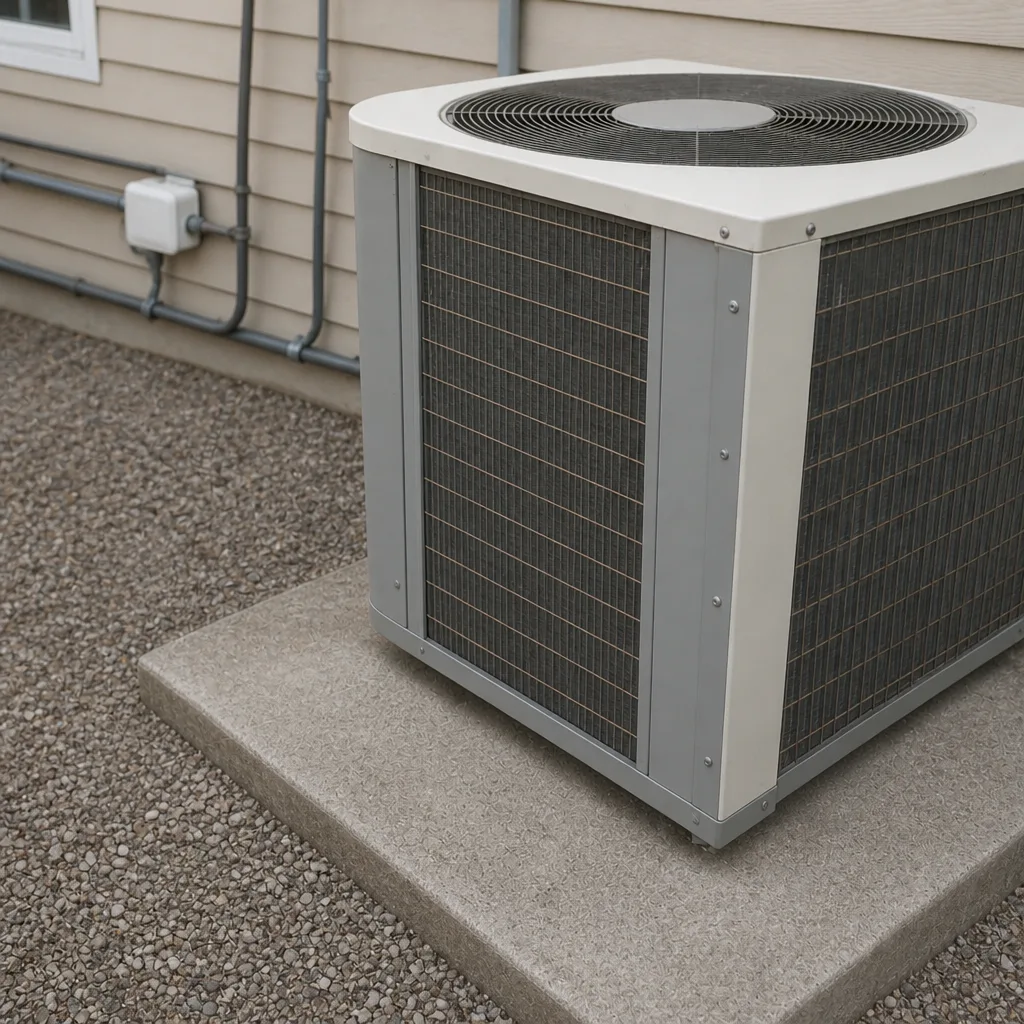
- Exterior condenser cleaning. With power off at the breaker, rinsing the outdoor unit’s coils with a garden hose (never a pressure washer) removes the dust and cottonwood fluff that accumulate in Winchester yards. Keep at least two feet of clearance around the unit. Straighten bent fins with a fin comb if you have one.
- Clearing debris from around the outdoor unit and checking that the pad is level. Simple, free, and it prevents a surprising number of problems.
What stays off-limits: refrigerant, electrical components inside the cabinet, gas piping, combustion components, and any diagnostic work requiring gauges or a multimeter. Those belong to licensed professionals – not because we’re gatekeeping, but because the law says so and the failure modes are serious.
How DIY Electrical Work Hits Your Insurance and Warranty
This is the section most homeowners wish they’d read before the fact. Two separate documents govern what happens after a DIY HVAC repair goes wrong: your homeowner’s insurance policy and your equipment manufacturer’s warranty.
Insurance language to look for. Pull out your policy and find the exclusions section – usually titled “Losses We Do Not Cover” or similar. Look for phrases like “faulty workmanship,” “improper installation,” “work performed without required permits,” or “work performed by unlicensed persons.” A fire traced to a homeowner-installed capacitor or control board almost always falls under one of these exclusions. The claim gets denied, and you’re covering the damage yourself, sometimes including a neighbor’s property. In a Winchester subdivision with homes spaced fifteen feet apart, that scope can be larger than you’d expect.
Warranty language to look for. Manufacturer warranties from Bryant, American Standard, and most other brands contain language around “installation and service by a licensed professional” and exclusions for “damage caused by improper service” or “unauthorized modifications.” A DIY capacitor replacement that fries a control board voids the warranty on that board. A DIY refrigerant top-off that introduces moisture and acid into the system can void the compressor warranty – the single most expensive component in the system, sometimes half the value of the equipment.
You don’t have to read every word. Look for these specific phrases:
- “Licensed contractor” or “qualified technician” in the service requirements section.
- “Improper installation” or “improper service” in the exclusions list.
- “Consequential damages” – this tells you whether the manufacturer covers the damage your DIY mistake causes downstream.
- “Proof of professional maintenance” – some manufacturers require documented professional service to honor certain labor warranties.
Our rule of thumb: if the task touches electrical or refrigerant, treat the warranty as at risk. The savings from a DIY part swap almost never outweigh the warranty coverage on a system that cost you thousands.
The Skill Ceiling Problem: Tasks That Look Simple But Aren’t
Here’s where the DIY conversation gets subtle. Some tasks are legal, technically simple, and still a bad idea – not because you can’t do them, but because doing them correctly requires context you don’t have.
Capacitor replacement is the classic example. It’s a $30 part and a five-minute job if you know what you’re doing. But capacitors fail for reasons. A capacitor that blows every summer is telling you something about voltage, start-up load, or a failing compressor. Swap the part, and the compressor keeps straining until it dies – a $2,000 repair that a proper diagnosis would have caught. We’ve seen this exact sequence play out in Winchester more times than we can count. The homeowner congratulates themselves on the DIY save in July and calls us in September staring at a compressor replacement.
Refrigerant top-off is the second. It’s illegal without certification, but even setting that aside: a system low on refrigerant is leaking. Refrigerant doesn’t get “used up” like gasoline. If you need a top-off, you have a leak. Adding refrigerant without finding and fixing the leak is a temporary patch that masks the real problem while the leak slowly gets worse. A proper diagnosis includes a leak search, sometimes with electronic detection equipment or UV dye. That diagnosis is the whole value – the refrigerant itself is a fraction of the cost.
Hard-start kit installation is a third. It looks like a plug-in accessory. Install the wrong one, or install one on a system that doesn’t need it, and you can burn out a compressor. On a heat pump, which is now common across newer Winchester homes, the interaction between the hard-start kit and the defrost cycle is its own complication.
The pattern holds: on modern equipment, the part is cheap and the diagnostic context is what you’re actually paying a professional for. Skipping the diagnosis to save on the part is like reading one page of a book and guessing the ending.
Three Symptoms That Look DIY-Fixable But Aren’t
Some problems present as if a simple fix will solve them. In our experience, these three symptoms almost always trace back to something larger, and the DIY patch delays the real repair while it gets more expensive.
1. A system that trips the breaker. The instinct is to reset the breaker and move on. When an HVAC breaker trips repeatedly, the underlying cause is nearly always a failing compressor, a shorted wire, or a bad contactor. Resetting the breaker each time doesn’t fix anything – it just lets the failure progress. We’ve walked into Winchester homes where the breaker had been reset for weeks before the compressor finally seized. What would have been a contactor replacement became a full system replacement.
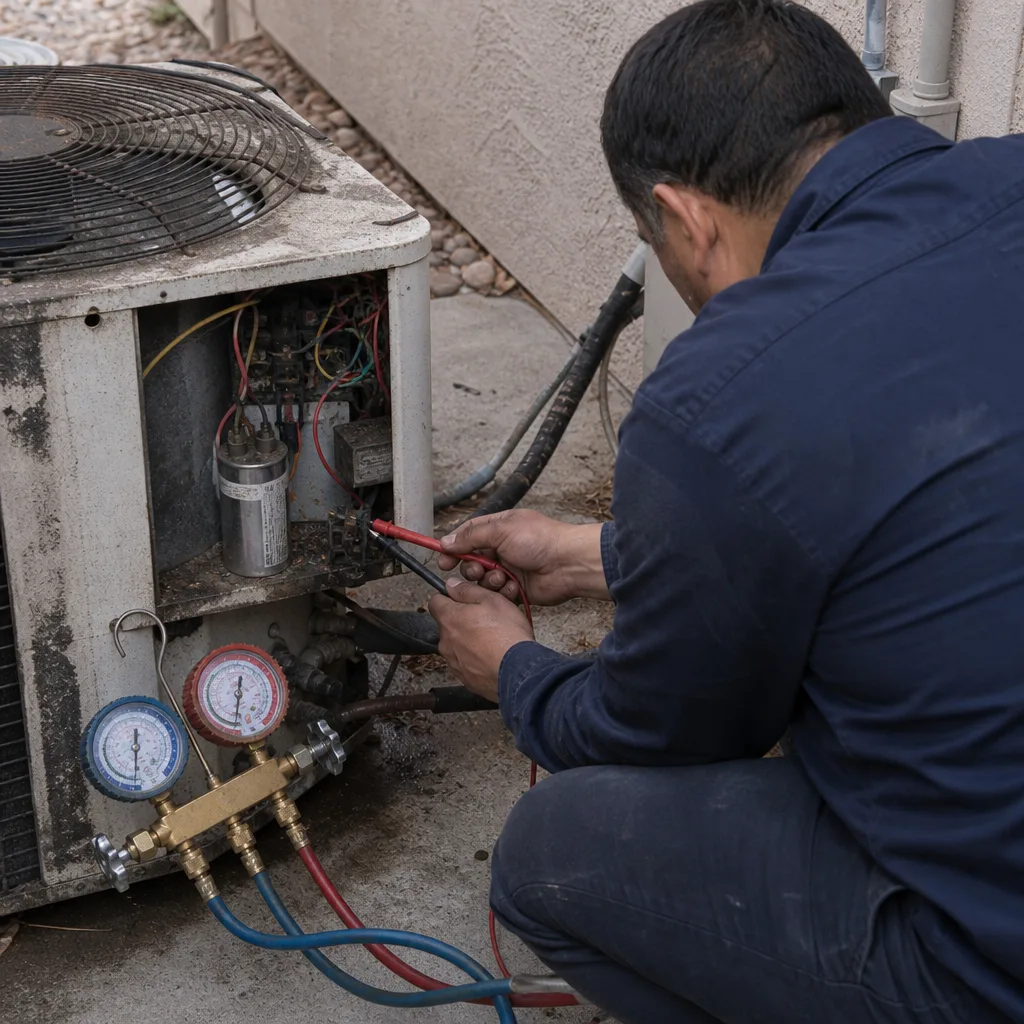
2. An outdoor unit that hums but doesn’t start. Could be a capacitor. Could be a stuck contactor. Could be a seized compressor. There’s no way to know which from the outside, and the wrong guess makes it worse. A seized compressor hums because it’s trying to start against a locked rotor. Swap the capacitor and the compressor still won’t start – now you’ve spent $30 and lost a week. What you needed was a technician with a meter and five minutes of diagnostic work.
3. Ice forming on the indoor coil or the refrigerant lines. Ice on the lines means the system is running cold – which means low refrigerant, restricted airflow, or a failing metering device. Each has a different repair. The homeowner who sees ice and thinks “I’ll just change the filter” sometimes gets lucky (dirty filter = restricted airflow), but just as often doesn’t. The ice is a symptom; the cause is one of three things, and only one of them is a filter.
For all three, the professional visit is diagnostic, not heroic. Usually the repair is modest once the cause is found. The DIY path is what turns a modest repair into a large one.
Why Winchester’s Desert Climate Changes the Calculation
HVAC advice written for a temperate climate doesn’t translate cleanly to Winchester. Three local factors reshape the DIY versus professional math.
Peak load hours. A Winchester air conditioner runs far more hours per summer than one in a coastal climate. In subdivisions like Sun City Aliante and Providence, equipment in a well-insulated home typically runs six to eight hours a day from June through August, and more during heat waves. That runtime means every inefficiency – a clogged filter, a dirty coil, a slightly undercharged system – compounds faster here. It also means the equipment is closer to its design limit throughout the season, so small problems escalate quickly.
Dust and seasonal wind. Our spring wind season deposits a fine layer of dust on outdoor coils within weeks. Homeowners who clean their condenser twice a year in Winchester – once in March before the cooling season and once in July – routinely get better efficiency and longer equipment life than those who do it once. That’s a DIY task we fully endorse.
Monsoon humidity. July and August bring short, intense monsoon storms. For a few weeks each year, Winchester humidity climbs into territory that strains a system designed primarily for sensible cooling. That’s when condensate drains clog, when indoor coils frost, and when systems that were “fine” all summer suddenly aren’t. Having the drain line clear before July is cheap insurance against a ceiling leak.
None of this makes Winchester a harder place to own an HVAC system. It makes the maintenance schedule shorter and the diagnostic discipline more valuable – which shifts more of the work toward professionals, honestly, but only in the diagnostic categories. The basic maintenance tasks are actually more valuable here, not less.
The Real Cost Comparison: DIY vs Professional in Winchester
Here’s what the actual numbers look like in the Winchester market. These are ranges based on what we see across the valley, and they exclude the legal and warranty considerations already covered – those are the wildcards that swing the math.
- Filter change: $10-20 DIY, $15-30 with a maintenance visit. Do this yourself. No argument.
- Thermostat swap (basic programmable): $40-120 DIY, $150-250 professional. DIY is reasonable on a simple system. Not on a heat pump with auxiliary stages or a communicating system.
- Condensate drain clearing: $0-5 DIY (vinegar flush), $100-175 professional if it’s already clogged and needs a suction clear. DIY wins if you’re pre-emptive.
- Capacitor replacement: $30-60 part DIY, $150-280 professional. The pro price includes the diagnosis that tells you whether the capacitor is the actual problem. The DIY price is only the capacitor – and if it wasn’t the problem, you’ll be paying the professional price plus the wasted part.
- Refrigerant top-off: Illegal to DIY. $200-500 professional depending on refrigerant type and amount. If there’s a leak, add $300-800 for the leak search and repair.
- Contactor or control board replacement: $50-200 part DIY, $250-550 professional. This is electrical work on a permanently wired appliance. Void your insurance, void your warranty. Don’t.
- Compressor replacement after a DIY mistake: $1,800-3,200 professional. This is the cost that makes the whole conversation real.
See the pattern? The cheap DIY tasks save real money. The “medium” DI”Y tasks save modest amounts while carrying the biggest tail risk. For anything in the medium category, the honest advice is: if you have to ask whether you can do it, that’s your answer.
A Decision Framework You Can Actually Use
When you’re standing in the garage with a part in your hand and a decision to make, run through these questions in order. We use a version of this ourselves when advising Winchester homeowners over the phone.
- Does it involve refrigerant? If yes, put the wrench down. It’s a federal violation without Section 608 certification, full stop.
- Does it involve electrical components inside the unit or on the permanently wired circuit? If yes, it’s licensed electrician territory in Nevada, and your homeowner’s insurance will treat it that way if something goes wrong.
- Does it involve gas piping or combustion? If yes, call a professional. This is not a close call.
- Is the symptom one that could trace to multiple causes? If yes, you need diagnosis, not a part. A humming outdoor unit could be a capacitor, contactor, or compressor. Guessing is worse than not starting.
- Is the warranty still active? If yes, weigh the part savings against the warranty risk. On a system installed within the last decade, the warranty coverage usually wins.
- Is it on the basic maintenance list? If yes, it’s yours, and doing it well makes a real difference in Winchester’s climate.
Six questions. Most decisions resolve in under a minute. If you get stuck anywhere in the middle – especially on question four – that’s usually the moment to call us and describe the symptom. We answer every call with a live person, every day, around the clock. The diagnostic conversation is often enough to tell you whether you’re looking at a five-minute fix or something a technician needs to see. When you’re ready to have it handled right the first time, Fireside Heating & Air Co. Winchester home is where we start.
Common Mistakes to Avoid
- Buying refrigerant online to “top off” a system. It’s a federal violation without Section 608 certification, and it masks the leak that caused the low charge in the first place. Whatever savings you think you’re getting, the eventual repair – often a compressor – dwarfs it.
- Replacing a capacitor without checking why it failed. Capacitors fail for reasons. A repeated failure in a Winchester home usually points to a straining compressor or voltage issue. Swapping the part without diagnosing the cause is how a $150 repair becomes a $2,000 one.
- Running the air conditioner with ice on the indoor coil. Some homeowners turn the system off, let it thaw, then turn it back on. If the underlying cause – low refrigerant, restricted airflow, or a failing metering device – isn’t fixed, the ice comes right back. In Winchester’s summer heat, this cycle can take two or three days before it causes real damage.
- Skipping the filter during a busy month. A clogged filter in May is annoying. A clogged filter in July, when the system runs fourteen hours a day, can freeze the coil and land you in emergency-service territory. Change it on the first of the month and you’ll never think about it again.
- Using a pressure washer on the outdoor unit. It bends fins, damages the coil, and drives water into electrical components. A garden hose on low pressure is all you need. If the unit needs a deep clean, that’s a professional job.
- Assuming a breaker reset fixed the problem. A repeatedly tripping HVAC breaker is a signal, not a nuisance. Each reset lets the underlying failure progress. In our experience in Winchester, a breaker that trips twice in a season should be looked at by a technician – and a breaker that trips three times is already on borrowed time.
- Ignoring the condensate drain until it overflows. The most common summer water-damage call we get comes from a drain that clogged during monsoon season. A monthly vinegar flush costs nothing. Repairing a soaked ceiling and a warped floor costs thousands.
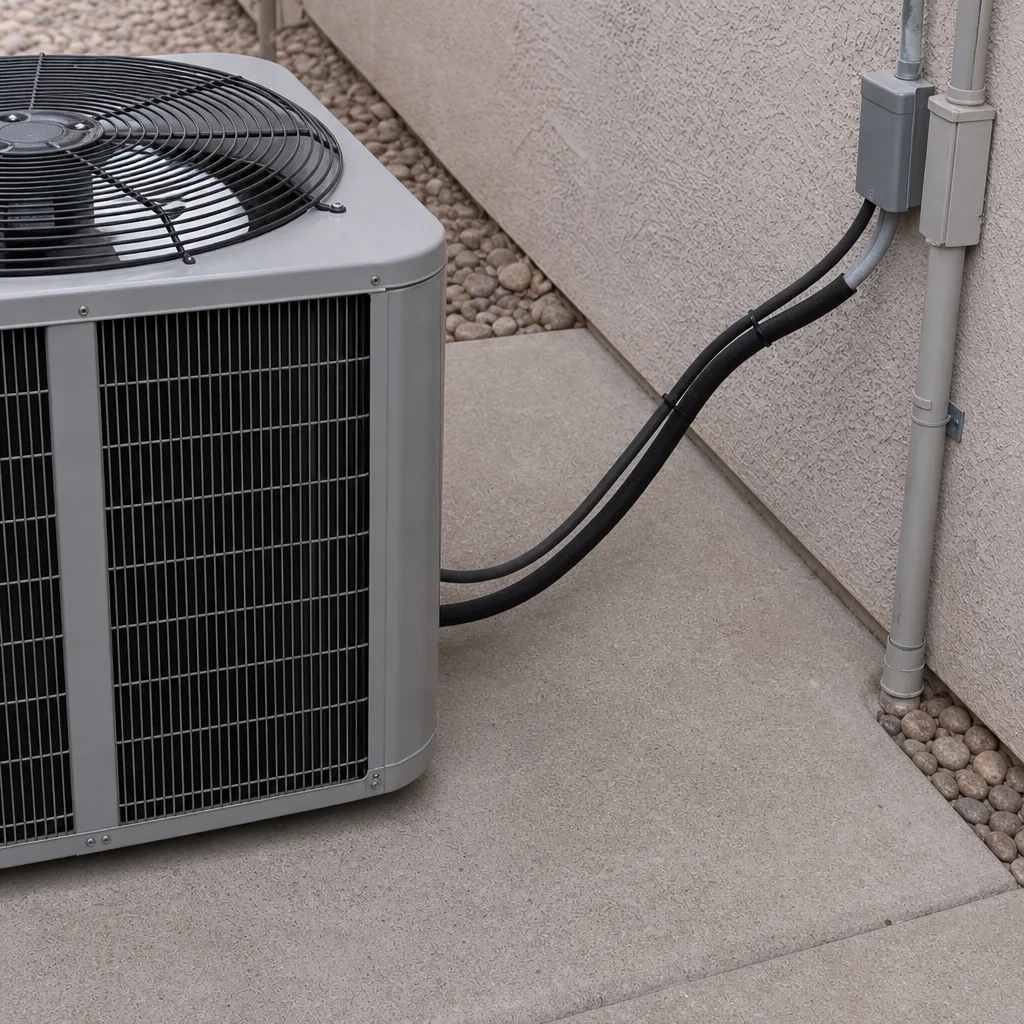
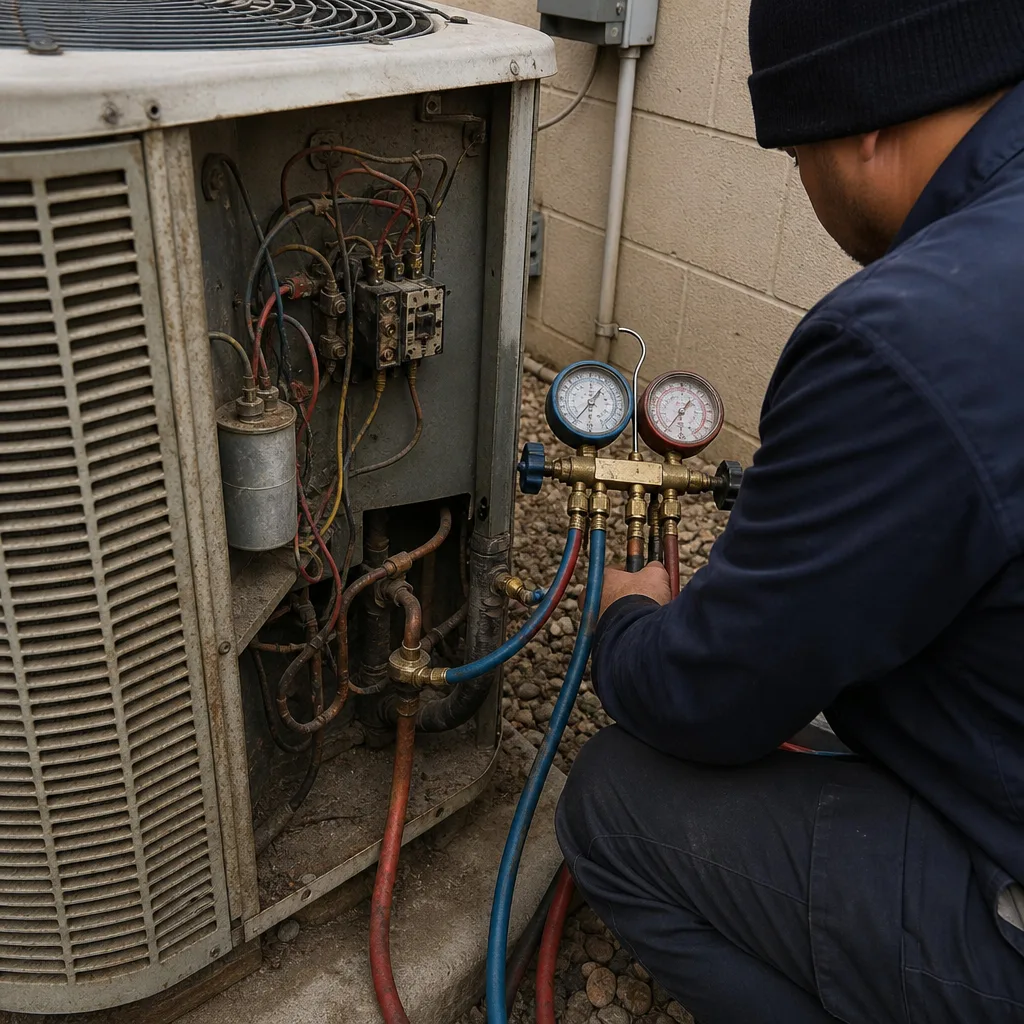
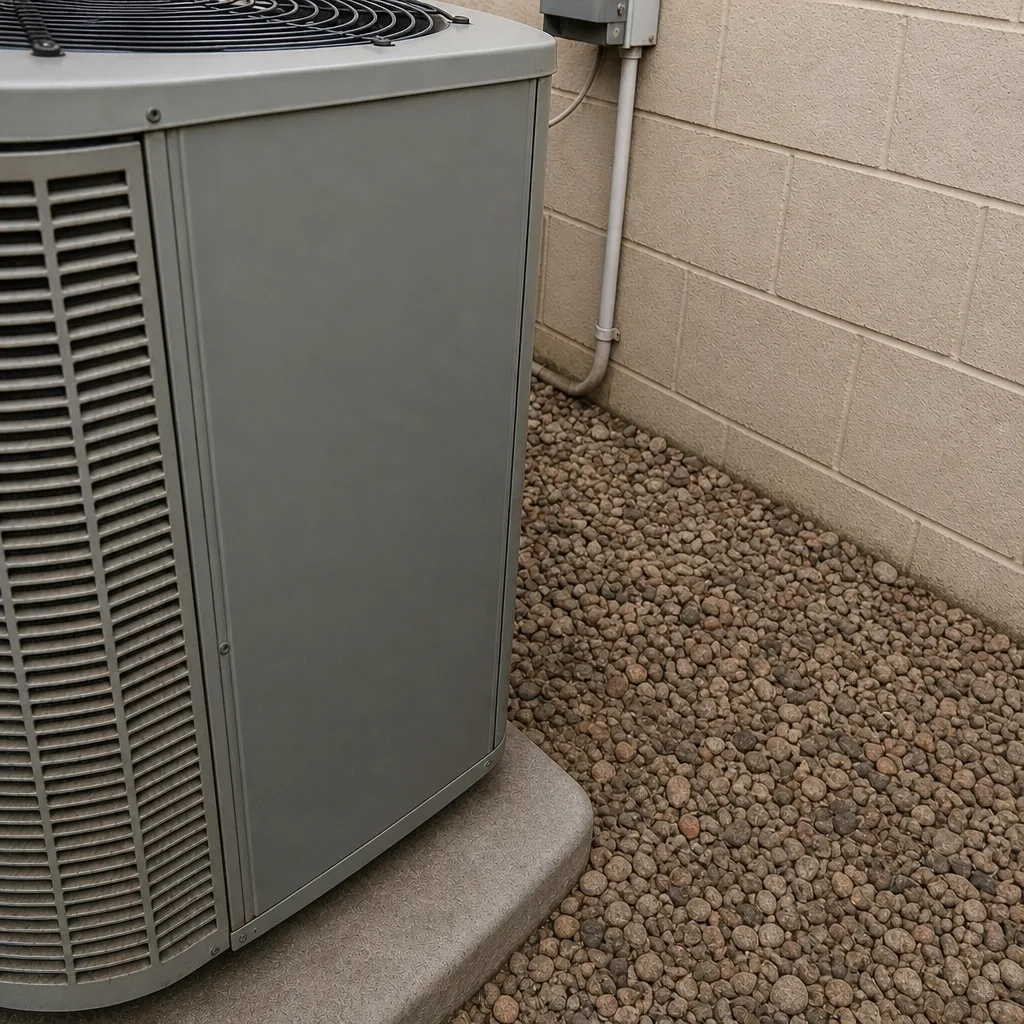
See the difference
 Before
 After
 Before
 After
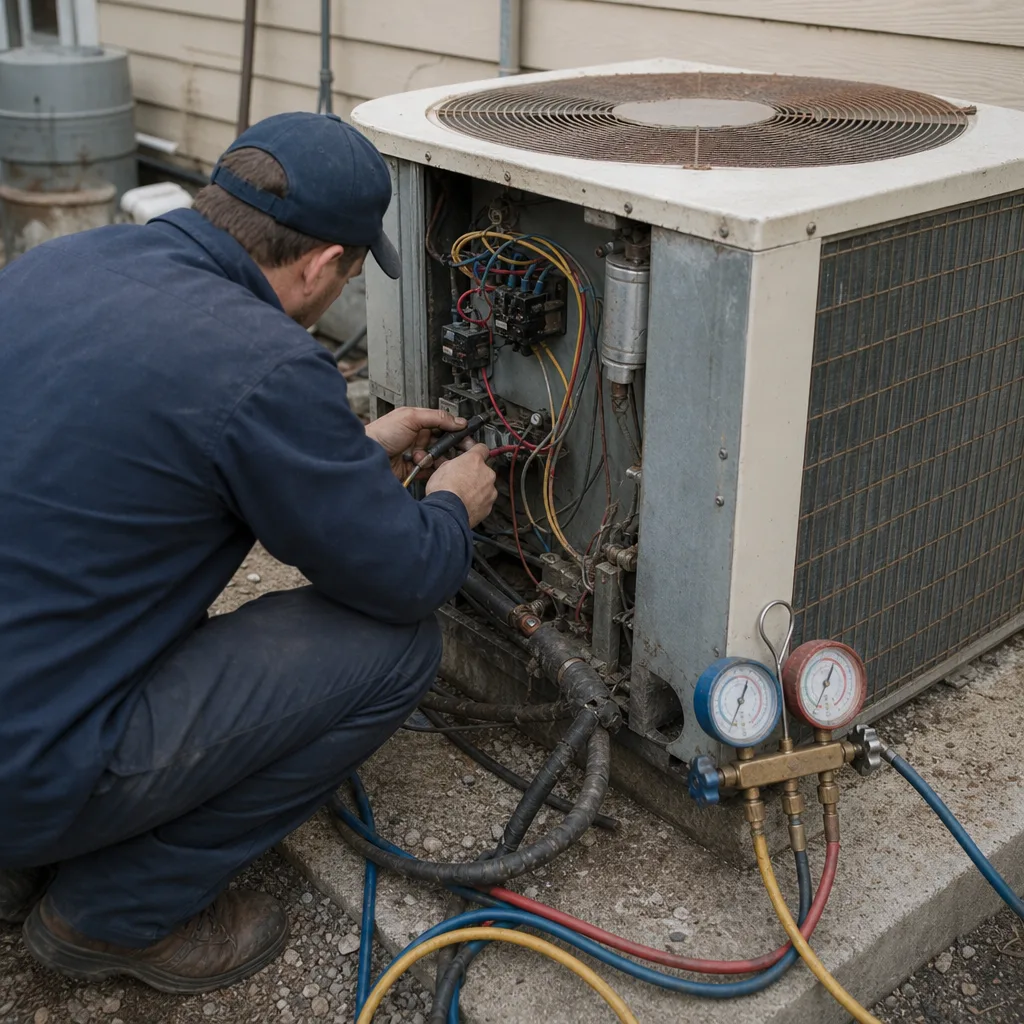 Before
 After
When to Call a Professional
Call us when the task involves refrigerant, electrical components beyond a basic thermostat, gas, or combustion. Call us when the symptom could trace to more than one cause – humming, tripping breakers, ice forming, warm air on a system that should be cooling. Call us when you’re not sure, because the diagnostic conversation over the phone is free and often settles the question in a minute. And call us for the annual tune-up even if you handle the monthly maintenance yourself: a trained technician catches things a homeowner can’t, and the AC Repair & Installation in Winchester visit is where those catches happen. Fireside Heating & Air Co. Winchester offers free estimates in Winchester – call (844) 783-5043. Our technicians have up to 8 years of experience, every job is backed by the 90-Day Done Right Promise, and the price quoted is the price paid.
Frequently Asked Questions
No. Buying or handling regulated refrigerants requires EPA Section 608 certification under the federal Clean Air Act, and that requirement applies to homeowners just as it does to contractors. There is no exemption for personal use on your own equipment. Beyond the legal issue, a system that’s low on refrigerant has a leak that needs diagnosis and repair – adding refrigerant without finding the leak just delays the inevitable and can damage the compressor. Call (844) 783-5043 to schedule a leak search; estimates are free.
It can, yes. Most manufacturer warranties – Bryant, American Standard, Carrier, Trane, and others – include exclusions for damage caused by improper service or unauthorized modification. If a DIY repair causes a downstream failure, the manufacturer is usually within its rights to deny the claim on the damaged component. The practical answer: read the exclusions section of your warranty paperwork before you start. If “improper service” or “unauthorized modification” appears, treat that as the boundary.
Filter changes, basic programmable thermostat swaps, condensate drain flushing with distilled vinegar, and gentle exterior coil cleaning with a garden hose (power off, low pressure). Those tasks are legal, safe, and genuinely valuable in Winchester’s dusty desert climate. Anything involving refrigerant, electrical components inside the cabinet, gas lines, or diagnosis should go to a licensed professional. When in doubt, call and describe the symptom – we’ll tell you honestly whether it’s a DIY job.
A repeatedly tripping breaker almost always points to a failing compressor, a shorted wire, or a bad contactor – not to the breaker itself. Resetting it repeatedly lets the underlying failure progress, which is how a modest repair becomes a compressor replacement. Stop resetting it and get it diagnosed. Our Heating & Furnace in Winchester and cooling technicians can usually pinpoint the cause in a single visit. Call (844) 783-5043.
Often, yes – because what you’re paying for isn’t the part, it’s the diagnostic context. A capacitor failure on a Winchester system could mean the part itself, a straining compressor, or a voltage problem. The $30 part fixes one of those. The other two come back worse. On tasks where the diagnosis is straightforward and the failure mode is singular, DIY is genuinely reasonable. On anything with multiple possible causes, the professional visit pays for itself in avoided misdiagnosis.
Usually not. Standard homeowner’s policies exclude damage from faulty workmanship, improper installation, and work performed by unlicensed persons – and HVAC electrical work by a homeowner falls into all three categories in most policies. If you attempt a repair that causes a fire or water damage, expect the claim to be denied. Check the exclusions section of your own policy for the exact language. For anything beyond basic maintenance, the risk math favors professional work. Call (844) 783-5043 for a free estimate on the job done right.
The Bottom Line
The DIY versus professional HVAC question isn’t really about skill. It’s about where the legal, insurance, and diagnostic lines fall – and in Winchester, those lines are clearer than most homeowners assume. Basic maintenance is genuinely yours: filters, drains, thermostat swaps, outdoor coil cleaning. Everything involving refrigerant, electrical components, gas, or multi-cause diagnosis belongs to a licensed professional, and the cost of crossing that line is real. If you want the low-stakes work handled cheaply and the high-stakes work handled right the first time, that’s exactly the split we’re built for. For heating service and heat pump work you don’t want to gamble on, see our Heat Pump & Mini Split in Winchester team. You can reach us any hour of any day – a live person answers, every call, including the 2 a.m. no-heat emergency. Call (844) 783-5043 for a free estimate. The price quoted is the price paid, and the 90-Day Done Right Promise stands behind every job.
Written by the team at Fireside Heating & Air Co. Winchester.